Why Digital Pain Diaries Matter
Chronic pain affects roughly 20% of U.S. adults—over 50 million people—leading to substantial personal distress and a $630 billion annual health‑care burden. Real‑time symptom tracking via digital pain diaries replaces retrospective paper logs, dramatically reducing recall bias and capturing fluctuations in intensity, location, and triggers as they occur. Studies of web‑based mapping apps show significant week‑to‑week changes in pain scores and area (P < .001), while quality descriptors remain stable, providing reliable longitudinal data. For patients, these tools foster self‑awareness, enable personalized pacing, and empower active participation in treatment decisions. Clinicians gain objective, timestamped information that can be shared securely with multidisciplinary teams, integrated into electronic health records, and visualized as trend graphs or heat maps. This bidirectional flow improves communication, speeds therapeutic adjustments, and ultimately supports better functional outcomes and higher patient satisfaction.
Understanding Digital Pain Mapping and Its Clinical Evidence
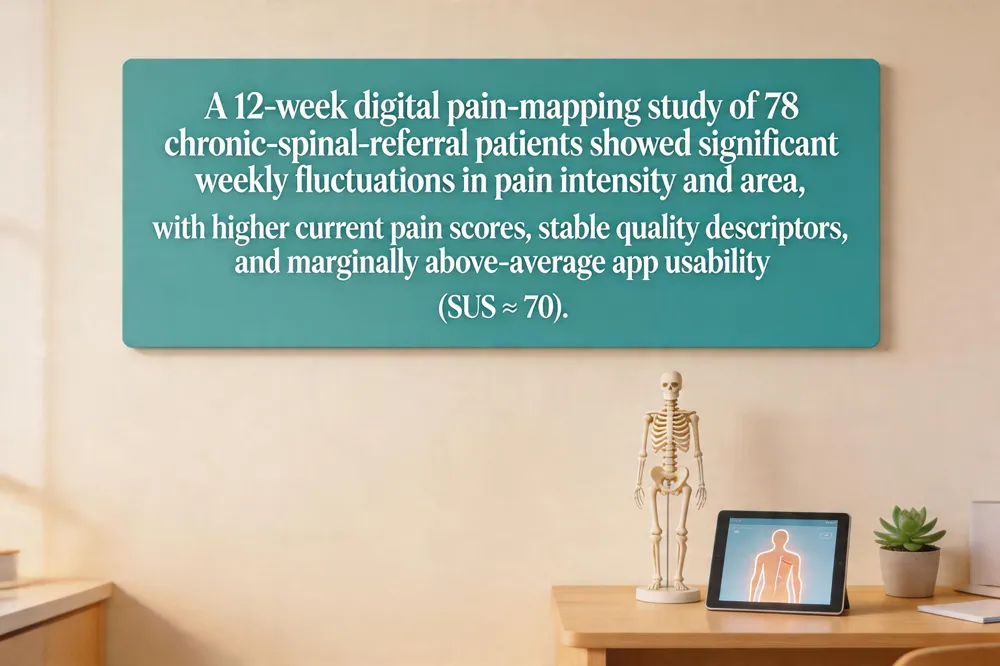 A 12‑week digital pain‑mapping study of 78 patients with chronic spinal‑referral pain showed that both current and usual pain intensity scores fluctuated significantly (P < .001). Current pain ratings were consistently higher than usual ratings (median 6.3 vs 5.4, Z = ‑18.0, P < .001). In addition, the total pain area measured in pixels varied week‑to‑week (χ²₁₁ = 48.7, P < .001), while the choice of quality descriptors remained stable (P = .99) and Jaccard similarity indices did not change (P = .52). Usability of the mapping app was marginally above average (mean SUS ≈ 70). Regular weekly users were younger (mean age ≈ 48.7 y) than non‑regular users (≈ 55.8 y, P < .001) and reported larger pain extents (median 4063 vs 3221 pixels, P < .001).
Tracking chronic pain – Recording intensity, location, triggers, mood, sleep, and medication in real time creates a data‑rich picture that can be shared with clinicians. Apps such as Branch, Manage My Pain, or Pathways Pain Relief make logging quick, reveal trends, and empower patients to adjust therapies confidently.
Chronic pain management PDF – A downloadable PDF summarises evidence‑based guidelines, assessment tools, and stepped‑care pathways, helping patients and providers coordinate care, set realistic goals, and improve quality of life.
Chronic pain management doctors – Board‑certified pain physicians work within multidisciplinary teams, using non‑opioid interventions, interventional procedures, and behavioral therapies to tailor treatment plans that reduce pain, restore function, and support long‑term well‑being.
Choosing the Right Chronic Pain Tracker App
Chronic pain tracker app
A chronic‑pain tracker app lets you record intensity, location, triggers, medication, sleep, activity and mood in a few taps. Options include Manage My Pain (HIPAA‑GDPR‑PIPEDA compliant, SOC 2 audited), PainScale (Apple HealthKit integration, 4.5‑star rating), Bearable (Apple Health, Google Fit sync, GDPR‑compliant), Nanolume (body‑map, ORCHA‑validated) and Branch (community sharing, CBT tools). Choose an app that offers a body map, quick entry under one minute.
Best way to track pain
Use a digital diary that timestamps each entry to reduce recall bias. Log pain several times daily, add notes on mood, stress, diet and medication timing. Review built‑in graphs weekly; export charts as PDF or CSV for your clinician. Regular reporting (at least weekly) improves communication and helps the California Pain Institute tailor treatment.
Best pain tracker app
For Los Angeles patients, Manage My Pain stands out with chart generation, cloud storage, HIPAA encryption and easy PDF export. It also provides a Pain Guide and an AI companion for personalized insights, making it a comprehensive and efficient tool for care.
Practical Home Strategies and Printable Tools
 Chronic pain management at home focuses on non‑pharmacologic interventions that reduce inflammation, improve mobility, and lower stress. A balanced diet rich in vegetables, fruits, whole grains and lean protein, coupled with regular low‑impact activity such as walking, swimming, yoga, or tai‑chi, can boost endorphins and protect joints. Relaxation techniques—including deep breathing, meditation, and guided imagery—help ease muscle tension and anxiety, while a consistent sleep routine supports overall recovery.
Pain tracker PDFs and printable pain diaries give patients a structured way to record daily pain intensity (0‑10 scale), location, quality descriptors, triggers, medications, and relief strategies. By filling out these worksheets each day and bringing them to clinic visits, patients provide clinicians with objective data that reveal patterns, assess treatment effectiveness, and guide personalized adjustments. The California Pain Institute offers a free, easy‑to‑use PDF template that includes fields for date, time, pain description, activity, mood, and side‑effects—download, print, and use it to empower your pain‑management journey.
Integrating Pain Tracking with Clinical Care
 How clinicians use diary data
Pain diaries provide clinicians with real‑time, time‑stamped records of intensity, location, triggers, medication timing and functional impacts. By reviewing trend graphs and heat‑maps, physicians can identify pain patterns, adjust medication doses, and prioritize non‑pharmacologic interventions such as CBT or therapeutic exercise. Integration with electronic health records enables multidisciplinary teams to view the same data, supporting coordinated care.
Report generation and sharing
Apps generate clinician‑friendly PDFs or secure cloud links that summarize weekly or monthly pain scores, medication logs, mood, sleep and activity metrics. Patients can share these reports before appointments, allowing the visit to focus on treatment decisions rather than data collection.
Clinical outcomes from regular tracking
Studies show regular digital diary use is linked to 20‑30% reductions in pain scores, improved functional outcomes, and higher patient satisfaction. Consistent logging also reduces opioid use and facilitates early identification of flare‑ups.
Manage my pain
The “Manage My Pain” app logs symptoms, meds and activities in under a minute, creates visual trend charts and produces shareable reports for physicians.
Free pain diary
A printable or digital log (or the free PainScale app) lets you record daily intensity, location, triggers and relief measures, supporting pattern detection and communication with your pain‑medicine team.
Pain diary app free
Free, HIPAA‑compliant apps such as Manage My Pain, Branch, ReLeaf and PainScale offer core tracking, reminders and basic reports; premium features are optional.
PainScale – Pain Tracker Diary
**Scale’s free diary captures intensity, triggers, meds, mood and sleep, generates visual trends and personalized reports, and syncs with Apple HealthKit/Google Fit to enrich clinician insight.
Advanced Therapies and Emerging Devices
 What is the new device for chronic pain?
The Inceptiv™ spinal cord stimulator is a closed‑loop, neural‑sensing system that automatically adjusts its output based on a patient’s movement and posture. By delivering controlled electrical impulses that interrupt pain signals before they reach the brain, it targets specific pain sites with real‑time modulation—unlike traditional fixed‑level stimulators. The rechargeable unit is built for long‑term durability, reducing the frequency of replacement surgeries and is offered to patients whose pain persists despite medication, injections, or physical therapy.
Chronic pain management medication
Effective regimens combine pharmacologic and non‑pharmacologic therapies. First‑line agents include NSAIDs for inflammatory pain and acetaminophen for mild‑to‑moderate discomfort. Neuropathic pain often responds to duloxetine, amitriptyline, gabapentin, or pregabalin, which target nerve‑related mechanisms. Opioids are reserved for severe, refractory pain and require careful monitoring. All medication choices should be paired with physical therapy, injections, or modalities such as TENS to maximize relief while minimizing adverse effects.
Chronic pain management opioids
Opioids provide modest short‑term relief but carry substantial risks—including dependence, overdose, constipation, fractures, and cardiovascular events—especially at higher doses. The California Pain Institute follows strict guidelines: thorough assessment, low‑dose trials, regular monitoring, urine drug testing, prescribing agreements, and coordinated specialist care. Non‑opioid therapies are prioritized, and when opioids are used, the lowest effective dose is prescribed with vigilant risk‑mitigation strategies.
Outcome Measures and Physiotherapy
 Pain outcome measures physiotherapy
Physiotherapy clinicians use a range of validated tools to monitor treatment effectiveness. Self‑report scales such as the Numeric Pain Rating Scale, Visual Analogue Scale, and Brief Pain Inventory quantify pain intensity and its impact on daily life. Objective functional tests—Timed Up‑and‑Go, range‑of‑motion assessments, and capacity questionnaires—show how pain limits movement. Patient‑reported instruments like the Pain Self‑Efficacy Questionnaire and Neck Disability Index capture perceived ability to manage pain and perform tasks, providing a comprehensive view of severity, functional limitation, and progress.
What is the 7‑item Brief Pain Inventory?
The Brief Pain Inventory asks patients to rate worst, least and average pain over the past 24 hours (0‑10) and to indicate how pain interferes with seven domains: general activity, walking, normal work, relations, mood, sleep, and enjoyment of life. Each interference item is scored 0‑10, yielding a quick snapshot of pain‑related disability used widely in chronic‑pain clinics.
What are the 3 P’s of pain?
The three P’s represent the three P’s of pain: Psychological, Physical, and Pharmacological strategies. Psychological techniques (e.g., CBT, mindfulness) modify pain perception; physical approaches (e.g., exercise, heat, massage) address the source; pharmacological treatments target pain pathways. Integrating all three creates a balanced, multimodal plan that outperforms any single method.
Track pain
Logging each pain episode—intensity, location, triggers, medication—in a digital diary creates a visual timeline that reveals patterns, supports clinician‑patient communication, and empowers patients to make informed, evidence‑based decisions.
Specialized Apps and Community Support
 Branch (formerly Ouchie) provides a platform linking patients with a community and their care team. Users share pain maps and medication logs, while clinicians view charts to adjust treatment.
Pathways Pain Relief offers evidence‑based videos, mindfulness exercises and physiotherapy routines. The app includes a daily diary, progress stats and reminders; a subscription unlocks the masterclass library that has shown pain‑intensity reductions.
My Pain Diary is an award‑winning iOS‑only tracker for intensity, location, triggers, medication and weather. Android users can use Manage My Pain, which offers comparable quick entries, graphs and PDF reports for clinicians.
A chronic‑pain tracking app lets you log intensity, triggers, medications, sleep, activity and mood, creating a diary that highlights patterns over time and can be shared with the California Pain Institute.
The Pathways app combines education, guided breathing and visualization with a pain diary to help break the pain cycle.
For Android, Manage My Pain mirrors My Pain Diary’s features; iOS users can run My Pain Diary directly.
Four chronic‑pain types are neuropathic, musculoskeletal, mechanical and inflammatory.
Finding Care Near You and When Pain Overwhelms
 Local multidisciplinary pain clinics, such as the California Pain Institute in West Los Angeles, bring board‑certified physicians, physical therapists, psychologists and interventional specialists together under one roof. They evaluate chronic pain with a biopsychosocial lens, offering medication management, nerve‑block procedures, physical therapy, acupuncture and counseling tailored to back, neck, arthritic, neuropathic and post‑surgical pain.
Signs that professional help is needed include pain that dominates daily activities, disrupts sleep, or triggers helplessness, depression or anxiety. When pain intensity consistently scores 6 or higher on a 0‑10 scale, or when you notice increasing medication use without relief, it’s time to seek a specialist. Early intervention can prevent the “terrible triad” of sleeplessness, suffering and emotional distress.
Online pain diaries provide real‑time, HIPAA‑compliant tracking of intensity, location, triggers, medication, mood and sleep. Apps like PainScale, Manage My Pain, Bearable and Nanolume calculate pain‑area coverage, generate color‑coded calendars and export PDF reports for clinicians. Remote monitoring lets your care team adjust treatment promptly, improves communication and empowers you to identify patterns—such as weather or activity effects—so you can implement pacing, mindfulness and lifestyle changes that reduce flare‑ups.
Empowering Your Pain Journey
Digital pain diaries transform a subjective symptom into objective data that clinicians can act on. Real‑time logging of intensity, location, triggers, medication timing, mood, sleep and activity reduces recall bias, improves communication between patients and the multidisciplinary team, and supports timely treatment adjustments. Regular use has been linked to 20–30% pain reductions, higher satisfaction, and better adherence to non‑pharmacologic therapies.
Next steps for patients
- Choose a HIPAA‑compliant app (e.g., PainScale, Manage My Pain, Nanolume, Bearable) that offers body‑map pain, reminders and exportable reports.
- Log at least once daily for two weeks to establish a baseline.
- Review generated graphs before each appointment and share the PDF with your clinician.
- Discuss patterns (e.g., sleep‑related spikes) and adjust goals with your care team.
Resources at California Pain Institute
- In‑person tutorials and telehealth sessions on diary setup.
- Access to the Pain Guide and educational library.
- Secure portal for uploading reports directly to your electronic health record.
- A dedicated support line (help@painscale.com) for technical assistance. By integrating digital tracking into your care plan, you gain insight, empower self‑management, and partner more effectively with your providers.