Why Knowing Your Coverage Matters
Pain‑management care can quickly become costly. Typical expenses include physician visits, diagnostic imaging, prescription drugs, physical‑therapy sessions, and interventional procedures such as epidural injections or nerve blocks. When a patient’s insurance is verified before the first appointment, the clinic can determine which services are covered, whether prior‑authorization is required, and what co‑pay or deductible will apply. This early verification often prevents surprise bills and can reduce out‑of‑pocket spending by as much as 30‑40 %. Private health plans, Medicare (Parts A‑D), Medicaid, and workers’‑compensation programs each have distinct benefit rules, caps, and network requirements. Understanding these differences helps patients plan treatment, avoid denied claims, and maximize the financial assistance available. By confirming coverage early, patients can also explore supplemental options such as Medicare Extra Help, Medicaid drug discounts, or employer‑provided HSAs to further lower costs.
Insurance Coverage Basics for Pain Management
| Service | Private Insurance | Medicare Part A/B/C/D | Medicaid (varies) |
|---|---|---|---|
| Physician consults | Covered if medically necessary | Covered (Part B) | Covered in most states |
| Diagnostic imaging | Covered if medically necessary | Covered (Part B) | Covered |
| Prescription meds | Covered, co‑pay varies | Covered (Part D) | Covered |
| Physical therapy | Covered if medically necessary | Covered (Part B) | Covered |
| Interventional procedures (e.g., epidural injections) | Covered if medically necessary | Covered (Part B) | Coverage varies |
| Workers’ comp / personal injury | May cover separate | May cover | May cover |
 Private health‑insurance plans typically cover essential pain‑management services when they are deemed medically necessary. This includes physician consultations, diagnostic imaging, prescription medications, physical‑therapy sessions, and many interventional procedures such as epidural steroid injections. Medicare offers a broader safety net: Part A covers inpatient services, Part B pays for outpatient visits, imaging, physical therapy, and certain injections, while Part C (Advantage) and Part D (prescription drug) add extra coverage for medications and, in some plans, complementary therapies. Medicaid benefits vary by state; most states cover physician visits, diagnostics, medications, and physical therapy, but the range of interventional procedures may differ. Workers’ compensation and personal‑injury claims can also fund pain‑treatment services for work‑related or accident injuries, though they often require separate documentation and pre‑authorization.
Does insurance pay for pain management? Yes—most health‑insurance plans provide some level of coverage for pain‑management services, including prescription medications, interventional procedures, physical therapy and related office visits. The exact amount you’ll pay out‑of‑pocket depends on your specific plan’s deductibles, co‑pays and whether the provider is in‑network. At the California Pain Institute we work with a wide range of insurers such as Cigna, Medicare, Blue Cross Blue Shield and UnitedHealthcare, and we can verify your benefits before treatment. If a service isn’t fully covered, we can discuss alternative options, including a fee‑for‑service arrangement. Contact our office to get a personalized estimate based on your insurance coverage and treatment plan.
Medicare, Medicaid and the ACA – What They Cover
| Program | Coverage Highlights |
|---|---|
| Medicare Part A | Inpatient stays, hospice |
| Medicare Part B | Outpatient visits, PT, imaging, some injections |
| Medicare Part C (Advantage) | May add acupuncture, other benefits |
| Medicare Part D | Prescription meds, Extra Help reduces costs |
| Medicaid (Medi‑Cal) | Essential health benefits: drugs, chronic disease, mental health; acupuncture required in CA |
| ACA Essential Health Benefits | Prescription drugs, chronic disease management, mental health; acupuncture varies |
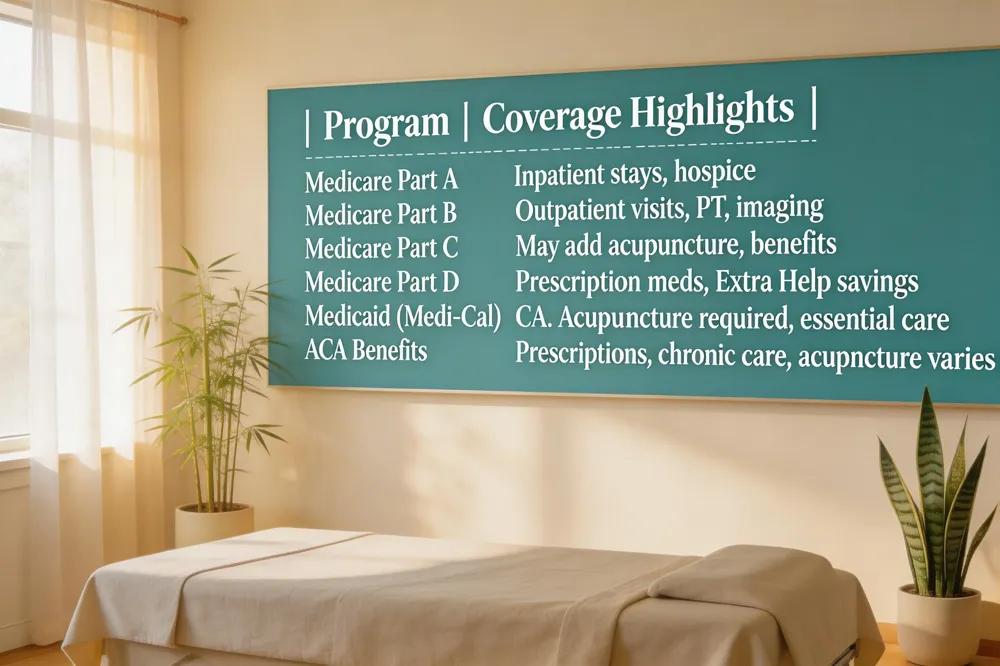 Medicare Parts A, B, C, and D provide a broad safety net for chronic‑pain patients. Part A covers inpatient stays and hospice care; Part B pays for outpatient services such as physician visits, physical therapy, and certain interventional procedures (e.g., epidural injections). Part C (Medicare Advantage) often adds extra benefits like acupuncture for chronic low‑back pain. Part D covers most prescription pain medications, and eligible beneficiaries can enroll in the Extra Help (Low‑Income Subsidy) program, which eliminates premiums and deductibles and caps co‑pays at $5.10 for generics and $12.65 for brand‑name drugs in 2026.
California’s Medi‑Cal (state Medicaid) follows the ACA’s Essential Health Benefits, guaranteeing coverage for prescription drugs, chronic‑disease management, and mental‑health services. While the ACA requires acupuncture to be an essential benefit in a few states (including California), chiropractic care is not universally required; coverage varies by insurer and plan design.
Is pancreatitis covered in health insurance? Yes, you can claim cashless for pancreatitis—provided your policy covers the condition and you have met any waiting periods. Pancreatitis, especially when linked to a pre‑existing condition, falls under specific clauses in most policies.
Pain and Suffering Claims – Evidence and Value
| Method | How Calculated | Typical Multipliers / Rates |
|---|---|---|
| Multiplier | Economic losses × factor (1.5‑5) | Factor based on severity, permanence |
| Per‑diem | Daily value × days of pain | Daily rate based on earnings or reasonable amount |
| Documentation Needed | Medical records, pain journal, photos, witness statements, expert testimony | — |
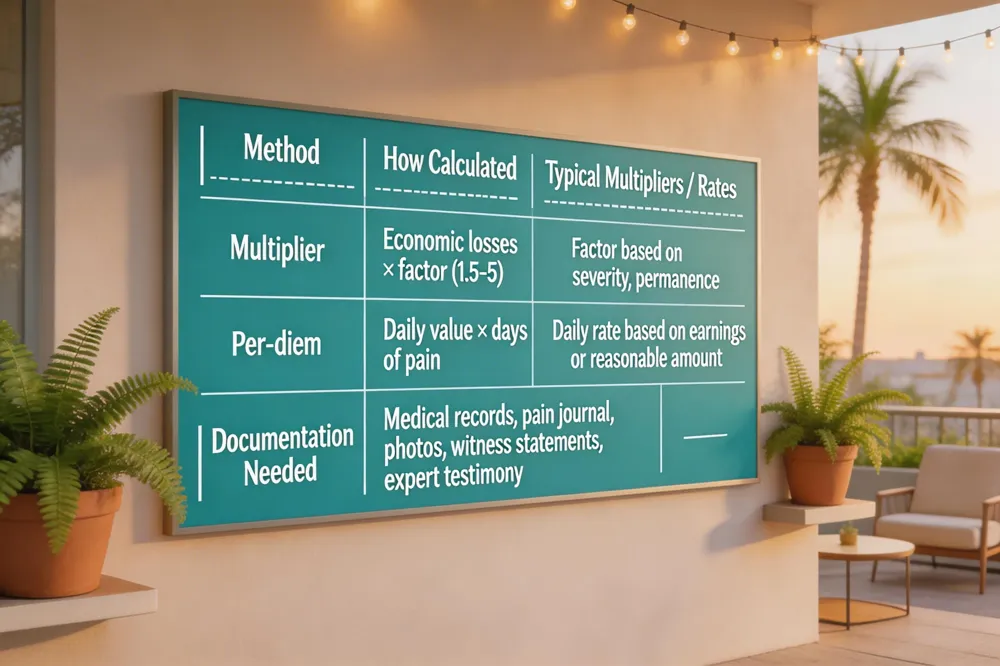 In California, non‑economic damages for pain and suffering are evaluated by the jury (or insurer) using two common methods: the multiplier and the per‑diem.
The multiplier method starts with the total economic losses—medical bills, lost wages, property damage—and multiplies that sum by a factor of 1.5‑5, depending on injury severity, permanence, and documented impact on daily life.
The per‑diem method assigns a daily monetary value (often based on the plaintiff’s earnings or a reasonable rate) and multiplies it by the number of days the plaintiff experiences pain and functional limitation. Courts consider factors such as the length of recovery, the need for ongoing therapy, loss of enjoyment of life, emotional distress, and any lasting impairment when deciding the appropriate factor or daily rate.
Documentation is critical. Plaintiffs should gather comprehensive medical records, diagnostic imaging, physician notes, a detailed pain journal noting intensity, frequency, and activity restrictions, photographs of injuries, and witness statements. Expert testimony from a pain‑medicine specialist can link the injury to ongoing suffering.
Settlement influences include the quality of documentation, the presence of pre‑existing conditions, the plaintiff’s comparative fault, and the insurer’s willingness to settle early. Strong, objective evidence and clear impact increase the likelihood of a higher award.
What evidence is needed for pain‑and‑suffering claim? To substantiate a pain‑and‑suffering claim you need documented proof that the injury exists and that it has impacted your daily life. Medical records—including physician notes, diagnostic imaging, treatment plans, and medication prescriptions—are the foundation, while a personal pain journal or diary that details the intensity, frequency, and limitations caused by the injury adds valuable context. Photographs of injuries, accident scenes, and any physical impairments help illustrate the extent of the harm. Witness statements from family members, coworkers, or first responders can corroborate the changes in your behavior and functionality. Finally, expert testimony from a pain‑medicine specialist or treating physician can explain the connection between the documented injuries and the ongoing physical and emotional suffering.
Is it worth suing for pain and suffering? Yes—if you have sustained a genuine injury that caused significant physical pain, emotional distress, or loss of enjoyment of life, pursuing a pain‑and‑suffering claim can be worthwhile. These non‑economic damages are separate from medical bills and lost wages, and they compensate for the subjective toll an accident takes on your daily wellbeing. A fair settlement can provide the financial resources needed for ongoing treatment, therapy, or rehabilitation that might otherwise be out of reach. However, the value of a claim depends on the severity of your injuries, the documentation you can provide, and the liability of the responsible party. Consulting a qualified personal‑injury attorney will help you assess whether a lawsuit is likely to yield meaningful compensation for your suffering.
Finding Medicaid‑Accepting Pain Specialists Near You
| Step | Action |
|---|---|
| 1 | Search California Medi‑Cal provider directory by specialty & ZIP |
| 2 | Filter for “Pain Management” and verify Medicaid participation |
| 3 | Call offices or check website for referral requirements |
| 4 | Ask PCP for recommendations |
| 5 | Use Healthgrades/Zocdoc filters for Medicaid or in‑network |
| 6 | Contact California Pain Institute for confirmation |
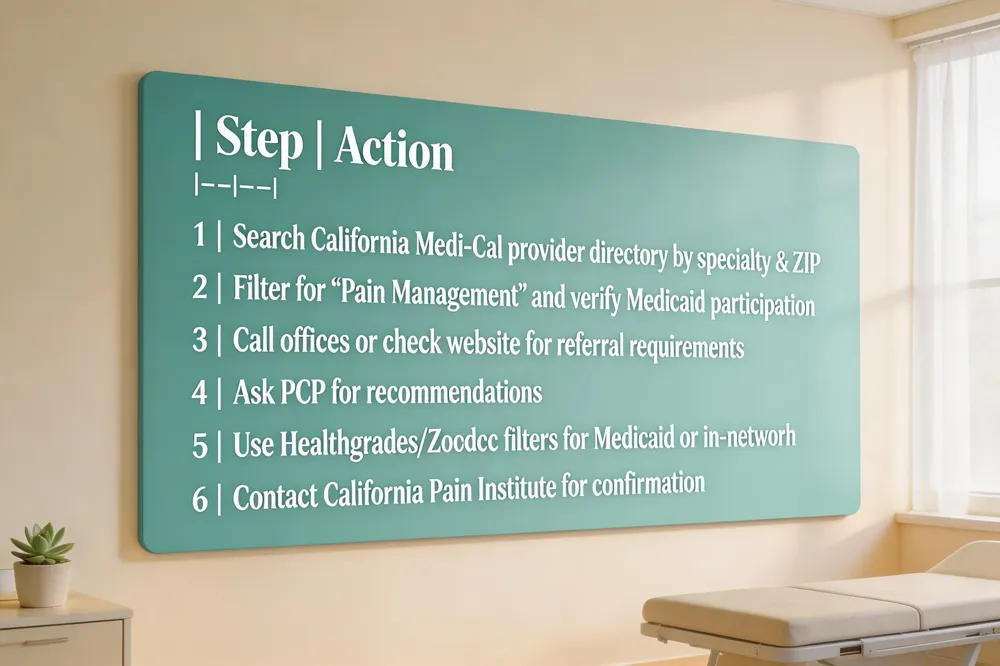 To locate pain‑management doctors that accept Medicaid near you, start by searching the California Medi‑Cal provider directory on your health‑plan’s website or the Medi‑Cal portal. Filter by specialty (pain management) and ZIP code to see in‑network clinics. Call the listed offices or visit their websites to verify current Medicaid participation and any referral requirements. Ask your primary‑care physician for a recommendation; many PCPs have trusted pain‑medicine specialists who accept Medicaid and can provide a quick referral. Online tools such as Healthgrades and Zocdoc also allow you to filter results by “Medicaid” or “in‑network,” making it easy to find providers in the Los Angeles area. Finally, when you contact the California Pain Institute, our staff will confirm our Medicaid participation and help schedule your appointment.
Building a Multimodal Pain Management Care Plan
| Pillar | Interventions |
|---|---|
| Psychological | CBT, guided imagery, relaxation, mindfulness |
| Physical | Positioning, heat/cold therapy, massage, PT exercises |
| Pharmacological | OTC analgesics, prescription meds, nerve blocks, topical agents |
| Eligibility Criteria | Pain interferes with daily life, persists > acute phase, prior therapy failure |
| Insurance Pre‑auth Docs | Functional impairment, prior therapy failure, detailed plan |
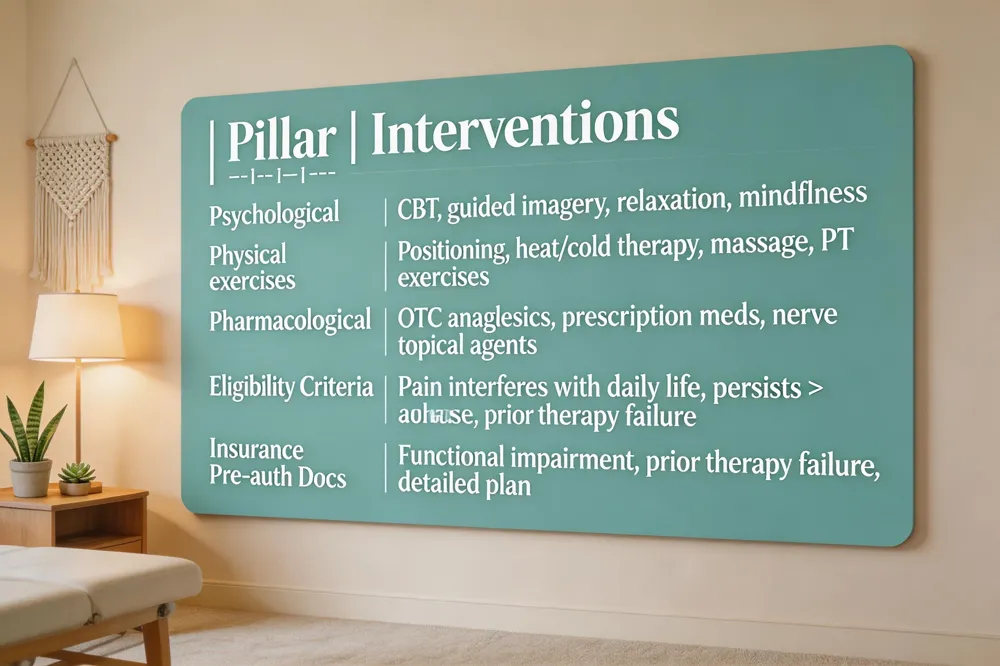 A multimodal pain‑management plan integrates three essential pillars—Psychological, Physical, and Pharmacological approaches to address chronic pain while minimizing medication side‑effects.
Psychological techniques such as cognitive‑behavioral therapy, guided imagery, relaxation, and distraction reshape the brain’s perception of pain and help patients cope with emotional distress. Physical modalities include optimal positioning, heat or cold therapy, massage, targeted physical‑therapy exercises, and other comfort measures that reduce tissue stress and improve function. Pharmacological therapy is tailored to the individual, ranging from over‑the‑counter analgesics to prescription opioids, nerve blocks, or topical agents, and follows evidence‑based guidelines to ensure medical necessity and avoid unnecessary dosing.
Typical care‑plan components therefore comprise prescribed medications, structured physiotherapy, massage or manual therapy, heat/cold applications, and relaxation or mindfulness practices.
Eligibility for a pain‑management program is determined when pain significantly interferes with daily activities, work, or quality of life, or persists beyond the acute phase despite conservative measures. Insurance verification—whether through Medicare, Medicaid, ACA‑mandated Essential Health Benefits—or private carriers—often requires documentation of functional impairment, prior‑therapy failure, and a detailed treatment plan before pre‑authorization is granted.
By meeting these criteria and embracing the 3 P’s, patients can achieve a balanced, effective strategy that targets both the physical and emotional dimensions of chronic pain.
Financial Assistance to Lower Out‑of‑Pocket Costs
| Assistance Type | Who Qualifies | Benefits |
|---|---|---|
| Medicare Extra Help | Low‑income seniors/disabled | Waives Part D premiums, deductibles, low co‑pays |
| State Programs (Medi‑Cal, PDDP) | Low‑income CA residents | Discounted drug prices |
| Non‑profit Foundations (PAN, HealthWell, Patient Advocate) | Qualifying patients | Grants, co‑pay assistance |
| Manufacturer Copay Cards / GoodRx / Blink Health | Anyone with prescription | Immediate cost reduction |
| HSAs / FSAs | Employees with eligible accounts | Pre‑tax dollars for meds/therapy |
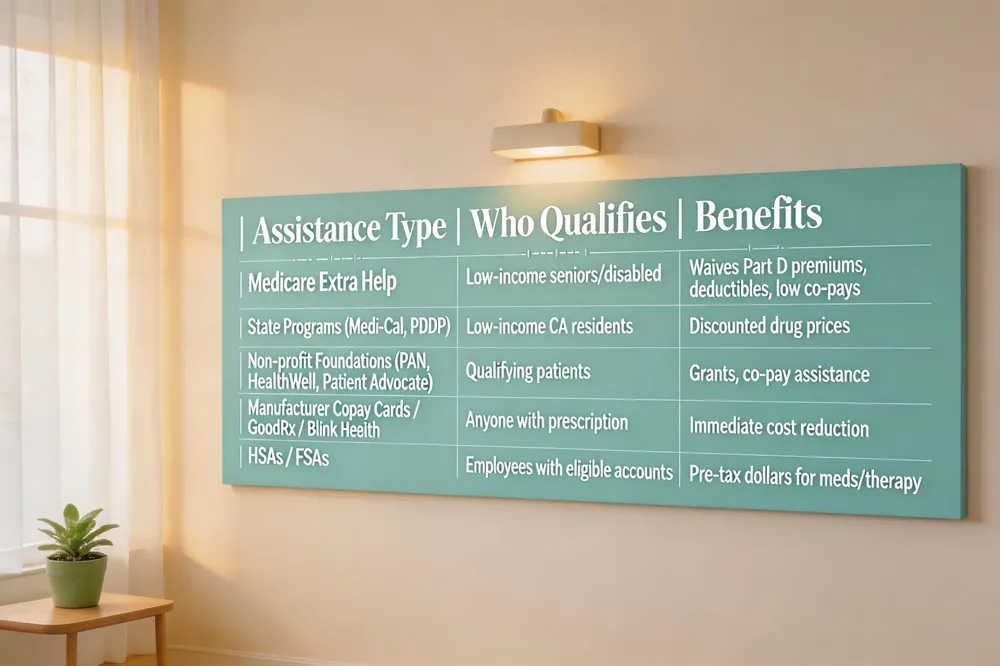 Many patients with chronic pain can reduce medication expenses through programs programs. Medicare’s Extra Help (Low‑Income Subsidy) eliminates or greatly lowers Part D premiums, deductibles, and co‑pays for eligible seniors and disabled adults, with an annual income limit of $23,940 for individuals in 2026. State drug‑assistance initiatives, such as California’s Medi‑Cal and the California Prescription Drug Discount Program, offer additional price reductions for low‑income residents. Non‑profit foundations—including the PAN Foundation, HealthWell Foundation, and Patient Advocate Foundation’s ‑Pay Relief—provide grants or co‑pay assistance for qualifying prescription drugs. Manufacturer copay cards and discount services like GoodRx and Blink Health further lower out‑of‑pocket costs. Finally, HSAs, FSAs, and employer‑sponsored health accounts allow patients to use pre‑tax dollars for pain‑related prescriptions and therapies, easing the financial burden.
Take Control of Your Pain‑Management Journey
Confirm insurance coverage before your first visit, noting pre‑authorizations, deductibles, and network status. Maintain a pain journal, medical records, bills, and correspondence for claim support. If costs rise, explore Medicare Extra Help, Medicaid, state drug‑discount programs, or nonprofit aid. Choose a pain‑management team that handles verification, authorizations, and coordinated care.