Why Specialized Pain Clinics Matter
Specialized pain clinics bring together physicians, physical therapists, psychologists, nurses, and interventionalists in a single, coordinated team. This multidisciplinary approach ensures that every facet of a patient’s pain—biological, functional, and emotional—is addressed simultaneously, which speeds recovery and reduces the need for multiple referrals. By housing advanced imaging (MRI, CT, ultrasound) and diagnostic nerve‑block capabilities on site, these centers can pinpoint the exact pain generator within days rather than weeks, allowing clinicians to launch targeted therapies promptly. Treatments are selected from evidence‑based guidelines and include minimally invasive procedures such as epidural steroid injections, radiofrequency ablation, spinal cord stimulation, and regenerative options like PRP. Because the team follows up on outcomes in real time, medication regimens, physical‑rehab plans, and behavioral interventions are adjusted quickly, minimizing trial‑and‑error and shortening the overall rehabilitation timeline. The result is faster pain relief, lower opioid reliance, and a quicker return to daily activities.
Multidisciplinary Teams Deliver Faster Functional Gains
 Board‑certified pain physicians lead a coordinated team that pairs high‑resolution imaging and interventional expertise with physical and occupational therapy to restore strength, range of motion, and functional independence. Psychological support—cognitive‑behavioral therapy , mindfulness , and coping‑skill training—addresses fear‑avoidance and depression, factors that otherwise prolong recovery.
Pain Management Van Nuys: The California Pain Institute serves Van Nuys residents with board‑certified physicians offering minimally invasive treatments (epidural/facet injections, radiofrequency ablation, spinal cord/nerve stimulators, PRP) plus physical therapy, acupuncture, and medication management for lasting relief.
Pain Management Torrance, CA: At 23550 Hawthorne Blvd, Suite 120, Torrance, a multidisciplinary team delivers epidural steroid injections, radiofrequency ablation, trigger‑point therapy, PRP, and spinal cord stimulation, coordinated with physical, occupational, and mental‑health therapists.
Pain Management Inglewood: The California Pain Institute provides personalized multimodal care—medication, nerve blocks, radiofrequency ablation, spinal cord stimulation—integrated with physical therapy, behavioral health, massage, and yoga to accelerate functional recovery.
Interventional Technologies Shorten the Healing Timeline
 Interventional therapies such as epidural steroid injections, radiofrequency ablation, and spinal cord stimulation quickly lower pain and restore function. Epidural steroid injections deliver anti‑inflammatory medication directly to the epidural space, often relieving radicular pain within days. Radiofrequency ablation uses heat to interrupt pain‑signal transmission from targeted nerves, providing months of relief and reducing opioid use. Spinal cord stimulation implants electrodes that modulate pain pathways, offering durable control for refractory cases and shortening rehabilitation.
UCLA Pain Management – Pain management UCLA: UCLA Health’s Comprehensive Pain Center in Santa Monica provides board‑certified specialists who integrate advanced imaging, medication, physical therapy, and the above interventional procedures to treat acute and chronic pain. UCLA pain management doctors include Dr. Hayley Osen, Dr. Najmeh Sadoughi, Dr. Jonathan Varghese, and Dr. Jerry Markar across multiple sites. UCLA pain management locations are in downtown Los Angeles, North Hollywood, Santa Monica, and Torrance, offering in‑person and video visits.
Evidence Shows Faster Functional Recovery
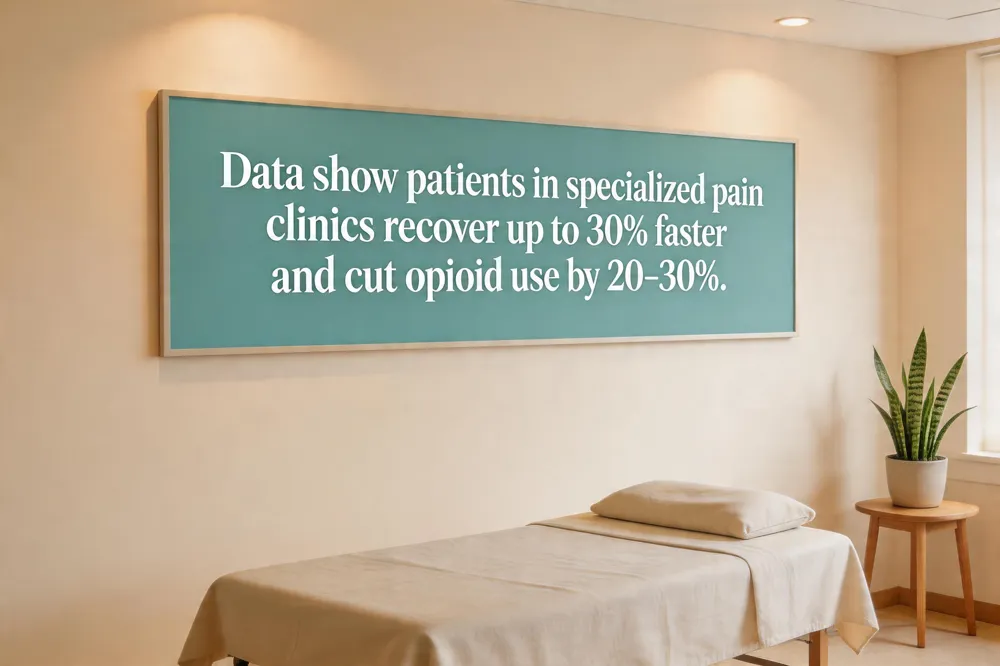 Clinical practice data from specialized pain clinics demonstrate that patients achieve functional improvement up to 30 % faster than those treated only by primary‑care physicians. Targeted interventional procedures—epidural steroid injections, radiofrequency ablation, spinal cord stimulation—provide rapid pain relief, allowing earlier mobilization and a quicker return to daily activities. Because these therapies focus on the pain source, opioid reliance drops by 20‑30 %, reducing side‑effects and opioid‑induced hyperalgesia. The combined effect is a measurable boost in quality‑of‑life scores within weeks of treatment.
Best pain management doctors in Los Angeles – Leading specialists include Dr. Hayley Osen (UCLA Downtown), Dr. Najmeh P. Sadoughi (Encino Specialty Care), Dr. Jonathan T. Varghese and Dr. Jerry Markar (UCLA Encino/North Hollywood), Dr. Laura G. Audell (Cedars‑Sinai), and Dr. Francis M. Ferrante and Dr. Eric S. Hsu (Santa Monica). These physicians head multidisciplinary teams that integrate interventional, physical, and behavioral therapies.
California Sports and Spine Institute – With sites in Arcadia, Glendale, and Palmdale, the institute offers non‑surgical, regenerative treatments such as Discseel®, PRP, and minimally invasive injections, supported by a team of pain‑medicine, sports‑medicine, and electro‑diagnostic specialists. Their evidence‑based, multidisciplinary approach accelerates recovery and restores active lifestyles.
Clinic‑Specific Programs That Cut Recovery Time
 Pain management Beverly Hills – In Beverly Hills, specialized clinics such as the California Pain Institute and Cedars‑Sinai Pain Management Center deliver multidisciplinary care for chronic back, neck, joint and neuropathic pain. Board‑certified physicians coordinate medication management, image‑guided injections, spinal cord stimulation and regenerative therapies, offering same‑day or urgent slots near Wilshire and Robertson.
Cedars‑Sinai Pain Management Doctors – The Cedars‑Sinai team includes Dr. Mary A. Vijjeswarapu (anesthesiology), Dr. Karl D. Wittnebel (internal medicine), Dr. Andrew M. Blumenfeld (neurology) and director Dr. Laura G. Audell. In Beverly Hills, Dr. Joseph C. Tu (physical‑medicine) also provides pain‑management services.
Pain management Cedars‑Sinai – The Los Angeles Pain Center (444 S. San Vicente Blvd) offers comprehensive evaluation and treatment for acute, chronic and cancer‑related pain, integrating physicians, anesthesiologists, neurologists, psychologists and PTs to create personalized, evidence‑based plans.
Regenerative options – Clinics employ platelet‑rich plasma, stem‑cell and other regenerative injections, which promote tissue healing, reduce inflammation and accelerate functional recovery, often allowing patients to resume activity within weeks rather than months.
Emerging Therapies and Telehealth Accelerate Access
 Ketamine infusions have emerged as a rapid‑acting option for treatment‑resistant chronic pain and mood disorders, offering relief within days and often reducing opioid dependence. Specialized centers such as Pacific Pain & Wellness Group, led by Dr. Kartik Ananth in Torrance, integrate ketamine therapy with epidural injections, nerve blocks and comprehensive psychotherapy, providing both in‑person and telehealth visits for flexible scheduling. Telemedicine follow‑up further shortens the care cycle: patients receive real‑time symptom monitoring, medication adjustments and behavioral coaching without travel delays, which research links to faster functional gains. Regenerative medicine—including platelet‑rich plasma and stem‑cell injections—accelerates tissue healing and minimizes downtime, and is a core offering at Pacific Pain Clinic across Santa Barbara, San Luis Opispo and Irvine. Their multidisciplinary teams combine advanced imaging, minimally invasive procedures and personalized education to restore mobility swiftly. Together, these innovations—ketamine, telehealth continuity, and regenerative therapies—compress treatment timelines and improve quality of life for chronic pain sufferers.
Patient‑Centric Care and Future Directions
 Self‑management education is now a cornerstone of multidisciplinary pain clinics. Programs teach patients the neurophysiology of chronic pain, coping strategies such as CBT and mindfulness, and practical tools like the RICE method, empowering them to take an active role in their recovery and reducing reliance on opioids. Digital tracking tools—mobile pain‑logging apps, tele‑health follow‑ups, and electronic outcome‑tracking platforms (PROMIS, VAS)—enable real‑time monitoring of symptom patterns and rapid treatment adjustments, which shortens the time to symptom control. Evidence from clinics such as the California Pain Institute and the Advanced Pain Medical Group shows that patients who engage with these technologies achieve functional milestones sooner and maintain them longer. Long‑term functional outcomes improve as coordinated care integrates physical therapy, regenerative medicine, and behavioral health, leading to sustained reductions in pain intensity, higher quality‑of‑life scores, and lower rates of disability years years after treatment.
Accelerating Recovery Through Specialized Pain Care
Specialized pain clinics bring together board‑certified physicians, physical therapists, psychologists, nurses and imaging specialists to create a coordinated care pathway. By evaluating the patient’s medical history, functional limitations and psychosocial factors in a single visit, the team can design a personalized program that blends medication management, graded exercise, cognitive‑behavioral therapy and lifestyle counseling. Targeted interventional therapies—such as image‑guided epidural steroid injections, facet joint blocks, radiofrequency ablation, spinal cord stimulation and minimally invasive lumbar decompression (MILD)—address the pain generator directly, often delivering relief within days rather than weeks. Clinical practice and systematic reviews consistently show that patients treated in these multidisciplinary settings achieve functional milestones 20‑30 % faster, report greater reductions in opioid use and return to daily activities sooner than those managed only by primary‑care providers. The synergy of rapid diagnosis, precise procedures and concurrent behavioral support shortens the recovery timeline.