Emerging Biologic Landscape
Recent advances in biologic therapy are reshaping peripheral neuropathy management.
NGF inhibition and monoclonal antibodies – Antibodies that block nerve‑growth factor (NGF), such as tanezumab and fulranumab, have shown significant pain‑score reductions in diabetic and chemotherapy‑induced neuropathy during Phase II/III trials. By interrupting NGF‑TrkA signaling, they dampen peripheral sensitization while preserving nerve survival. Safety monitoring focuses on joint health, as rapid osteoarthritis progression has been reported in some long‑term studies.
Cell‑based regenerative approaches – Mesenchymal stem cells (MSCs) and platelet‑rich plasma (PRP) deliver neurotrophic factors (NGF, BDNF, GDNF) and anti‑inflammatory cytokines that promote axonal regrowth. Autologous MSC injections have modestly lowered pain scores and improved nerve conduction in diabetic neuropathy; PRP provides concentrated growth‑factor bursts that support microvascular repair. Emerging exosome‑rich secretomes may offer a cell‑free alternative with similar regenerative signaling.
Gene‑editing and RNA‑based strategies – CRISPR‑Cas9 knock‑down of Nav1.7 and RNA‑interference silencing of SCN9A are in early clinical evaluation, targeting hyperexcitability at its genetic source. AAV‑delivered neurotrophic genes (e.g., BDNF, NT‑3) aim to restore sensory function, while miR‑146a mimics show anti‑inflammatory effects in diabetic mouse models. These molecular approaches hold promise for disease‑modifying outcomes but remain investigational pending safety and efficacy data.
Clinic Presence and Expert Providers Across Los Angeles County
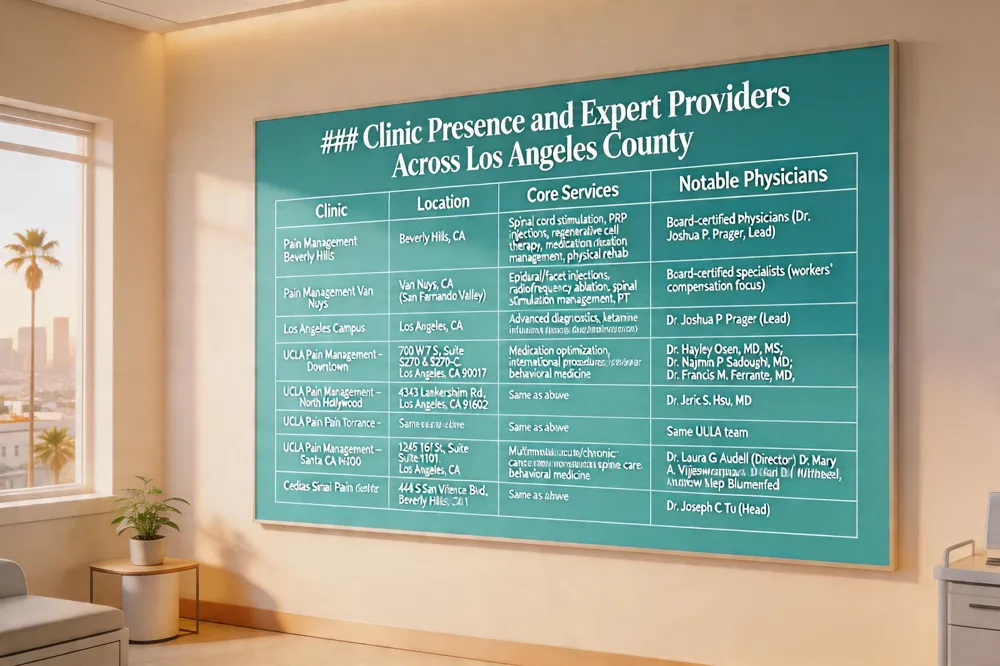
Clinic Presence and Expert Providers Across Los Angeles County
| Clinic | Location | Core Services | Notable Physicians |
|---|---|---|---|
| Pain Management Beverly Hills | Beverly Hills, CA | Spinal cord stimulation, PRP injections, regenerative cell therapy, medication management, physical rehab | Board‑certified physicians (team led by Dr. Joshua P. Prager) |
| Pain Management Van Nuys | Van Nuys, CA (San Fernando Valley) | Epidural/facet injections, radiofrequency ablation, spinal cord stimulation, medication management, PT | Board‑certified specialists (workers‑compensation focus) |
| Los Angeles Campus | Los Angeles, CA | Advanced diagnostics, ketamine infusions, neuromodulation, PRP, intrathecal pumps, psychotherapy, functional restoration | Dr. Joshua P. Prager (lead) |
| UCLA Pain Management – Downtown | 700 W 7 St., Suite S270‑D & S270‑C, Los Angeles, CA 90017 | Medication optimization, interventional procedures, behavioral medicine | Dr. Hayley Osen, MD, MS; Dr. Najmeh P. Sadoughi, MD; Dr. Jerry Markar, MD; Dr. Francis M. Ferrante, MD; Dr. Eric S. Hsu, MD |
| UCLA Pain Management – North Hollywood | 4343 Lankershim Rd., Suite 200, Los Angeles, CA 91602 | Same as above | Same UCLA team |
| UCLA Pain Management – Torrance | 3500 Lomita Blvd., Suite M100, Torrance, CA 90505 | Same as above | Same UCLA team |
| UCLA Pain Management – Santa Monica | 1245 16th St., Suite 225, Santa Monica, CA 90404 | Same as above | Same UCLA team |
| Cedars‑Sinai Pain Center | 444 S San Vicente Blvd., Suite 1101, Los Angeles, CA | Multimodal acute/chronic/cancer pain, nonsurgical spine care, behavioral medicine, dental sleep medicine | Dr. Laura G. Audell (Director); Dr. Mary A. Vijjeswarapu; Dr. Karl D. Wittnebel; Dr. Andrew M. Blumenfeld |
| Cedars‑Sinai Beverly Hills Satellite | 444 S San Vicente Blvd., Mark Goodson Building, Suite 1101, Beverly Hills, CA | Same as main center | Dr. Joseph C. Tu (head) |
 Pain Management Beverly Hills
California Pain Institute delivers comprehensive pain‑care services in Beverly Hills, offering personalized plans for chronic back, neck, joint, and neuropathic pain. Board‑certified physicians employ advanced interventional techniques—spinal cord stimulation, platelet‑rich plasma (PRP) injections, and regenerative cell therapy—alongside medication management and physical rehabilitation. A multidisciplinary team ensures accurate diagnosis, minimally invasive procedures, and ongoing support to improve function and quality of life. New patients from across Los Angeles County are welcome; the clinic provides convenient scheduling, on‑site parking, and a modern, welcoming environment.
Pain Management Beverly Hills
California Pain Institute delivers comprehensive pain‑care services in Beverly Hills, offering personalized plans for chronic back, neck, joint, and neuropathic pain. Board‑certified physicians employ advanced interventional techniques—spinal cord stimulation, platelet‑rich plasma (PRP) injections, and regenerative cell therapy—alongside medication management and physical rehabilitation. A multidisciplinary team ensures accurate diagnosis, minimally invasive procedures, and ongoing support to improve function and quality of life. New patients from across Los Angeles County are welcome; the clinic provides convenient scheduling, on‑site parking, and a modern, welcoming environment.
Pain Management Van Nuys In Van Nuys, California Pain Institute’s board‑certified specialists diagnose and treat chronic pain conditions, including back, neck, joint, and neuropathic pain. The multidisciplinary team utilizes minimally invasive procedures such as epidural and facet injections, radiofrequency ablation, and spinal cord stimulation, combined with medication management and physical therapy. Treatment plans are tailored to each individual, emphasizing immediate pain control and long‑term quality of life. The clinic serves San Fernando Valley residents, assists with workers‑compensation cases, and offers flexible scheduling and online booking.
Pain Management Doctor Los Angeles The Los Angeles campus of California Pain Institute is led by Dr. Joshua P. Prager, a board‑certified pain‑medicine physician. Dr. Prager’s team employs advanced diagnostics, medication optimization, injections, ketamine infusions, spinal cord stimulation, and other neuromodulation techniques to create personalized plans. Emotional and functional impacts of pain are addressed through psychotherapy and functional restoration programs. Services include PRP injections, intrathecal pumps, and pain‑rehabilitation, all available locally.
Best Pain Management Doctors in Los Angeles Top‑rated specialists include Dr. Laura G. Audell (Director of Comprehensive Pain Services at Cedars‑Sinai), Dr. Hayley Osen, MD, MS (UCLA Downtown), Dr. Najmeh P. Sadoughi, MD (UCLA Encino), Dr. Jerry Markar, MD, Dr. Francis M. Ferrante, MD, and Dr. Eric S. Hsu, MD (UCLA Santa Monica). These physicians are recognized for minimally invasive, evidence‑based techniques and coordinated behavioral‑medicine support.
UCLA Pain Management Locations UCLA Health operates Pain Management clinics at:
- Downtown Los Angeles – 700 W 7 St., Suites S270‑D & S270‑C (CA 90017).
- North Hollywood – 4343 Lankershim Rd., Suite 200 (CA 91602).
- Torrance (South Bay) – 3500 Lomita Blvd., Suite M100 (CA 90505).
- Santa Monica – 1245 16th St., Suite 225 (CA 90404). All sites accept in‑person appointments and provide scheduling assistance.
UCLA Pain Management Doctors UCLA’s pain team includes Dr. Hayley Osen, MD, MS; Dr. Najmeh P. Sadoughi, MD; Dr. Jonathan T. Varghese, MD; Dr. Jerry Markar, MD; Dr. Francis M. Ferrante, MD; Dr. Eric S. Hsu, MD; Dr. Jakun W. Ing, MD; Dr. Andrea Poon, MD; and Dr. Irene I. Wu, MD. They provide comprehensive diagnostics, medication management, and advanced interventional procedures.
Cedars‑Sinai Pain Management Doctors Cedars‑Sinai’s Pain Center is led by Dr. Laura G. Audell, MD, with physicians such as Dr. Mary A. Vijjeswarapu, MD; Dr. Karl D. Wittnebel, MD; and Dr. Andrew M. Blumenfeld, MD. In Beverly Hills, Dr. Joseph C. Tu, MD heads the pain‑medicine team. The program offers multimodal care for acute, chronic, and cancer‑related pain.
Pain Management Cedars‑Sinai Cedars‑Sinai operates a comprehensive Pain Management program at its Los Angeles center (444 S San Vicente Blvd., Mark Goodson Building, Suite 1101) and a Beverly Hills satellite. Services include chronic & acute pain management, nonsurgical spine care, behavioral medicine, and dental sleep medicine. Patients can schedule appointments by calling 310‑423‑9600 (Los Angeles) or 310‑385‑3530 (Beverly Hills).
Regenerative Medicine and Advanced Biologic Therapies for Neuropathy
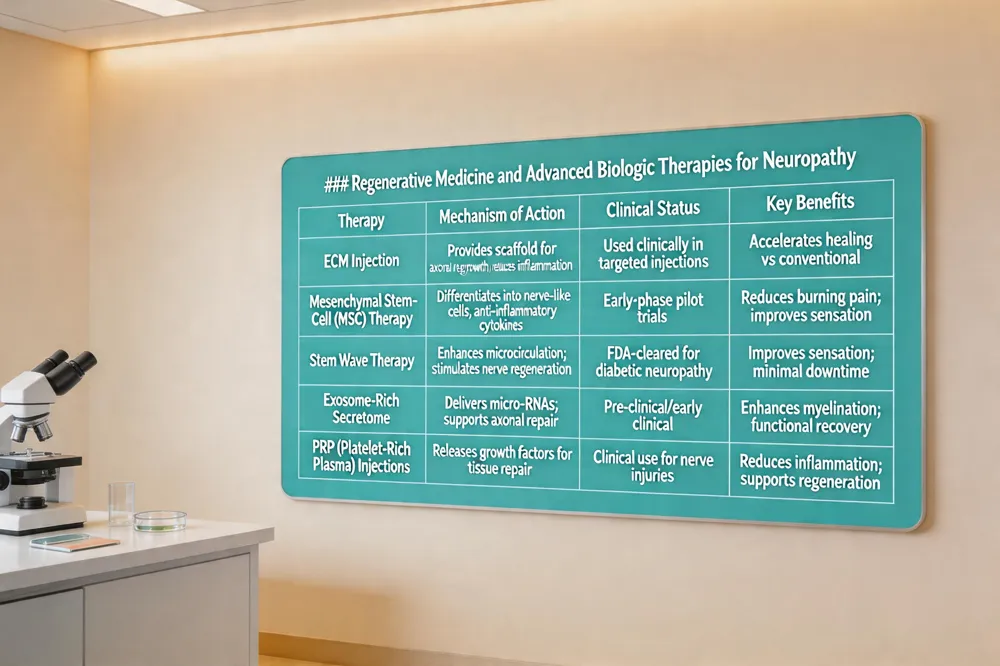
Regenerative Medicine and Advanced Biologic Therapies for Neuropathy
| Therapy | Mechanism of Action | Clinical Status | Key Benefits |
|---|---|---|---|
| ECM Injection | Provides scaffold for axonal regrowth; reduces inflammation; can be enriched with growth factors | Used clinically in targeted, time‑sensitive injections | Accelerates healing compared to conventional injections |
| Mesenchymal Stem‑Cell (MSC) Therapy | Differentiates into nerve‑like cells; secretes anti‑inflammatory cytokines; promotes regeneration of small‑fiber nerves | Early‑phase pilot trials (experimental) | Reduces burning pain; improves sensory testing |
| Stem Wave Therapy (Low‑frequency acoustic wave) | Enhances microcirculation; stimulates cellular regeneration in peripheral nerves | FDA‑cleared for diabetic neuropathy | Improves sensation; minimal downtime |
| Exosome‑Rich Secretome | Delivers micro‑RNAs and proteins that modulate inflammation and support axonal repair | Pre‑clinical/early clinical studies | Enhances myelination; functional recovery |
| PRP (Platelet‑Rich Plasma) Injections | Concentrated platelets release growth factors that aid tissue repair | Clinical use for musculoskeletal and nerve injuries | Reduces inflammation; supports regeneration |
 Peripheral neuropathy has long been treated only with symptom‑relieving drugs, leaving the underlying nerve damage untouched. Regenerative medicine now offers biologically based options that aim to repair damaged fibers, reduce inflammation, and restore function.
ECM injection for neuropathy – Extracellular‑matrix (ECM) injections deliver a biologically derived scaffold directly to the injury site. The matrix guides axonal regrowth, dampens inflammation, and can be enriched with growth‑factor proteins. In clinical practice ECM is administered in a time‑sensitive, targeted manner to accelerate healing compared with conventional injections alone.
Stem‑cell therapy for small‑fiber neuropathy – Mesenchymal stem cells (MSCs) can differentiate into nerve‑like cells and secrete anti‑inflammatory cytokines that promote regeneration of small sensory and autonomic fibers. Early‑phase studies report reductions in burning pain and improvements in sensory testing, though optimal cell source, dose, and delivery remain under investigation.
Does stem cell work for neuropathy? – Small pilot trials and animal models show pain‑score reductions and improved nerve conduction after MSC infusion, but long‑term safety data are limited. At present stem‑cell treatment is experimental, not yet standard of care.
Stem Wave Therapy for neuropathy – This non‑invasive, low‑frequency acoustic wave treatment enhances blood flow and cellular regeneration in peripheral nerves. FDA‑cleared for diabetic neuropathy, it reduces inflammation and improves sensation with minimal downtime.
Exosomes for neuropathy – Exosome‑rich secretomes carry protective micro‑RNAs and proteins that modulate inflammation and support axonal repair. Pre‑clinical data show enhanced myelination and functional recovery, while clinical translation is still emerging.
Regenerative medicine for peripheral neuropathy – Combining MSCs, exosomes, ECM scaffolds, and stem‑wave therapy offers a multimodal strategy to stimulate nerve regeneration. At the California Pain Institute these biologic approaches are integrated with conventional pain management, lifestyle counseling, and physical therapy to maximize functional outcomes.
Can biologics help neuropathy? – Yes. Targeted biologic injections, cell‑derived secretomes, and stem‑cell‑based therapies can address the root cause of nerve injury, providing significant pain relief and functional improvement for many patients. A personalized evaluation is essential to determine suitability.
Pharmacologic Foundations and Adjunct Therapies
Pharmacologic Foundations and Adjunct Therapies
| Medication Class | Example Drugs | Mechanism | Typical Use |
|---|---|---|---|
| Anti‑seizure (Gabapentinoids) | Gabapentin, Pregabalin | Dampens hyper‑excitable neuronal firing | First‑line for neuropathic pain |
| Antidepressants (SNRIs & TCAs) | Duloxetine, Venlafaxine, Amitriptyline, Nortriptyline | Increases norepinephrine & serotonin in pain pathways | First‑line or adjunct for neuropathic pain |
| NSAIDs / Acetaminophen | Ibuprofen, Naproxen, Acetaminophen | Reduces inflammation (NSAIDs) / analgesic (acetaminophen) | Adjunct for mild discomfort; limited efficacy for neuropathic pain |
| Topical Analgesics | Lidocaine patches/cream, 8% Capsaicin patch | Local sodium channel blockade or TRPV1 desensitization | Focal foot/leg pain relief |
| Disease‑Targeted Therapies | Vitamin B12 supplementation, Tight glucose control | Addresses underlying metabolic cause | Essential when specific etiology identified |
| Neuromodulation | Peripheral Nerve Stimulation, Spinal Cord Stimulation | Electrical impulses inhibit nociceptive transmission | Refractory pain after medication failure |
| Biologic Adjuncts | Tanezumab (NGF inhibitor), Tocilizumab (IL‑6R antagonist) | Neutralizes nerve‑growth factor or blocks IL‑6 signaling | Emerging treatments for diabetic/chemotherapy‑induced neuropathy |
 Neuropathy medication
Medication for neuropathy focuses on relieving nerve‑related pain while addressing any underlying disease. First‑line oral agents are anti‑seizure drugs—gabapentin and pregabalin—that dampen hyper‑excitable neuronal firing, and antidepressants such as duloxetine, venlafaxine, or tricyclics (amitriptyline, nortriptyline) that increase norepinephrine and serotonin availability in pain pathways. Over‑the‑counter NSAIDs or acetaminophen provide little benefit for neuropathic pain and are used only as adjuncts for mild discomfort. When a specific cause is identified (e.g., diabetes, vitamin B12 deficiency), disease‑targeted therapy (tight glucose control, vitamin repletion) is essential for optimal outcomes.
Treatment for neuropathy in legs and feet
Management begins with a thorough evaluation for diabetes, metabolic disorders, or toxic exposures. Symptom‑focused pharmacotherapy follows the same first‑line regimen described above. Topical lidocaine patches or 5% lidocaine cream can be applied directly to painful areas of the lower extremities, offering localized relief with minimal systemic side effects. Non‑pharmacologic measures—regular aerobic exercise, balance‑training, and meticulous foot care—help preserve nerve function and reduce fall risk. For refractory pain, specialized centers may offer peripheral nerve stimulation or spinal cord stimulation, which deliver patterned electrical impulses to inhibit nociceptive transmission.
Treatment for neuropathy in feet
Foot‑specific therapy mirrors the broader approach: oral gabapentinoids, duloxetine, or tricyclic antidepressants, combined with topical lidocaine or 8% capsaicin patches for focal pain. Physical therapy emphasizes gait training, strengthening, and footwear optimization to protect vulnerable skin. Advanced neuromodulation (peripheral nerve or spinal cord stimulation) is increasingly available at multidisciplinary pain clinics for patients who fail conventional medication.
New treatments for neuropathy in feet
Emerging biologic and regenerative options are expanding the therapeutic armamentarium. Monoclonal antibodies that neutralize nerve‑growth factor (tanezumab) have shown significant pain reduction in diabetic neuropathy trials, while anti‑IL‑6 receptor agents (tocilizumab) target neuroinflammation. Stem‑cell‑derived exosome therapies and autologous platelet‑rich plasma (PRP) injections aim to promote nerve regeneration and modulate inflammation, with early pilot studies reporting modest pain relief. High‑concentration capsaicin patches (8%) provide a clinic‑based, non‑systemic method of desensitizing TRPV1 receptors. Combining these novel biologics with lifestyle optimization—exercise, smoking cessation, balanced nutrition—offers a comprehensive, patient‑centered strategy for foot‑related neuropathic pain.
Expanding Biologic Arsenal Beyond NGF Inhibition
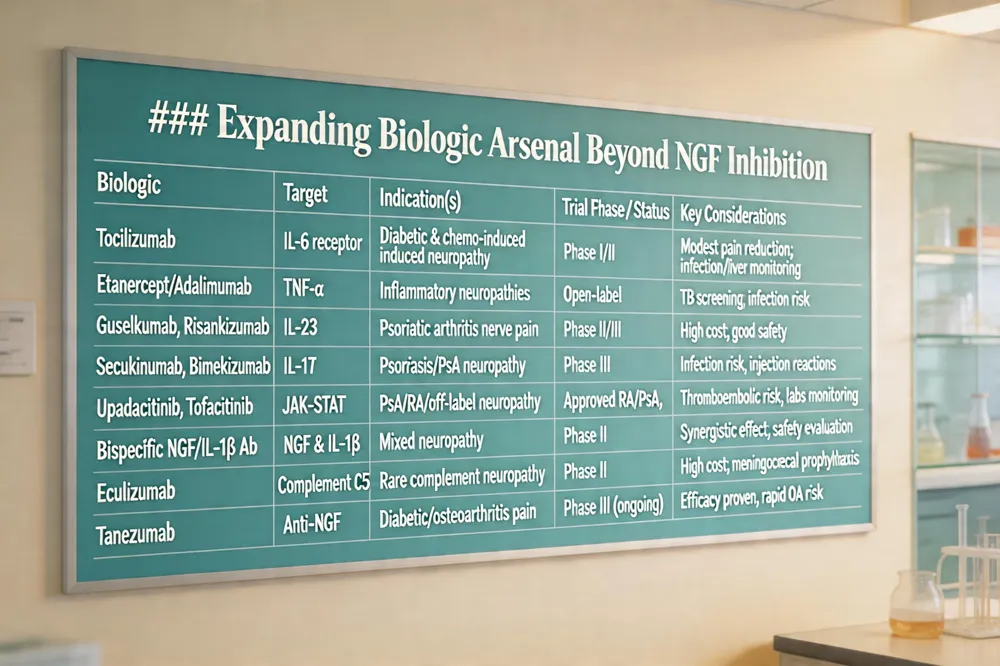
Expanding Biologic Arsenal Beyond NGF Inhibition
| Biologic | Target | Indication(s) | Trial Phase / Status | Key Considerations |
|---|---|---|---|---|
| Tocilizumab | IL‑6 receptor | Diabetic & chemotherapy‑induced neuropathy | Early‑phase (Phase I/II) trials | Modest pain reduction; infection & liver‑enzyme monitoring |
| Etanercept / Adalimumab | TNF‑α | Inflammatory‑mediated neuropathies (e.g., autoimmune) | Open‑label studies | TB screening required; infection risk |
| Guselkumab, Risankizumab (IL‑23 inhibitors) | IL‑23 | Psoriatic arthritis with nerve pain component | Phase II/III for psoriasis; repurposed studies | High cost; good safety profile |
| Secukinumab, Bimekizumab (IL‑17 inhibitors) | IL‑17 | Psoriasis & PsA with neuropathic pain | Phase III for skin disease; exploratory neuropathy trials | Infection risk; injection site reactions |
| Upadacitinib, Tofacitinib (JAK inhibitors) | JAK‑STAT pathway | PsA, rheumatoid arthritis, off‑label neuropathy | Approved for RA/PsA; early neuropathy data | Thromboembolic risk; labs monitoring |
| Bispecific NGF/IL‑1β Antibody | NGF & IL‑1β | Mixed nociceptive & inflammatory neuropathy | Phase II | Potential synergistic effect; safety still under evaluation |
| Eculizumab (C5 inhibitor) | Complement C5 | Rare complement‑mediated neuropathies | Phase II | High cost; meningococcal infection prophylaxis required |
| Tanezumab (Anti‑NGF) | NGF | Diabetic neuropathy, osteoarthritis pain | Phase III (ongoing) | Efficacy proven; risk of rapid‑progressive OA; infection screening |
 Beyond nerve‑growth‑factor (NGF) blockers, a growing suite of biologics is reshaping peripheral‑neuropathy care. Anti‑IL‑6 agents such as tocilizumab have entered early‑phase trials for diabetic and chemotherapy‑induced neuropathy, leveraging the cytokine’s role in neuroinflammation; results so far show modest pain reduction with a safety profile that mirrors rheumatoid‑arthritis use—monitoring for infections and liver‑enzyme changes is essential. Similarly, anti‑TNF‑α antibodies (etanercept, adalimumab) are being repurposed for inflammatory‑mediated neuropathies, offering relief in small open‑label studies while demanding vigilance for latent tuberculosis and opportunistic infections.
In psoriatic arthritis (PsA) and psoriasis, the biologic landscape now includes IL‑23/IL‑17 inhibitors (guselkumab, risankizumab, secukinumab, bimekizumab) and oral JAK inhibitors (upadacitinib, tofacitinib). These agents target downstream pathways that also modulate peripheral‑nerve sensitization, making them attractive for patients with overlapping skin and nerve pain. bispecific antibodies that simultaneously block NGF and IL‑1β and as well as complement‑C5 inhibitors like eculizumab are entering Phase II trials to address both nociceptive and immune‑driven mechanisms.
Clinical‑trial activity is robust: over 1,000 neuropathy studies worldwide include dozens of biologic arms, with safety data highlighting infection risk, transient joint pain (especially with anti‑NGF antibodies), and rare rapid‑progressive osteoarthritis. Regulatory agencies now require baseline screening for hepatitis, TB, and cardiac status before initiation. For patients with psoriatic arthritis, the most effective biologics often combine IL‑23 blockade (risankizumab, guselkumab) with low‑infection risk profiles, while TNF‑α inhibitors remain first‑line for many due to long‑term safety data and broader insurance coverage. Rheumatoid‑arthritis treatment lists similarly feature TNF‑α blockers, IL‑6 antagonists, abatacept, and rituximab, administered subcutaneously or intravenously based on disease severity.
Cost considerations are significant: annual wholesale prices for psoriasis biologics range from $20,000–$30,000, with out‑of‑pocket expenses mitigated by insurance, copay‑card programs, and biosimilars. Shared decision‑making—balancing efficacy, safety, and financial impact—remains the cornerstone of personalized neuropathy management.
Future Directions and Patient Empowerment
Rapidly expanding clinical trials are testing disease‑modifying biologics—anti‑NGF antibodies, IL‑6 blockers, stem‑cell‑derived exosomes, and gene‑therapy vectors—while also evaluating personalized biomarkers that predict response. This precision‑medicine approach enables clinicians to match a patient’s underlying etiology (diabetic, chemotherapy‑induced, immune‑mediated) with the most promising biologic or regenerative therapy. Simultaneously, leading pain centers in Los Angeles are weaving these agents into multidisciplinary programs that include physical therapy, nutrition counseling, neuromodulation, and psychosocial support. By actively involving patients in treatment decisions, monitoring outcomes, and offering education on lifestyle measures, clinicians empower individuals to achieve better pain control and functional recovery.