Introduction: Why Sciatica Myths Matter
Sciatica is not a disease but a symptom of irritation, compression, or inflammation of the sciatic nerve that runs from the lower back through the buttocks and down the leg. About 40 % of Americans will experience a sciatica episode, most often after age 20, and the pain can be severe enough to limit work, sleep, and daily activities. When patients rely on myths—such as “rest cures sciatica” or “it always requires surgery”—they may delay effective care, use unnecessary imaging, or pursue invasive procedures prematurely. Accurate, evidence‑based information helps patients and clinicians choose appropriate conservative therapies (NSAIDs, physical therapy, nerve‑gliding exercises, epidural injections) and recognize red‑flag signs that demand urgent evaluation, ultimately improving outcomes and reducing chronic disability.
What Is Sciatica? Anatomy, Causes, and Symptoms
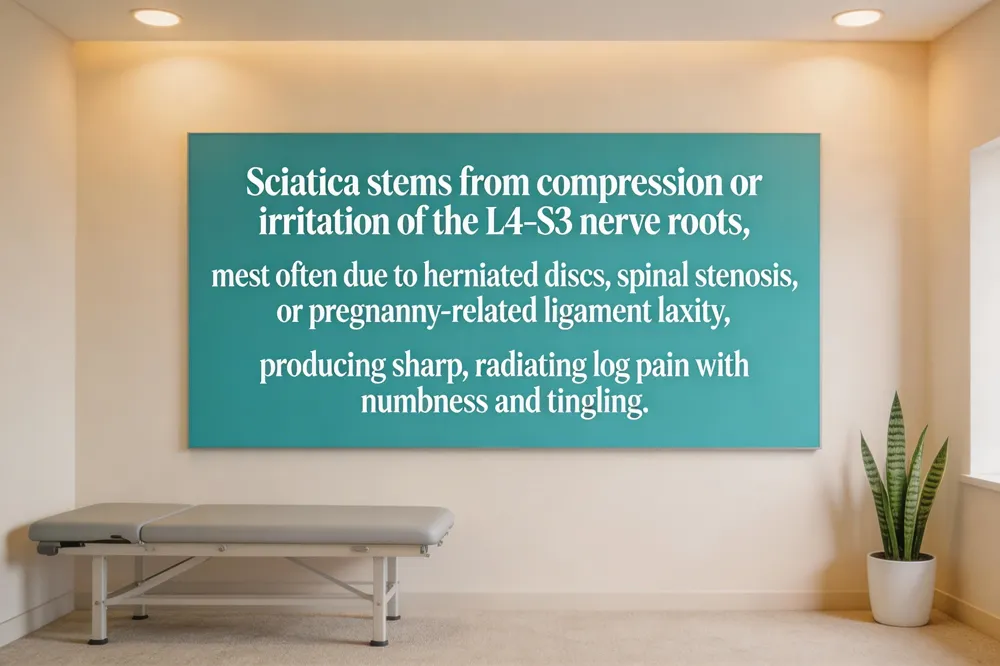 The sciatic nerve is the body’s largest peripheral nerve, originating from the lumbar and sacral spinal nerves (L4‑S3) in the lower back, passing through the pelvis and buttocks, and traveling down the back of each thigh to the foot. Most episodes of true sciatica arise when something compresses or irritates the nerve roots at their spinal origin. The most common culprits are herniated or bulging lumbar discs, which press on the L5‑S1 or L4‑L5 roots; degenerative changes such as spinal stenosis, spondylolisthesis, and osteoarthritis that narrow the spinal canal or foramina; and pregnancy‑related ligament laxity and shifted center of gravity that add stress to the lumbar spine.
Patients typically describe a sharp, burning, or electric‑shock pain that starts in the lower back or buttock and radiates down the back of the thigh, often reaching the calf and foot. Numbness, tingling (pins‑and‑needles), and occasional weakness of the leg or foot accompany the pain, especially when the nerve root is inflamed. The pain is usually unilateral, following the precise dermatome of the sciatic nerve.
It is important to distinguish true sciatica from “sciatica‑like” conditions. True sciatica requires a spinal origin that directly impacts the sciatic nerve roots, whereas similar leg pain can arise from peripheral nerves (e.g., femoral or lateral femoral cutaneous), piriformis muscle irritation, or hip joint pathology. Clinical clues such as a positive straight‑leg raise test, a clear pain pattern along the posterior thigh, and red‑flag signs (marked weakness, loss of bowel or bladder control) help identify genuine sciatic nerve involvement. When the presentation deviates from this classic pattern, further evaluation is needed to rule out alternate sources of leg pain.
Common Myths About Sciatica Debunked
 Myth 1: A slipped disc is the only cause of sciatica. While a herniated lumbar disc accounts for many cases, sciatica can also arise from spinal stenosis, spondylolisthesis, arthritis‑related bone spurs, piriformis syndrome, pregnancy-related ligament laxity, and even tumors or infections. Myth 2: Prolonged sitting always causes sciatica. Long periods of sitting may aggravate existing nerve compression, but it does not create the compression itself. Underlying spinal pathology, such as disc degeneration or stenosis, is the true trigger. Myth 3: Rest is the best treatment. Evidence shows that brief rest may ease acute pain, but prolonged bed rest worsens stiffness and delays recovery. Gentle movement, low‑impact aerobic activity, and targeted stretching promote circulation and reduce inflammation. Myth 4: Only older adults get sciatica. Age‑related wear and tear is a major risk factor, yet younger individuals can develop sciatica from disc herniation, sports injuries, heavy lifting, or congenital abnormalities. Myth 5: Surgery is always required. Most episodes resolve within 2–6 weeks with conservative care—NSAIDs, muscle relaxants, gabapentin, physical therapy, core‑strengthening, and epidural steroid injections. Surgery is reserved for patients with severe, progressive neurological deficits or those who fail non‑operative treatment after 6–12 weeks.
Conservative Management and Treatment Options
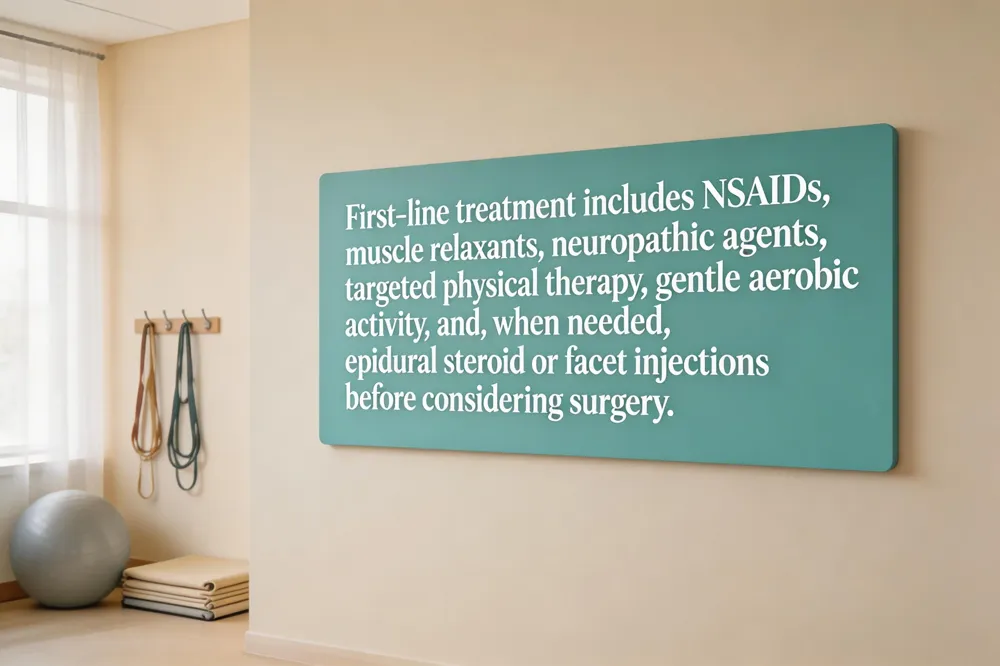 Over‑the‑counter NSAIDs reduce inflammation, while muscle relaxants ease spasm; for neuropathic features, gabapentin or duloxetine can blunt abnormal nerve signaling, and topical lidocaine offers localized relief without systemic side effects.
Physical‑therapy programs focus on core stabilization, hamstring flexibility, and nerve‑gliding techniques that alleviate pressure on the sciatic root and improve gait mechanics.
Early, gentle movement—such as short walks, stationary‑bike sessions, or water‑based aerobic activity—prevents stiffness and promotes circulation, shortening the typical 2‑6‑week recovery window.
When pain persists despite these measures, targeted epidural steroid injections or facet‑joint injections can dampen perineural inflammation and provide short‑term functional gains.
For chronic, refractory cases, a multidisciplinary approach—combining interventional pain procedures, regenerative options (e.g., PRP or stem‑cell‑guided injections), structured exercise, weight‑management counseling, and cognitive‑behavioral strategies—offers comprehensive symptom control and reduces the likelihood of surgery.
This step‑wise, evidence‑based pathway empowers patients to regain function while minimizing unnecessary imaging or invasive interventions.
Red‑Flag Symptoms and When to Seek Immediate Care
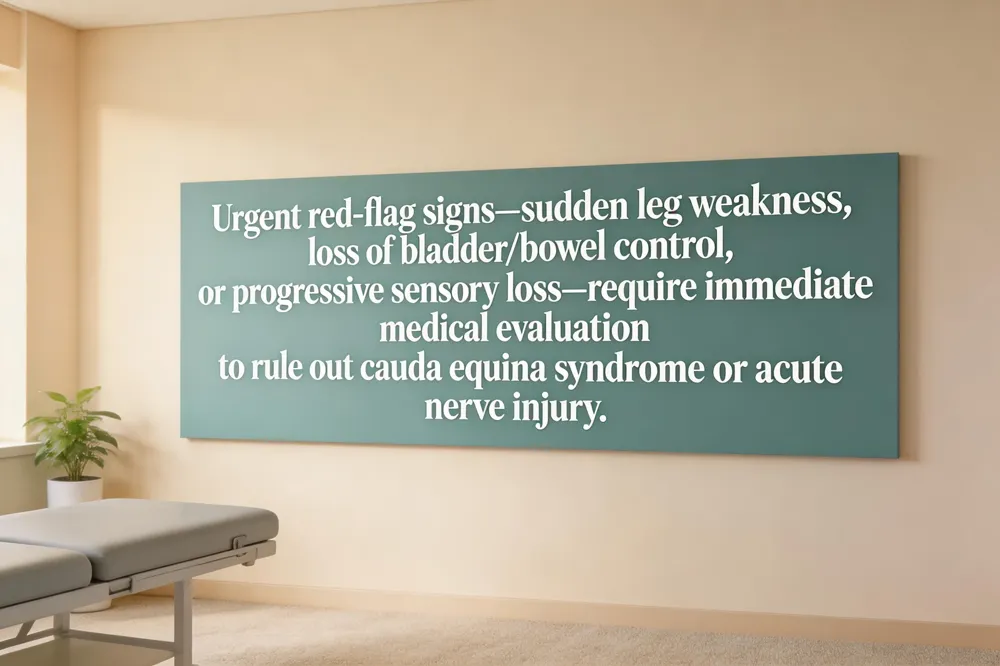 Red‑flag signs signal that sciatica may be caused by serious nerve compression and require urgent medical evaluation. Sudden numbness, weakness in the leg, or loss of bladder or bowel control are classic warning signs; they can indicate cauda equina syndrome—a spinal emergency that needs immediate treatment to prevent permanent damage. Progressive neurological deficits—worsening sensation loss, increasing muscle weakness, or loss of reflexes—also demand prompt assessment, especially if they develop despite conservative care. A sharp, severe pain that follows a traumatic event (e.g., a fall or car accident) may reflect acute nerve injury and should be evaluated without delay. If any of these symptoms appear, patients should seek emergency care or contact a spine specialist right away, as early intervention improves outcomes and reduces the risk of chronic disability.
Imaging, Diagnosis, and the Role of MRI
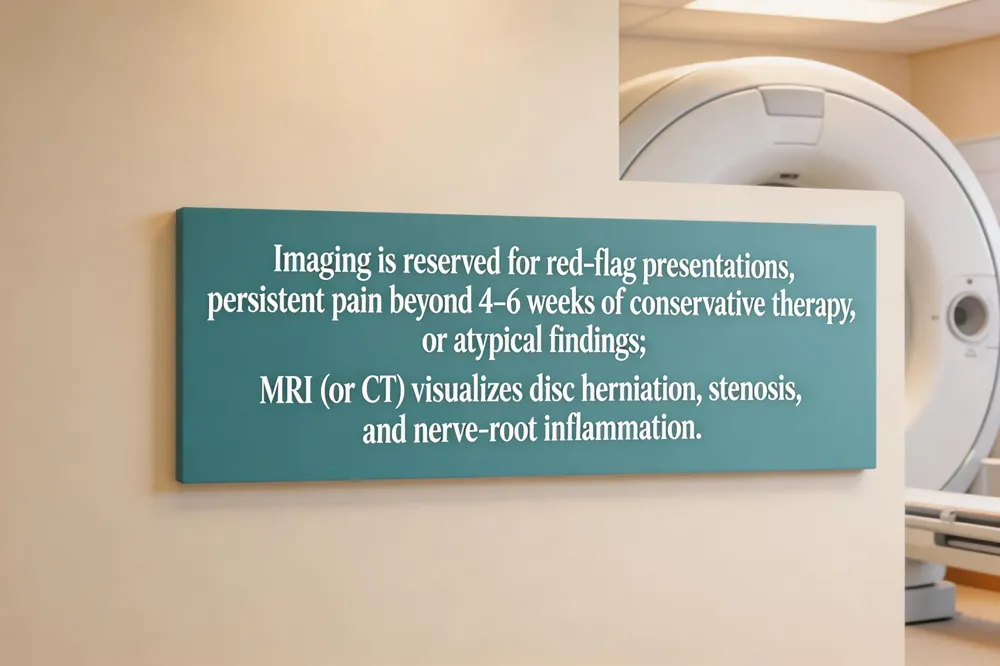 A careful clinical evaluation—starting with a detailed history and the straight‑leg raise test—remains the cornerstone of sciatica diagnosis. Imaging is reserved for specific scenarios: red‑flag symptoms (e.g., sudden weakness, bowel or bladder dysfunction), pain that worsens despite 4–6 weeks of evidence care, or when the clinical picture is atypical. In many cases, a plain X‑ray can reveal degenerative changes, alignment issues, or fractures and may be sufficient for initial planning. MRI (or CT when MRI is contraindicated) is reserved for patients who meet the imaging criteria, as it visualizes disc herniation, spinal stenosis, and nerve root inflammation. Limiting MRI to these indications helps reduce unnecessary health‑care costs, minimizes patient anxiety, and avoids incidental findings that can distract from effective treatment.
Leading Pain Management Specialists in Los Angeles
 Top physicians and clinics for sciatica and chronic pain
Los Angeles offers a concentration of board‑certified pain specialists. Notable names include Los Angeles pain specialists include Dr. Hayley Osen, Dr. Najmeh P. Sadoughi, Dr. Jerry Markar, Dr. Francis M. Ferrante, and Dr. Laura G. Audell—all affiliated with UCLA Health or Cedars‑Sinai. California Pain Clinic, Mobin Neurosurgery, and the Beverly Hills Institute for Pain Management also provide expert care.
Multidisciplinary, evidence‑based approaches
These teams blend interventional procedures (epidural steroid injections, facet blocks, spinal cord stimulation) with medication management, physical therapy, and behavioral medicine. UCLA’s Comprehensive Pain Center emphasizes whole‑person care, while Cedars‑Sinai’s Pain Center integrates anesthesiologists, neurologists, psychologists, and surgeons under Dr. Audell’s leadership.
Access to interventional procedures and behavioral medicine
Patients can receive image‑guided nerve blocks, minimally invasive disc decompression, and emerging therapies such as PRP or ketamine infusions at facilities like California Pain Clinic and Cedars‑Sinai. Behavioral services—including CBT, pain coping,, and sleep medicine—are routinely offered to address the psychosocial aspects of chronic pain.
Answers to common patient questions
- Best pain management doctors in Los Angeles: Los Angeles pain specialists include Dr. Hayley Osen, Dr. Najmeh P. Sadoughi, Dr. Jerry Markar, Dr. Francis M. Ferrante, and Dr. Laura G. Audell lead multidisciplinary teams with rapid access to interventional and opioid‑sparing treatments.
- Cedars‑Sinai Pain Management doctors: Dr. Mary A. Vijjeswarapu, Dr. Karl D. Wittnebel, Dr. Andrew M. Blumenfeld, and Dr. Laura G. Audell oversee a comprehensive, evidence‑based program.
- UCLA pain management: The UCLA Pain Center offers advanced imaging, medication regimens, epidurals, facet injections, and spinal cord stimulation, supported by physical therapy and lifestyle counseling.
- California Pain clinic: With Dr. Joshua P. Prager and Dr. Zach Cohen, the clinic provides interventional, regenerative, and neuromodulation therapies across multiple Southern‑California locations.
- Pain management in Beverly Hills: Clinics such as Beverly Hills Institute for Pain Management and Cedars‑Sinai Beverly Hills deliver nerve blocks, injections, and multidisciplinary chronic‑pain programs.
These specialists together ensure that Los Angeles residents have convenient, comprehensive access to the latest, science‑backed sciatica and chronic pain treatments.
Conclusion: Empowered Decisions Lead to Better Outcomes
Understanding sciatica is essential for effective relief. Most episodes stem from herniated discs, spinal stenosis, or age‑related wear, not merely “bad posture” or prolonged sitting. Common myths—such as the belief that rest always cures, that surgery is inevitable, or that only older adults develop sciatica—are disproved by evidence. Early, evidence‑based care—including NSAIDs, gentle movement, core strengthening, targeted stretching, and, when needed, epidural or joint injections—often resolves pain within six weeks and prevents chronic nerve damage. Red‑flag signs like sudden weakness or bowel/bladder loss require immediate evaluation. Los Angeles patients benefit from specialists who combine multidisciplinary expertise, advanced imaging when appropriate, and personalized treatment plans. Consulting a qualified pain‑medicine physician promptly ensures accurate diagnosis, timely intervention, and the best chance for a swift, lasting recovery. Take charge of your health today, schedule a comprehensive evaluation, and start your journey toward pain‑free living. Your proactive approach can dramatically improve outcomes.