Introduction
Adaptive exercise programs are individualized, low‑impact activity plans that adjust intensity, duration, and type to match each patient’s pain thresholds, functional capacity, and comorbidities. By starting with short, gentle sessions—such as 5–10 minutes of walking, water‑based movement, or seated stretching—and progressing no more than 10 % per week, these programs safely break the pain‑inactivity cycle while minimizing flare‑ups. Regular physical activity reduces pain severity, improves circulation, releases endorphins, and supports weight management, all of which are critical for conditions like low back pain, osteoarthritis, and fibromyalgia. When exercise is coordinated with medical, physical‑therapy, and behavioral specialists—an approach championed by the California Pain Institute and similar multidisciplinary clinics—patients receive education on pacing, posture, and pain‑self‑management, leading to higher adherence, better functional outcomes, and a reduced reliance on medications. This integrative model ensures that adaptive exercise becomes a core, evidence‑based pillar of chronic‑pain care.
Foundations of Adaptive Exercise for Chronic Pain
 Adaptive exercise programs—individualized plans that modify frequency, intensity, time, type, and progression (FITT‑P) are backed by a strong evidence base. Systematic reviews and randomized trials show that low‑impact aerobic activities (walking, swimming, stationary cycling) reduce pain severity by 20‑30% in low‑back, osteoarthritis, and fibromyalgia patients, while strength training and core‑focused routines (Pilates, resistance bands) improve joint stability and posture. Mind‑body practices such as yoga and tai chi add meditation, lowering stress‑related pain amplification. Exercise induces hypoalgesia through endogenous opioids, serotonin, and descending inhibitory pathways, simultaneously enhancing mood and sleep. In a multidisciplinary setting, adaptive exercise complements pharmacologic options (NSAIDs, antidepressants, carefully monitored opioids) and interventional procedures (injections, nerve blocks). Physiotherapy techniques—therapeutic exercise, manual mobilization, electro‑modalities, and patient education on pacing—empower patients to break the fear‑avoidance cycle and achieve sustainable relief. The California Pain Institute tailors these strategies to each individual’s condition, ensuring safe progression and long‑term functional improvement.
Designing a Safe Chronic Pain Workout
 Low‑impact aerobic options such as walking, swimming, or stationary cycling are ideal first steps; 10‑15 minutes daily improves circulation and triggers endorphin release. Begin with gentle dynamic stretches, then add static stretches after the session to enhance joint range of motion. Progressive dosing follows the “10 % rule”: start with short bouts (5‑10 minutes) and increase duration or intensity by no more than 10 % each week, monitoring pain on a 0‑10 numeric scale. Strengthening moves—abdominal lifts, back‑extension raises, seated or standing arm‑and‑chest presses—are performed 2‑3 times weekly, starting with a few repetitions and gradually working up to 20‑25 as tolerated. Balance work, like single‑leg stance or Tai Chi flows, supports stability and spinal alignment. Exercise‑induced hypoalgesia (EIH) describes the short‑term rise in pain thresholds after activity, driven by endogenous opioids and inhibitory pathways; tailoring intensity and combining movement with mindfulness can enhance EIH and provide sustainable pain relief. Always obtain physician or pain‑specialist clearance before starting any new regimen.
Targeted Joint and Hand Exercises
 Hand mobility drills such as the knuckle bend, gentle fist stretch, thumb‑stability and fingertip‑touch exercises improve flexibility, increase blood flow and reduce stiffness, helping joint pain in the hands. Strengthening surrounding muscles protects ligaments; low‑impact moves like body‑weight squats, seated rows with resistance bands, step‑ups, shoulder presses, leg extensions, single‑leg balances and ankle‑foot drills build joint stability. Perform 8‑12 reps, 2‑3 sets, progressing only while pain stays ≤5/10. Seven universally useful low‑impact activities for chronic pain include: walking 30 minutes 3‑5 times weekly, water‑based cardio (swimming or aqua aerobics), deep‑breathing/visualization, low‑back/glute stretch, cat‑cow yoga, bridges/pelvic tilts, and bird‑dog or child’s‑pose variations. To prevent low‑back pain, incorporate daily knee‑to‑chest, rotational stretches, pelvic tilts, cat‑stretch, bridges and shoulder‑blade squeezes, twice a day, increasing repetitions gradually. The Harvard Health “Joint Pain Relief Workout” PDF offers clinician‑designed, progressive routines for ankles, hips, knees, shoulders and wrist/elbow, and should be started after physician clearance.
Mind‑Body and Non‑Pharmacologic Pain Relief
 Chronic pain can be eased without relying on medication by embracing gentle, regular movement and mind‑body practices. Light aerobic work such as walking, swimming, or seated cycling improves circulation and triggers endorphin release, while stretching and range‑of‑motion drills keep joints supple and reduce stiffness. Heat, cold, or a TENS unit can further relax tight tissues and lower inflammation.
Mentally, pain is moderated through deep‑breathing, mindfulness, and guided imagery that activate the body’s relaxation response and shift attention away from nociceptive signals. Cognitive‑behavioral strategies help patients identify and re‑frame catastrophizing thoughts, replacing them with realistic statements that diminish emotional distress. Regular practice of these techniques, combined with paced activity and enjoyable hobbies, retrains pain pathways and reduces medication dependence.
Living with chronic pain is challenging, yet many find meaning by building supportive networks, setting achievable goals, and focusing on small daily victories. With adaptive exercise, education and and mental‑coping tools, life with chronic pain can remain purposeful and fulfilling.
Progression, Pacing, and Monitoring
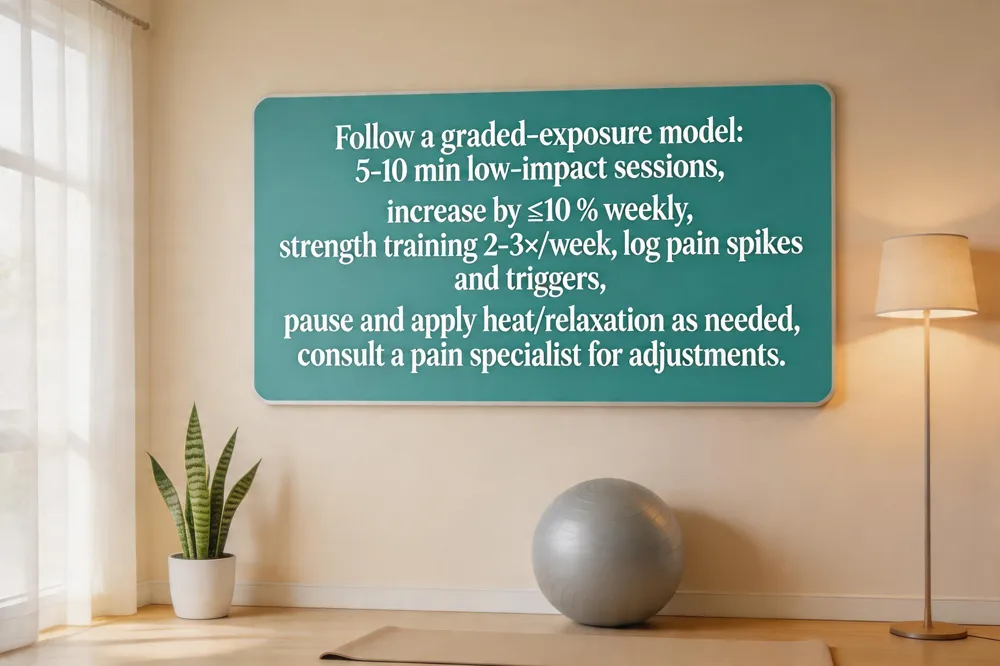 Adaptive exercise for chronic pain follows a graded‑exposure model: start with brief 5–10 min low‑impact sessions and increase duration or intensity by no more than 10 % each week. This gradual progression respects the body’s pain threshold while preventing flare‑ups. Strength training is a cornerstone of this approach. Light resistance work—such as glute bridges, modified planks, wall sits, resistance‑band rows, and step‑ups—builds muscle that supports painful areas and reduces load on the spine and arthritic joints. The repeated activation of muscle fibers also triggers endorphin release and reduces inflammation, enhancing mood and functional capacity. Aim for two‑to‑three sessions per week, beginning with a few repetitions and slowly adding volume as tolerated. If pain spikes beyond manageable levels, pause activity, apply gentle heat or relaxation techniques, and record triggers in an activity diary. Promptly contact a pain‑management specialist (e.g., at the California Pain Institute) to reassess the program, adjust medication, or introduce adjunctive therapies. Early intervention prevents the “terrible triad” of sleeplessness, heightened suffering, and emotional distress, supporting sustainable, empowered self‑management.
Integrating Multidisciplinary Support and Emerging Therapies
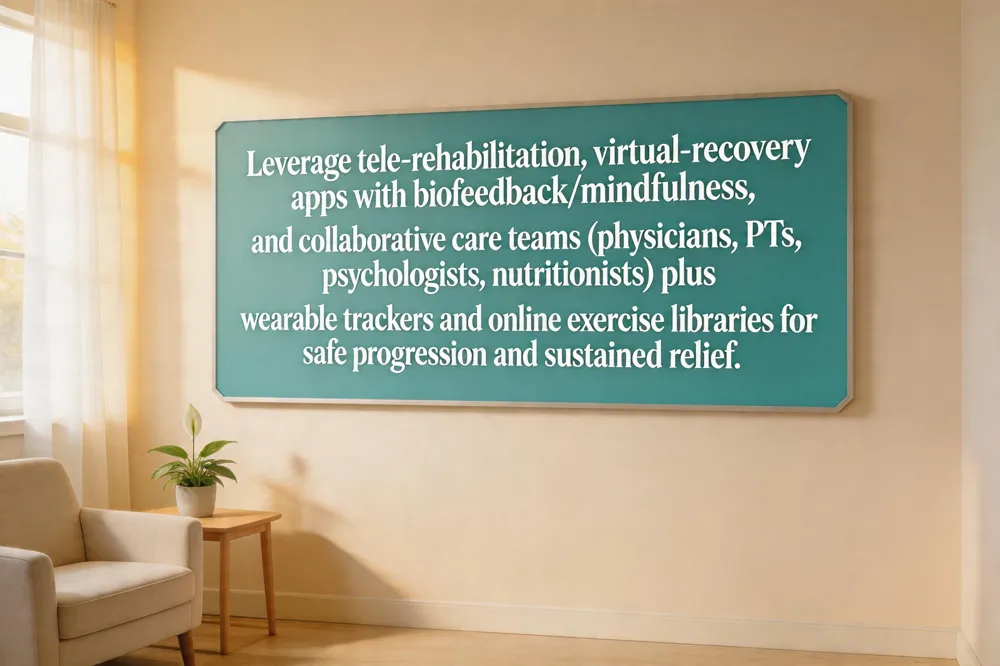 Future directions for chronic‑pain care emphasize tighter integration of adaptive exercise with emerging therapies. Ongoing research is expanding tele‑rehabilitation platforms (JAMA Network Open, 2022) that deliver real‑time monitoring, allowing clinicians to adjust intensity and provide instant feedback. Virtual‑recovery apps are adding biofeedback and mindfulness modules, blending physical conditioning with neuro‑behavioral training to reduce central sensitization. Collaborative care models—bringing together pain physicians, physical therapists, psychologists, and nutritionists—have already shown superior outcomes in large multidisciplinary programs such as the California Pain Institute (Los Angeles) and the Mayo Clinic virtual class, where coordinated education and pacing improve adherence and quality of life. Patient resources are becoming more accessible: online exercise libraries (e.g., Fearless Fitness, “Top 10 Activities for Chronic Pain”), wearable activity trackers for self‑monitoring, and low‑impact classes (walking, water aerobics, yoga, tai chi) . These tools empower individuals to safely progress, track pain scores, and stay connected with professional support, fostering sustainable relief.
Conclusion
Key takeaways: Regular, low‑impact aerobic activity (walking, swimming, stationary cycling) and mind‑body exercises (yoga, Tai Chi) safely lower pain severity, improve circulation, and trigger endorphin release. Strengthening core and surrounding muscles with body‑weight, resistance bands, or light weights provides joint support and reduces mechanical stress. Gradual progression—starting with 5‑10 minutes and increasing volume by no more than 10 % per week—prevents flare‑ups while re‑training the nervous system. Adaptive programs individualized by a pain‑specialist or physical therapist ensure activities match each patient’s pain pattern, functional limits, and comorbidities.
Next steps for patients: 1) Obtain medical clearance from a qualified provider. 2) Begin a short, low‑impact routine (e.g., 5‑minute walk) and log pain scores before and after each session. 3) Incorporate core‑strengthening, flexibility, and balance work 2‑3 times weekly, following the 10 % rule for progression. 4) Use adaptive equipment (seated elliptical, water pool) as needed and schedule regular reassessments every 4‑6 weeks.
Resources: American Physical Therapy Association guidelines, Harvard Health Publishing on chronic‑pain exercise, the California Pain Institute (Los Angeles) for personalized programs, and reputable online platforms offering low‑impact videos (e.g., Mayo Clinic virtual class, Pain Management Best Practices tools).