Opening Overview
Chronic pain affects roughly 20 % of U.S. adults—about 50 million people—making it a leading cause of disability. When pain limits movement, a cycle of deconditioning begins: muscles weaken, joints lose range, and inflammation can rise, which in turn heightens pain and reduces daily functioning. Breaking that cycle by embracing regular, low‑impact activity restores strength, improves circulation, and triggers endorphin release, all of which lower pain intensity and protect against future flare‑ups. An active lifestyle also supports mental health, sleep quality, and weight management, providing a foundation for long‑term wellbeing beyond symptom control and a higher quality of life for patients everywhere.
Exercise Strategies for Chronic Pain
Exercise Strategies for Chronic Pain
| Aspect | Recommendation | Example |
|---|---|---|
| Aerobic base | Low‑impact, steady‑state cardio | Walking, swimming, stationary bike, water aerobics |
| FITT progression | Start 10‑15 min, 3‑4 ×/wk; gradually increase duration, frequency, intensity, type | Add 5 min each week, increase to 30 min, incorporate moderate intensity |
| Warm‑up / cool‑down | Gentle movements before and after main activity | 5 min marching in place, light stretching after cardio |
| Strength & core | Light resistance, core stability, flexibility | Resistance bands, Pilates, yoga, tai‑chi |
| Pacing & fear‑avoidance | Keep movements pain‑free, avoid over‑exertion | Stop if pain spikes, use pain diary to monitor |
| Professional guidance | Consult PT or pain‑medicine specialist | Tailored program based on back, knee, arthritic pain |
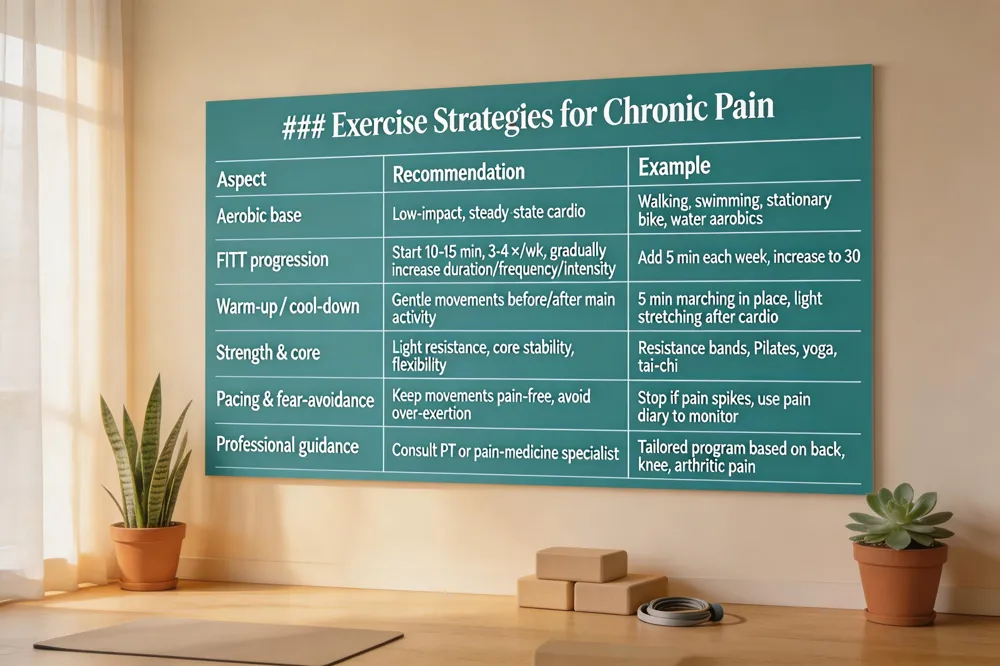 Low‑impact aerobic activities such as walking, swimming, stationary or, or water‑based aerobics are the foundation of a chronic‑pain exercise program. These movements increase circulation, release endorphins, and avoid high joint loading, making them safe for back, knee, and arthritic pain (Harvard Health, PTCOA, NCBI).
Gradual progression and FITT principles – Begin with 10‑15 minutes of gentle activity 3‑4 times per week, then slowly extend duration, frequency, intensity, and type (the FITT framework). A warm‑up, low‑impact cool‑down, and regular pacing prevent flare‑ups and break the fear‑avoidance cycle (NIH TIP‑54, Integrative Physical Activity).
Strength, flexibility, and core work – Incorporate resistance‑band exercises, Pilates, yoga, or tai‑chi to improve muscular support, core stability, and joint range of motion. Strengthening the core and lower‑extremity muscles reduces strain on the spine and knees, while stretching maintains flexibility (Exercise for chronic pain, NCBI).
How to exercise with chronic pain? Start with low‑impact aerobic activity, keep movements pain‑free, add light strength and flexibility work, and aim for consistent, moderate sessions. Consult a pain‑medicine specialist or physical therapist to tailor the plan.
Does exercise help with chronic pain? Yes. Regular, gentle exercise lowers pain perception, improves function, and enhances mood by boosting circulation and endorphin release.
Low‑impact exercises for chronic pain? Options include swimming, water aerobics, recumbent cycling, yoga, Pilates, and tai‑chi, combined with daily dynamic stretching. Always obtain professional guidance before beginning a new routine.
Home‑Based Pain Management
Home‑Based Pain Management
| Component | Action | Benefit |
|---|---|---|
| Daily stretching | Low‑impact movements each morning (ankle circles, gentle yoga, brisk walk) | Improves flexibility, reduces stiffness, raises pain threshold |
| Heat & ice | Apply heat to relax muscles; ice after activity to reduce inflammation | Decreases muscle tension, controls swelling, enables more comfortable movement |
| Relaxation & mindfulness | Deep‑breathing, progressive muscle relaxation, meditation | Lowers stress hormones, activates endogenous analgesic pathways |
| Pain diary & tracking | Record pain scores, activity, sleep, diet, meds | Identifies patterns, guides adjustments, supports personalized care |
| Multidisciplinary support | Coordinate with physicians, PT, psychologists | Ensures comprehensive, balanced management |
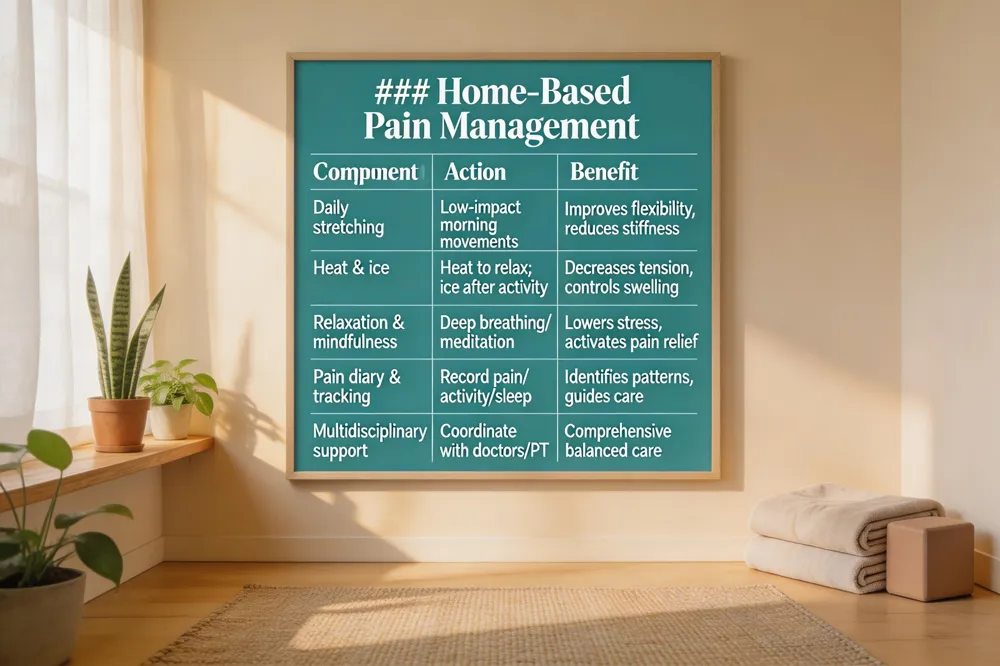 A successful home‑based program blends gentle movement, self‑care tools, relaxation techniques, and systematic tracking.
Daily stretching and gentle movement – Begin each day with low‑impact exercises such as seated ankle circles, gentle yoga, or brisk walking. Research shows that gradual, supervised activity improves strength, flexibility, and pain thresholds while breaking the cycle of inactivity that worsens chronic pain (NCBI, TIP‑54; Cochrane overview).
Heat, ice, and self‑care tools – Apply heat to relax tight muscles and ice to dampen inflammation after activity. These simple modalities reduce muscle tension and swelling, allowing patients to engage in therapy without excessive discomfort (Mayo Clinic, 2021).
Relaxation and mindfulness techniques – Practices such as deep‑breathing, progressive muscle relaxation, and mindfulness meditation lower stress hormones and may lessen pain perception by activating endogenous analgesic pathways (Harvard Health Publishing; NCBI, TIP‑54).
Pain diary and lifestyle tracking – Record daily pain scores, activity levels, sleep quality, diet, and medication response. Patterns emerging from the diary guide adjustments in exercise intensity, heat/ice use, and coping strategies, a chronic recommended by the NIH and CDC for personalized chronic‑pain care.
Answers to key questions
- Chronic pain management at home? Managing chronic pain at home works best when you combine physical, mental, and lifestyle strategies. Start each day with gentle stretching or low‑impact exercise to keep joints mobile, and use heat or ice as needed to reduce muscle tension and inflammation. Practice daily relaxation techniques—such as deep‑breathing, mindfulness meditation, or progressive muscle relaxation—to break the pain‑stress cycle and keep the nervous system calm. Keep a pain diary that records activity, diet, sleep, stress levels, and medication response, and use it to identify patterns and guide adjustments. Finally, support these habits with a balanced whole‑food diet, adequate sleep, and regular communication with your pain‑care team to ensure any medication or therapy changes are appropriate.
- What does effective pain management involve? Effective pain management is a multidisciplinary process that combines medication, physical therapy, interventional procedures, behavioral health support, and patient education. It begins with educating patients and their families so they can participate in shared decision‑making and self‑management, while also training the entire care team in their specific competencies. Non‑pharmacologic modalities—such as cognitive‑behavioral therapy, mindfulness, and integrative health approaches—are integrated alongside rational, evidence‑based use of drugs and procedures, including safe opioid prescribing when needed. Continuous communication among physicians, therapists, nurses, and specialists ensures a coordinated plan, and outcomes are tracked with appropriate metrics to adjust treatment and achieve optimal relief. This comprehensive, team‑based approach promotes faster recovery, improved function, and a higher quality of life for individuals living with chronic pain.
Neuroplasticity and Pain Pathways
Neuroplasticity and Pain Pathways
| Intervention | Mechanism | Expected Effect |
|---|---|---|
| Mindfulness meditation | Re‑train cortex to reinterpret nociceptive signals | Reduces fear‑driven amplification, improves pain coping |
| Cognitive‑behavioral therapy (CBT) | Change maladaptive thoughts & behaviors related to pain | Decreases pain perception, enhances function |
| Structured pain‑education | Teach neurobiology of pain, self‑management strategies | Empowers patients, reduces catastrophizing |
| Gentle aerobic activity | Stimulates endogenous opioids, serotonin, endocannabinoids | Acts as natural “gate‑closers”, lowers central sensitization |
| Targeted physical therapy | Sensory re‑training, proprioceptive input | Restores normal pathways, prevents central sensitization |
| Neuromodulation (SCS, TMS) | Directly disrupt hyper‑active pain circuits | Promotes inhibitory pathways, reduces chronic pain intensity |
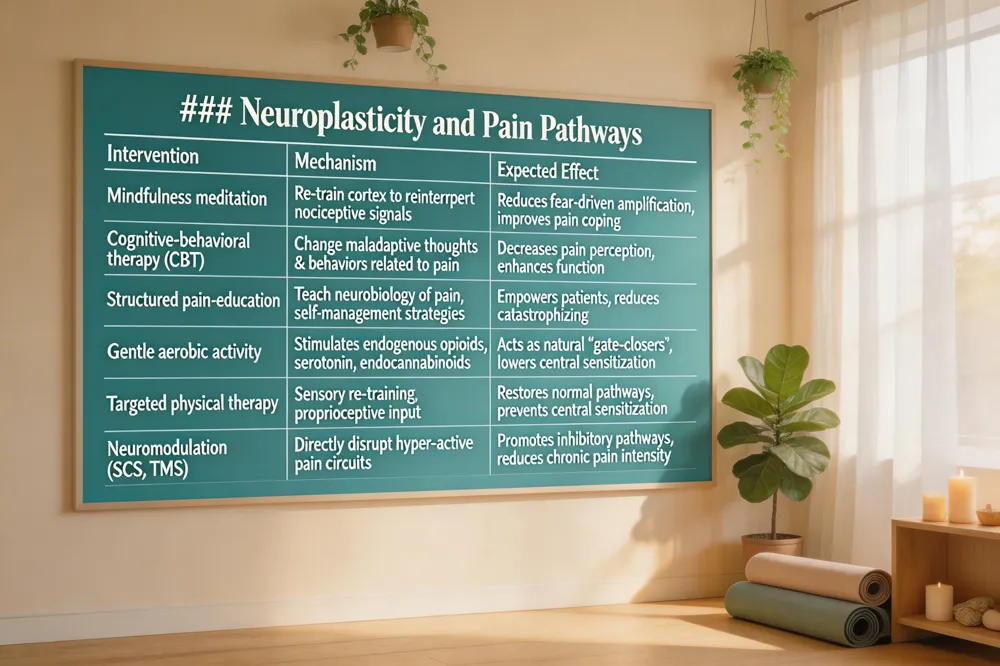 Chronic pain persists when the nervous system becomes “stuck” in a hyper‑alert state, but neuroplasticity offers a route to reset those pathways. Brain‑based interventions such as mindfulness meditation, cognitive‑behavioral therapy (CBT) and structured pain‑education programs teach the cortex to reinterpret nociceptive signals, dampening fear‑driven amplification and fostering adaptive circuitry. Regular, gentle aerobic activity—walking, swimming, or low‑impact yoga—stimulates the release of endogenous opioids, serotonin and endocannabinoids, which act as natural ‘gate‑closers’ and shift immune signaling toward anti‑inflammatory cytokines. Targeted physical‑therapy programs provide sensory re‑training, restoring normal proprioceptive input, preventing central sensitization, and strengthening musculoskeletal support for joints and the spine. Neuromodulation technologies, including spinal‑cord stimulation and transcranial magnetic stimulation, directly disrupt hyper‑active pain circuits and promote the formation of new inhibitory pathways. Consistent practice of these strategies, combined with adequate sleep, balanced nutrition and stress‑management, enables the nervous system to “unlearn” chronic pain and adopt healthier processing patterns. By integrating brain‑focused therapies, graded exercise, and neuromodulation, patients can rewire pain pathways, reduce reliance on opioids, and transition to an active, fulfilling lifestyle.
Personal Success Stories
Personal Success Stories (Template)
| Patient | Diagnosis | Treatment Components | Outcome |
|---|---|---|---|
| Maria L. | Chronic low back pain (lumbar disc disease, sciatica) | Medication, epidural steroid injections, posture PT, core strengthening, pain‑education workshops | Pain ↓ from 8/10 to 3/10; walked 30 % farther; returned to teaching |
| James T. | Knee osteoarthritis | Injections, PT, yoga, weight‑management | Pain ↓ from 8 to 2; resumed gardening |
| Sofia R. | Fibromyalgia | CBT, mindfulness, low‑impact aerobic, sleep hygiene | Pain almost gone; sleeping through night |
| David K. | Chronic neck pain | Multidisciplinary plan (meds, PT, psychology) | Returned to teaching, improved quality of life |
| Laura M. | Chronic shoulder pain | Regenerative PRP, PT, relaxation techniques | Restored function, renewed hope |
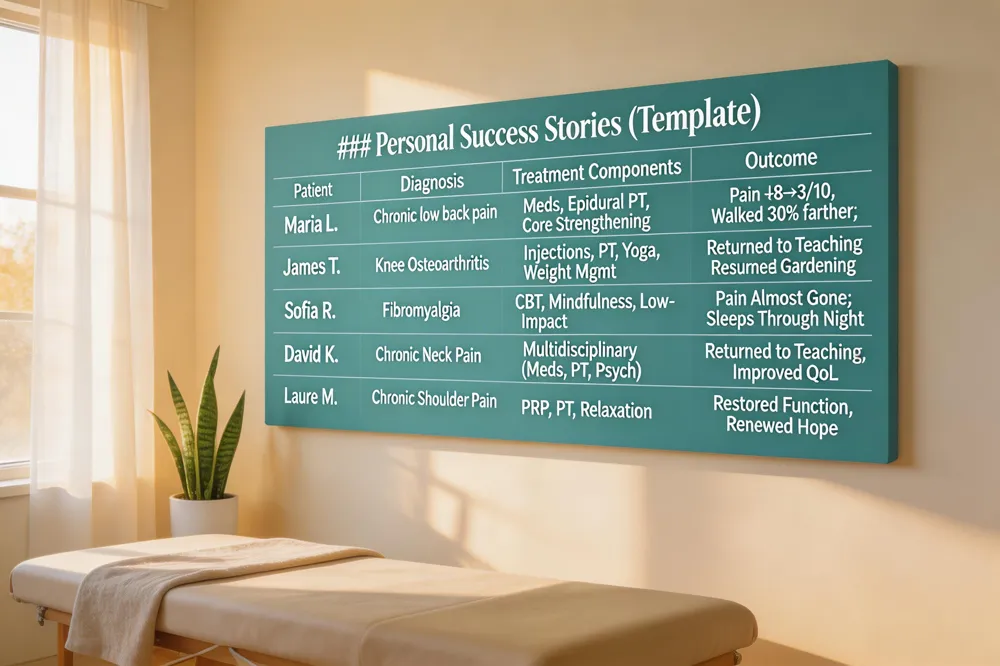 How to write a patient success story?
Start by researching the patient’s diagnosis (e.g., chronic low back pain, knee osteoarthritis) and the specific treatments offered at the California Pain Institute. Interview the patient in a relaxed setting to capture their challenges, milestones, and feelings. Interview the treating clinician for clinical details and verification. Draft a chronological outline—diagnosis, multidisciplinary treatment plan, progress, and outcomes—using plain language and relatable anecdotes. Review for accuracy, HIPAA compliance, and obtain patient approval before publishing. End with a compelling call‑to‑action inviting readers to schedule a consultation.
Patient story template?
Title: “Finding Relief: Maria’s Journey with Chronic Back Pain.”
Background & Diagnosis: Maria, 48, active teacher, suffered lumbar degenerative disc disease and sciatica.
Multidisciplinary Plan: She received medication management, a series of epidural steroid injections, targeted physical‑therapy (posture training, core‑strengthening), and pain‑education workshops.
Progress Timeline & Measured Outcomes: After 8 weeks, her numeric pain score fell from 8/10 to 3/10, she walked 30 % farther, and returned to classroom duties. A patient quote closes the story: “I finally feel like I can live again.”
Patient testimonials examples?
“Pain dropped from an 8 to a 2; I can now walk my dog without wincing.” – Maria L., Los Angeles
“The injections gave me back the freedom to garden with my grandchildren.” – James T., Pasadena
“My chronic back pain is almost gone; I’m sleeping through the night for the first time in years.” – Sofia R., West Hollywood
“Your team’s personalized plan let me return to teaching.” – David K., Burbank
“Compassionate, cutting‑edge care restored my quality of life and hope.” – Laura M., Santa Monica
Clinical Guidelines and Multidisciplinary Care
Clinical Guidelines & Multidisciplinary Care
| Guideline Element | Recommendation | Notes |
|---|---|---|
| Assessment | Comprehensive pain, function, psychosocial factors | Baseline for individualized plan |
| First‑line therapy | Non‑pharmacologic (exercise, CBT, yoga, acupuncture) | Initiate early, continue alongside meds |
| Opioid prescribing (CDC 2022) | Lowest effective dose, short‑term, risk‑mitigation (urine testing, agreements) | Reassess every ≤3 months |
| Multidisciplinary team | Physicians, PT/OT, psychologists, nurses, pharmacists, addiction specialists | Improves functional outcomes, reduces opioid reliance |
| Non‑opioid analgesics | NSAIDs, acetaminophen, antidepressants, anticonvulsants | Preferred before opioids |
| Monitoring | Tolerance, hyperalgesia, misuse signs; taper when benefits < risks | Ongoing evaluation |
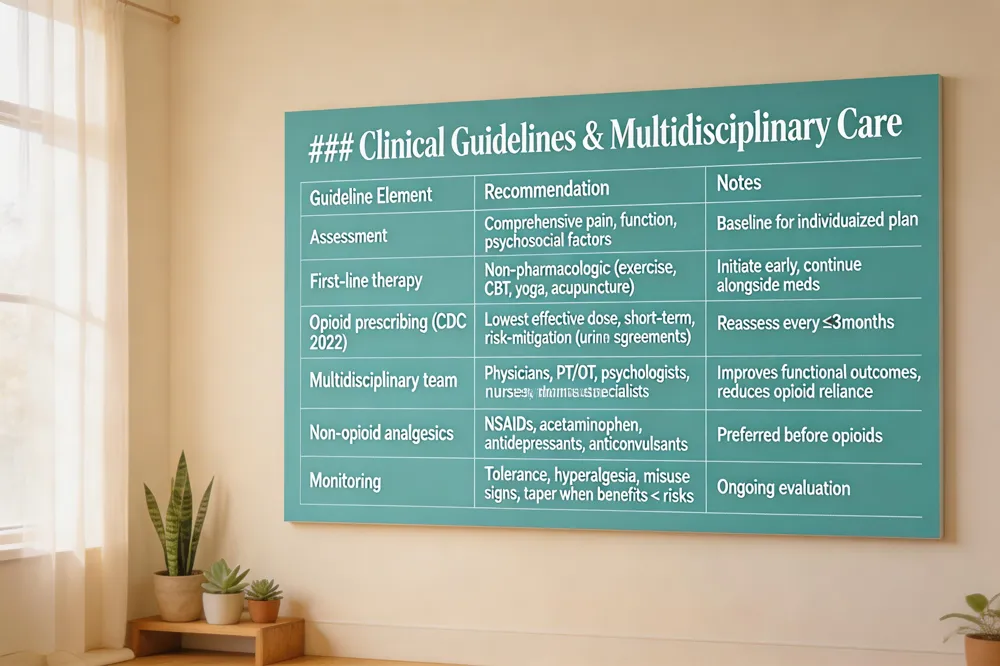 National chronic‑pain guidelines from the CDC, ASA, and ASRA emphasize a multimodal, function‑first approach. Treatment begins with a comprehensive assessment of pain intensity, functional status, psychosocial factors, and comorbidities. Non‑pharmacologic therapies—structured exercise, cognitive‑behavioral therapy, yoga, tai chi, and acupuncture—are introduced early and continued alongside medications. When opioids are considered, the 2022 CDC opioid guideline requires the lowest effective dose, short‑term use, and strict risk‑mitigation: urine drug testing, prescription‑monitoring‑program checks, treatment agreements, and regular reassessment at least every three months.
The multidisciplinary team model brings together physicians, pain specialists, physical and occupational therapists, psychologists, nurses, pharmacists, and addiction specialists. This collaborative framework improves functional outcomes, reduces opioid reliance, and addresses the biopsychosocial nature of chronic pain.
Opioid stewardship actions include prescribing Non‑opioid analgesics first (NSAIDs, acetaminophen, antidepressants, anticonvulsants), monitoring for tolerance, hyperalgesia, and signs of misuse, and offering tapering plans when benefits no longer outweigh risks.
Answers to specific questions:
- Chronic pain management guidelines? They call for individualized, multimodal plans that integrate early non‑pharmacologic therapy, judicious opioid use, and ongoing functional reassessment.
- What conditions does Dr. Kerr treat? Neuropathy, fibromyalgia, sciatica, headache, and back pain.
Local Expertise at California Pain Institute
Local Expertise at California Pain Institute (Torrance)
| Service | Description | Contact |
|---|---|---|
| Medication management | Board‑certified pain physicians tailor drug regimens | (310) 891‑6795 |
| Interventional procedures | Nerve blocks, epidural/facet injections, radiofrequency ablation, spinal‑cord stimulation, intrathecal pumps, ketamine infusions | (310) 891‑6795 |
| Regenerative medicine | PRP, stem‑cell injections for musculoskeletal conditions | (310) 891‑6795 |
| Physical‑therapy referrals | Coordinated PT for strength, core, flexibility | (310) 891‑6795 |
| Behavioral health | CBT, mindfulness, pain‑education workshops | (310) 891‑6795 |
| Imaging & guided injections | State‑of‑the‑art imaging for precise procedures | (310) 891‑6795 |
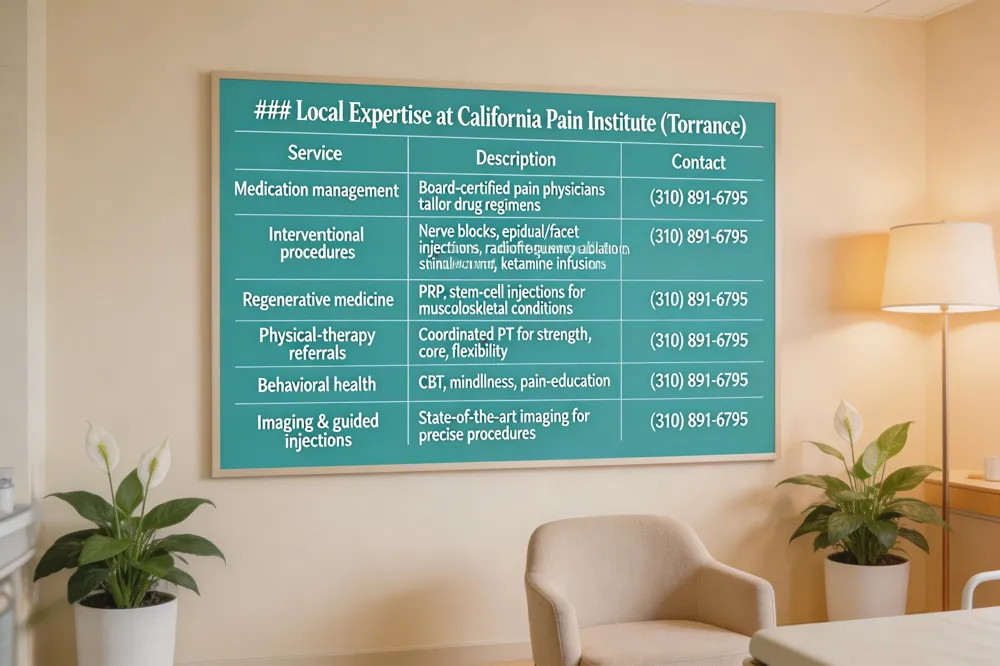 The California Pain Institute’s Torrance clinic delivers a full spectrum of pain‑management services tailored to the needs of patients in Southern California. Board‑certified physicians, including Dr. Daniel Jacobs and Dr. Melanie D. Johansson, lead an interdisciplinary team that integrates medication management, physical‑therapy referrals, occupational therapy, psychology, and nursing support. This collaborative model ensures that each patient receives a personalized plan that addresses the biopsychosocial aspects of chronic pain.
Advanced interventional options are available on‑site, such as nerve blocks, epidural and facet‑joint injections, radiofrequency ablation, spinal‑cord stimulation, intrathecal pain pumps, and ketamine infusions. Regenerative therapies—including platelet‑rich plasma (PRP) and stem‑cell injections—provide evidence‑based alternatives for musculoskeletal conditions. State‑of‑the‑art imaging and guided‑injection techniques enable precise, low‑risk procedures.
Pain management Torrance, CA? The California Pain Institute offers comprehensive pain‑management services right in Torrance, CA, with board‑certified physicians who develop personalized treatment plans for chronic and acute pain. Their multidisciplinary approach includes medication management, physical‑therapy referrals and a full suite of interventional procedures such as nerve blocks, epidural and facet‑joint injections, radiofrequency ablation, spinal‑cord stimulation, intrathecal pain pumps, ketamine infusions and regenerative‑medicine options like PRP. By coordinating care with physical, occupational and mental‑health specialists, the clinic aims to restore function and improve overall quality of life. Patients can schedule a consultation at the institute’s Torrance office, where state‑of‑the‑art imaging and guided‑injection techniques are available. Call (310) 891‑6795 or visit the clinic’s website to learn more and book an appointment.
Final Takeaway
Empowering patients through evidence‑based activity means giving each individual a clear, step‑by‑step roadmap that starts with gentle, low‑impact exercises and gradually builds confidence, strength, and endurance. A supportive multidisciplinary team—pain physicians, physical therapists, psychologists, and nurses—provides the expertise, encouragement, and monitoring needed to keep progress safe and sustainable. Together they address the physical, emotional, and social dimensions of chronic pain, helping patients move from fear‑avoidance to active coping. If you’re ready to reclaim mobility and improve quality of life, take the first step today: contact a qualified pain‑management clinic, discuss a personalized activity plan, and begin your journey toward a healthier, more active lifestyle.