Introduction
Early referral to a pain specialist is a pivotal step in preventing acute pain from becoming chronic. When patients are evaluated promptly—usually within weeks of persistent symptoms—specialists can accurately diagnose the pain source, initiate multimodal therapy, and teach self‑management techniques before maladaptive pathways solidify. This timely involvement consistently yields better functional outcomes, lower pain intensity, reduced opioid reliance, and higher satisfaction scores. The purpose of this article is to explain why early referral matters, illustrate its positive impact on patient outcomes, and guide readers on how to recognize the appropriate moment to seek specialist care.
Why Early Referral Improves Outcomes
Early Referral Benefits
| Benefit | Evidence | Impact |
|---|---|---|
| Improved functional scores | Oswestry Disability Index ↑ 15 points within 6 months (PMID:40418798) | Greater independence in daily activities |
| Reduced opioid use | 25‑30 % decrease in long‑term doses; lower misuse rates | Safer medication profile |
| Lower healthcare costs | $1,200‑$5,000 saved per patient annually (Pain Med 2020) | Less burden on health system |
| Decreased central sensitization | Intervention before sensitization reduces chronic pain transition | Better sleep, mood, social participation |
| Enhanced quality of life | Systematic reviews show modest but lasting physical & emotional gains | Higher life satisfaction |
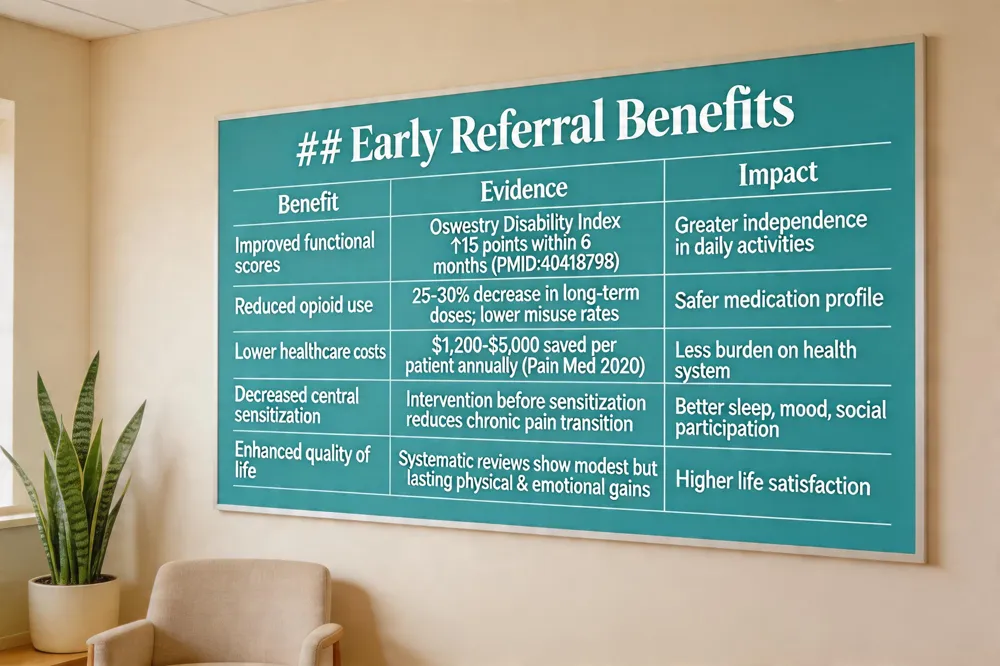 Early referral to a pain specialist or breaks the painful cycle that often leads to chronic disability. Systematic reviews show that patients who enter pain‑management programmes within weeks of symptom onset experience small‑to‑moderate gains in physical functioning and emotional well‑being, with benefits lasting up to three years. By intervening before central sensitization sets in, the transition to chronic pain is markedly reduced, preserving sleep, mood, and social participation.
Opioid utilization drops sharply when specialists introduce opioid‑sparing strategies such as targeted nerve blocks, peripheral nerve stimulation, and mindfulness‑based skill training. Studies report a 25‑30 % decrease in long‑term opioid doses and a lower incidence of misuse when referral occurs early.
Physical functioning improves as multidisciplinary teams—physicians, psychologists, physiotherapists, and occupational therapists—deliver graded exercise, activity pacing, and cognitive‑behavioral techniques. Functional scores such as the Oswestry Disability Index rise by an average of 15 points within six months.
Cost savings arise from fewer unnecessary imaging studies, reduced emergency visits, and avoidance of expensive surgeries or spinal‑cord stimulation. Early specialist involvement can save $1,200‑$5,000 per patient annually and lessen the overall financial burden on health systems.
Impact of chronic pain on quality of life – Persistent pain limits daily activities, disrupts sleep, and fuels anxiety or depression, eroding overall life satisfaction. Restoring functional independence through early, multidisciplinary care is essential for improving well‑being.
The 4 A’s of chronic pain management – Analgesia, activities of daily living, adverse events, and aberrant drug‑taking behaviors guide treatment toward safe, functional outcomes.
The 5 A’s of pain management – Analgesia, activities of daily living, adverse effects, affect, and aberrant drug‑related behaviors expand the focus to emotional health.
Early‑referral benefits from systematic reviews – Early engagement yields modest but lasting improvements in physical and emotional domains while cutting long‑term healthcare costs.
What to Expect at Your First Pain Specialist Appointment
First Appointment Overview
| Step | Description |
|---|---|
| Comprehensive history | Pain location, intensity, duration, triggers, prior treatments, imaging/lab results |
| Focused physical exam | Identify source, differentiate tissue vs. nerve mechanisms |
| Baseline urine drug screen | Establish safe starting point for pharmacologic plan (especially if opioids considered) |
| Education on pain physiology | Explain mechanisms and why multidisciplinary care helps |
| Treatment plan outline | Medication adjustments, targeted injections, PT referrals, interventional options |
| Goal setting & lifestyle counseling | Realistic functional goals, side‑effect discussion, activity modifications |
| Follow‑up & referrals | Schedule future visits; refer to psychology, rehab, complementary services as needed |
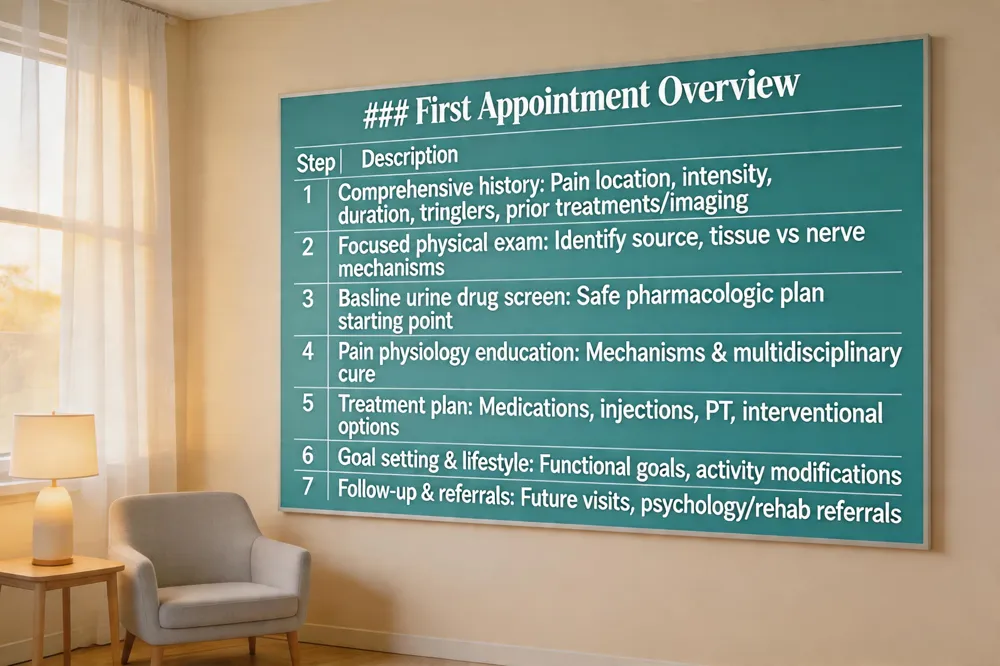 During the initial visit the specialist conducts a comprehensive assessment and history, asking detailed questions about pain location, intensity, duration, triggers, previous treatments, and any imaging or lab results you can bring. A focused physical examination follows to locate the source of discomfort and to differentiate tissue injury from nerve‑related mechanisms. Most clinics—including those in Los Angeles—order a baseline urine drug screen at this stage, especially if opioids or other controlled medications may be considered; the test establishes a safe starting point for any pharmacologic plan. Based on the gathered information, the physician explains the underlying pain physiology and outlines a step‑wise treatment plan that may include medication adjustments, targeted injections, physical‑therapy referrals, or advanced interventional options. Realistic goals, potential side effects, and lifestyle modifications are discussed, and follow‑up appointments or referrals to psychology, rehabilitation, or complementary services are scheduled to ensure coordinated, long‑term care.
Finding a Pain Specialist Near You
Pain Specialists in Los Angeles (California Pain Institute)
| Location | Contact | Services |
|---|---|---|
| Santa Monica | (310) 264‑7246 | Interventional procedures, regenerative therapy, PT, psychology |
| Downtown LA (Dr Hayley Osen) | (310) 423‑9600 | Multidisciplinary pain management, opioid‑sparing strategies |
| Encino (Dr Najmeh Sadoughi / Dr Jonathan Varghese) | (310) 423‑9600 | Advanced injections, nerve blocks, CBT, PT |
| North Hollywood (Dr Jerry Markar) | (310) 423‑9600 | Comprehensive assessment, medication management, lifestyle counseling |
| Thousand Oaks & Torrance | (310) 423‑9600 | Integrated care team, acupuncture, mindfulness training |
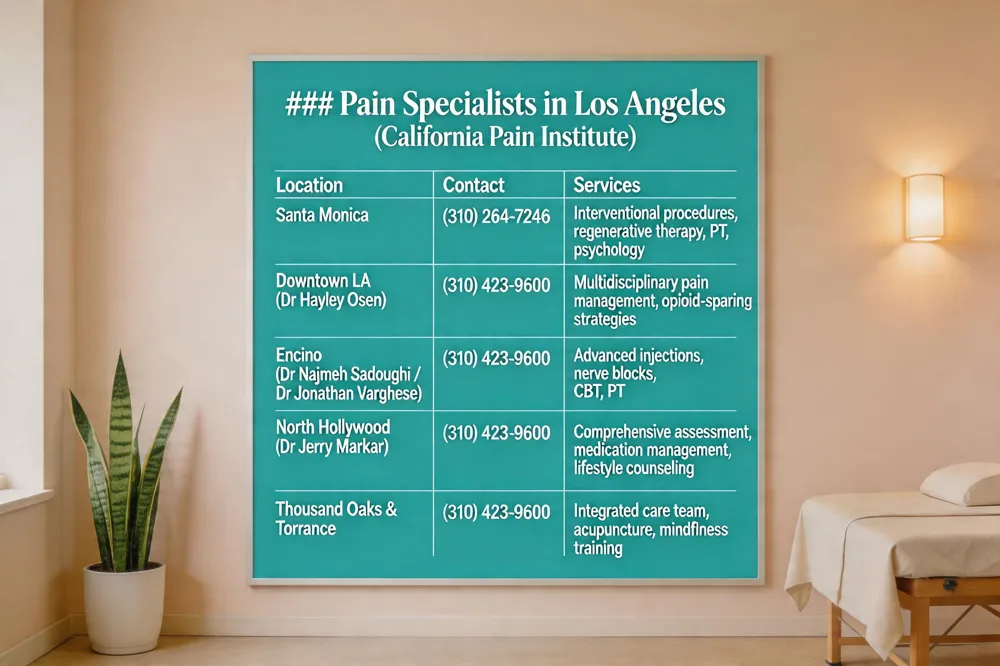 Los Angeles patients have several convenient options for board‑certified pain physicians. The California Pain Institute (also called California Pain Medicine Center) operates multiple sites – Santa Monica, Downtown LA (Dr Hayley Osen), Encino (Dr Najmeh Sadoughi and Dr Jonathan Varghese), North Hollywood (Dr Jerry Markar), Thousand Oaks and Torrance – each staffed by physicians trained in acute and chronic pain care. Their multidisciplinary teams provide interventional procedures, regenerative therapies, physical therapy, psychological support and lifestyle counseling, all aimed at reducing opioid use and improving function. To schedule an appointment, call (310) 264‑7246 for the Santa Monica office or 310‑423‑9600 for other locations, or use the online booking portal on the institute’s website. Early referral to one of these specialists can accelerate diagnosis, personalize treatment and help prevent pain chronification.
A Comprehensive Pain Management Plan & Patient Education
Core Components of a Pain Management Plan
| Component | Description | Patient Role |
|---|---|---|
| Assessment | Pain diary, rating scales, functional impact evaluation | Record daily pain, triggers, activities |
| Education | Neurophysiology of pain, realistic goal setting | Learn self‑management tools (mindfulness, pacing) |
| Non‑opioid therapies | Physical therapy, exercise, acupuncture, CBT, heat/cold therapy | Participate actively in PT sessions, practice CBT techniques |
| Opioid stewardship | Lowest effective dose, close monitoring, urine screens | Adhere to prescribed regimen, report side effects |
| Interventional options | Nerve blocks, peripheral stimulation, regenerative injections | Discuss expectations, consent to procedures |
| Lifestyle & support | Sleep hygiene, nutrition, peer support groups | Implement lifestyle changes, engage in support networks |
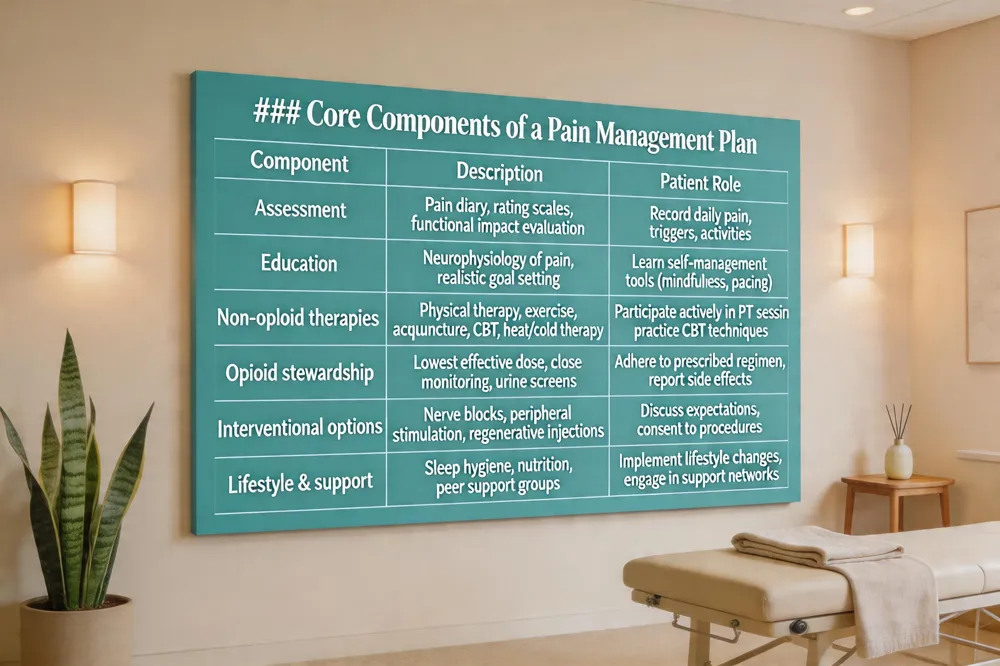 A pain clinic is a multidisciplinary hub where physicians, physiotherapists, psychologists and other specialists collaborate to address the physical, emotional and functional dimensions of chronic pain. Early education is essential: patients learn the neurophysiology of pain, set realistic goals, and acquire self‑management tools such as paced activity, relaxation, mindfulness, proper posture, heat‑cold therapy and safe medication use. A personalized pain‑management plan starts with a detailed assessment—pain diary, rating scales, and functional impact—and prioritizes non‑opioid options (physical therapy, exercise, acupuncture, CBT). Opioids are reserved for severe, refractory pain and prescribed at the lowest effective dose with close monitoring.
Health education for pain management equips patients with knowledge to actively participate in care, reduces reliance on drugs, and promotes long‑term control.
What is a pain clinic? It is a specialized facility offering comprehensive, team‑based evaluation and treatment, including interventional procedures, therapy and education.
Pain management plan integrates assessment, non‑opioid therapies, judicious medication use and regular follow‑up to adjust treatment.
What is the #1 worst pain in the world? Kidney‑stone attacks are widely regarded as the most excruciating pain, often described as an “11” on a 1‑to‑10 scale.
Living with Chronic Pain: Hope and Practical Strategies
Practical Strategies for Living Well with Chronic Pain
| Strategy | Goal | Example |
|---|---|---|
| Cognitive‑behavioral therapy (CBT) | Modify pain‑related thoughts & behaviors | Weekly therapist sessions, home worksheets |
| Mindfulness & relaxation | Reduce stress‑induced pain amplification | Guided meditation 10 min daily |
| Graded exercise & pacing | Improve strength without flare‑ups | 5‑minute walk → increase by 2 min each week |
| Peer support | Decrease isolation, share coping tips | Join local pain‑support group or online forum |
| Activity pacing | Balance activity and rest to avoid over‑exertion | Use a timer to alternate 20 min work / 10 min rest |
| Sleep hygiene | Enhance restorative sleep, lower pain sensitivity | Consistent bedtime, dark room, limit caffeine |
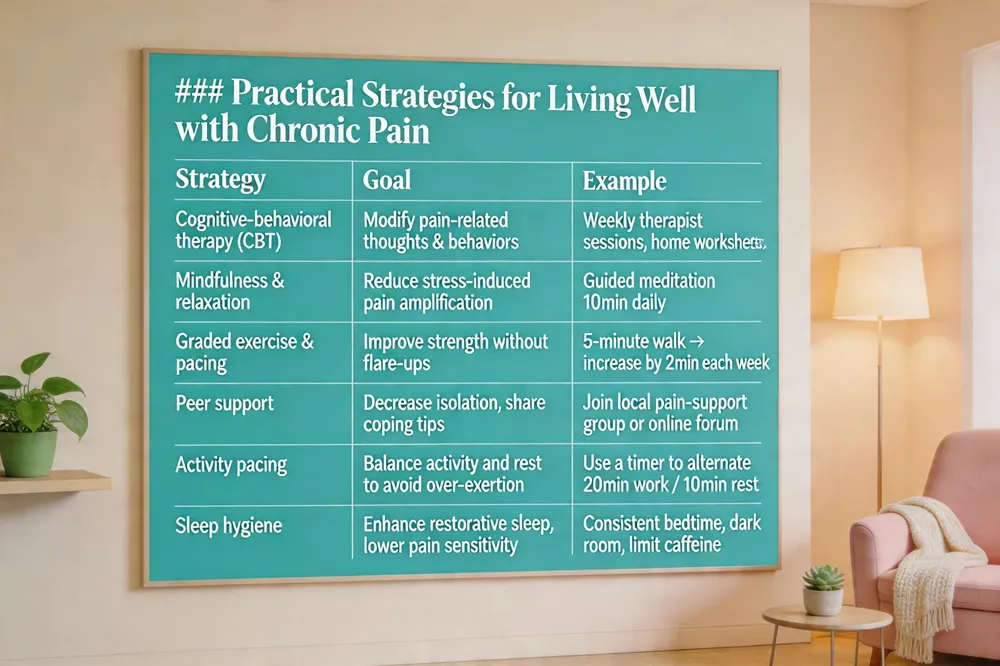 Chronic pain can be overwhelming, but life remains meaningful when patients adopt a comprehensive, multidisciplinary approach. Pain often stems from arthritis, spine disorders, neuropathic injury, fibromyalgia, cancer, or central sensitization, producing aching, burning, or stabbing sensations that persist beyond three months and are accompanied by fatigue, sleep disruption, anxiety, or depression. Effective coping mechanisms include cognitive‑behavioral therapy, mindfulness, graded exercise, activity pacing, and peer support, all of which improve functional ability and emotional well‑being. Communicating openly with doctors—describing pain intensity, functional impact, and goals—while avoiding demands for stronger prescriptions or dismissal of non‑drug therapies, fosters collaborative, patient‑centered care. Early referral to pain specialists or pain‑management programmes accelerates accurate diagnosis, multimodal treatment, and long‑term quality of life.
Conclusion
Early referral to a pain specialist delivers measurable advantages: it curtails the transition of acute pain to chronic disease, reduces opioid exposure, and speeds functional recovery while lowering overall healthcare costs. By engaging a multidisciplinary team within the first weeks of persistent pain, patients benefit from accurate diagnosis, targeted interventional therapies, and comprehensive self‑management education. Residents of Los Angeles are encouraged to discuss timely specialist evaluation with their primary‑care providers, especially when pain persists beyond four to six weeks or interferes with daily activities. Prompt action not only improves personal health outcomes but also aligns with regional initiatives to curb the opioid crisis and enhance community well‑being. Take the first step today—schedule a referral and empower your journey toward lasting pain relief.