Introducing Neuropathy and Its Impact
Peripheral neuropathy is a disorder of the nerves outside the brain and spinal cord, producing tingling, numbness, burning pain, weakness, and autonomic disturbances. In the United States, it affects roughly 2.4 % of the population overall and rises to 5‑7 % among adults over age 45, making it one of the most common neurological conditions. Because the disease can involve sensory, motor, and autonomic fibers, patients often experience a blend of pain, functional loss, and complications such as falls or foot ulcers. A comprehensive, multidisciplinary approach—combining medical management of underlying causes, targeted pharmacologic and non‑pharmacologic pain therapies, physical rehabilitation, nutritional counseling, and interventional techniques—optimizes symptom control, preserves function, and improves quality of life.
Root Causes, Idiopathic Forms, and Risk Factors
 Diabetes mellitus is by clear single most common cause of peripheral neuropathy in the United States; more than half of people with uncontrolled type 2 diabetes develop nerve damage from chronic high blood‑sugar levels. Other major etiologies include vitamin deficiencies (especially B12, B1, B6, B9, and E), chronic alcohol misuse, exposure to neurotoxic chemicals or heavy metals, and autoimmune diseases such as lupus, rheumatoid arthritis, and Guillain‑Barré syndrome. When a comprehensive work‑up fails to identify any trigger, the condition is classified as idiopathic neuropathy—often termed chronic idiopathic axonal polyneuropathy (CIAP). CIAP accounts for roughly 23 % of peripheral neuropathy cases in the U.S., affecting an estimated 5–15 million adults, most of whom are over 60 years old. The worst aggravating factor for any neuropathy is uncontrolled hyperglycemia, which directly injures peripheral nerves and accelerates degeneration; smoking and excessive alcohol intake further compromise nerve blood flow. Importantly, neuropathy itself rarely shortens life expectancy—most patients enjoy a normal lifespan when the underlying disease is tightly managed, early diagnosis is made, and appropriate therapy is instituted.
How Nerve Damage Feels and Its Classification as Chronic Pain
 Peripheral neuropathy produces abnormal sensations that differ markedly from ordinary muscle aches. Patients frequently describe a burning, hot‑like sensation, sharp stabbing or shooting pains, and electric‑shock‑like jabs. Tingling, “pins‑and‑needles,” a buzzing feeling, and heightened sensitivity to light touch (allodynia) are also common sensory descriptors.
The pain of Neuropathic pain is fundamentally different from nociceptive pain, which arises from tissue injury and is usually described as throbbing or aching. Neuropathic pain originates from damaged or dysfunctional nerves in the somatosensory system, leading to ectopic nerve firing and altered signal processing. Consequently, it often persists despite the absence of ongoing tissue damage and is less responsive to conventional NSAIDs.
Because nerve injury is usually irreversible and the resulting pain can last months to years, neuropathy is classified as chronic pain. Its chronic nature mandates a multidisciplinary approach that includes medication, physical therapy, lifestyle changes, and, when needed, advanced interventional therapies to improve quality of life.
Triggers That Can Worsen Neuropathy Symptoms
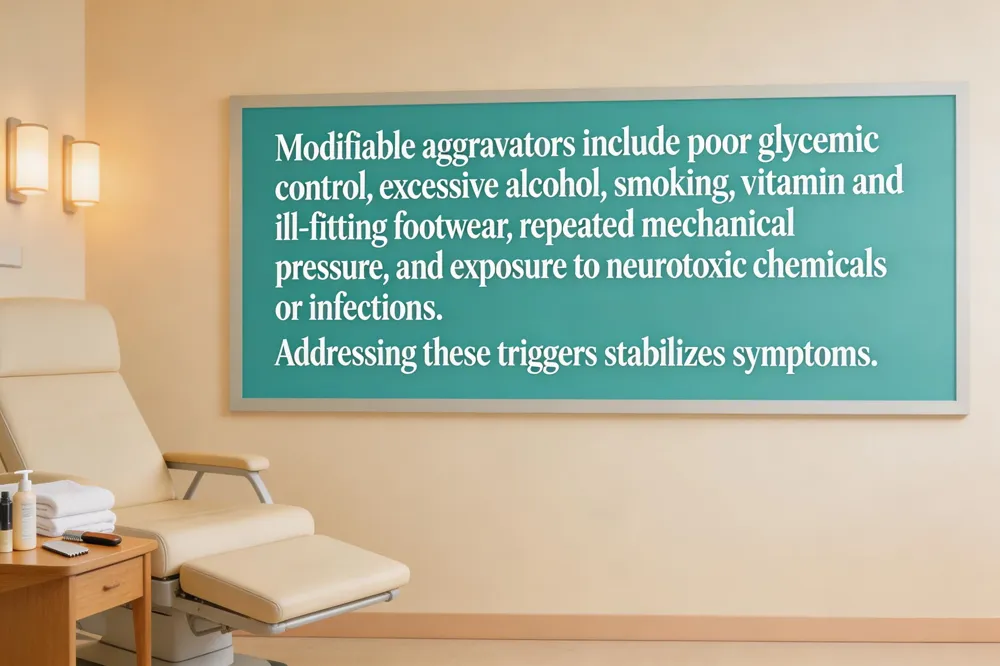 Neuropathy symptoms often flare when certain modifiable factors are not kept in check. Poor blood‑sugar control—especially in people with diabetes or pre‑diabetes—allows high glucose to damage the tiny blood vessels that nourish nerves, leading to increased numbness, tingling, and burning pain. Excessive alcohol use and smoking further compromise circulation and impair the nerves’ ability to repair themselves, accelerating symptom progression. Deficiencies of essential nutrients, notably vitamin B12, B1, B6, folate, copper and vitamin E, deprive nerves of the cofactors required for myelin production and metabolic health, making pain and sensory disturbances more pronounced. Mechanical pressure from ill‑fitting footwear, prolonged standing, or repetitive high‑impact activities can compress vulnerable peripheral nerves, especially in the feet and hands, while exposure to neurotoxic chemicals, heavy metals, certain chemotherapy agents, and infections such as HIV or Lyme disease can trigger acute worsening. Addressing these triggers through tight glycemic management, alcohol and tobacco cessation, adequate vitamin supplementation, proper footwear, and avoidance of known toxins is essential for stabilizing neuropathic symptoms and improving quality of life.
Core Treatment Strategies and the Best‑Performing Medications
 Peripheral neuropathy treatment begins with correcting the root cause—tight glycemic control for diabetes, vitamin B12 repletion, cessation of alcohol, or discontinuation of neurotoxic drugs. Once the underlying issue is addressed, pain relief is pursued with first‑line pharmacologic agents: anticonvulsants (gabapentin, pregabalin) and antidepressants (duloxetine, amitriptyline). These drugs target abnormal nerve signaling and are supported by extensive trial data. For mild or localized discomfort, over‑the‑counter NSAIDs and topical preparations such as lidocaine patches or high‑strength capsaicin creams provide symptom relief without systemic side effects. When pain persists despite medication, advanced interventional therapies are considered, including peripheral nerve blocks, epidural steroid injections, spinal cord stimulation, and peripheral nerve stimulation.
What are the main neuropathy treatment options? Address the cause, use neuropathic‑pain meds, add topical/OTC relief, and employ interventional procedures for refractory pain.
What is the most effective treatment for neuropathy? A personalized, multidisciplinary plan that combines cause‑specific management, optimal medication choice, lifestyle modifications, and, when needed, neuromodulation.
What is the best drug for peripheral neuropathy? First‑line choices are gabapentin, pregabalin, duloxetine, and amitriptyline; selection depends on comorbidities and side‑effect tolerance.
Foot‑Specific Therapies, Home Care, and Lifestyle Modifications
 Peripheral neuropathy of the feet and legs is managed with a multimodal approach. First, protective footwear and custom orthotics off‑load pressure points, prevent skin breakdown, and improve gait stability. Medication options include systemic agents such as gabapentin, pregabalin, duloxetine, or amitriptyline to dampen nerve‑signal hyper‑excitability. For localized discomfort, topical lidocaine cream or 8 % capsaicin patches can provide targeted relief without systemic side effects. Exercise and physical‑therapy programs emphasize low‑impact aerobic activity (walking, swimming, cycling) and balance‑training drills that enhance circulation, muscle strength, and proprioception. Home‑based self‑care strategies involve daily foot inspections, moisturized skin to avoid cracks, warm foot soaks (10‑15 min) for blood flow, and a nutrient‑dense diet rich in B‑vitamins, omega-3 fatty acids, and antioxidants. Lifestyle modifications—tight glycemic control, cessation of alcohol and smoking, weight management, and regular exercise—further reduce neuropathic symptoms. When pain persists despite these measures, referral to a pain‑medicine specialist for nerve‑block injections or neuromodulation may be warranted.
Prognosis, Curability, and Advanced Interventional Options
 Is neuropathy curable? In most cases peripheral neuropathy is not curable because once a nerve fiber is damaged it does not regenerate fully. However, many patients experience significant symptom relief and functional improvement when the underlying cause—such as uncontrolled diabetes, vitamin deficiencies, or toxic exposure—is addressed. Early intervention can halt progression and, in some instances, restore partial sensation or strength.
Can you die from peripheral neuropathy? The disorder itself rarely causes death, but its complications can be life‑threatening. Untreated diabetic neuropathy may lead to foot ulcers, deep infections, or gangrene, while autonomic neuropathy can provoke severe blood‑pressure swings, cardiac arrhythmias, or respiratory compromise. Vigilant foot care, infection control, and regular monitoring of autonomic function are essential to prevent these outcomes.
What are the most advanced treatment options for refractory neuropathic pain? For pain that does not respond to medications, the California Pain Institute offers a multidisciplinary arsenal: spinal cord stimulation, peripheral nerve stimulation, dorsal root ganglion stimulation, and high‑frequency TENS. Adjunctive therapies include acupuncture, laser photobiomodulation, platelet‑rich plasma, and emerging stem‑cell protocols. These modalities are combined with personalized medication regimens, physical therapy, and lifestyle counseling to maximize relief and preserve function.
Putting It All Together – A Path Forward
Effective management of peripheral neuropathy requires three pillars: treating the underlying cause, relieving the specific symptoms, and adopting supportive lifestyle habits. Tight blood‑sugar control, vitamin repletion, alcohol cessation, and avoidance of neurotoxic drugs address root drivers; medications such as gabapentin, duloxetine, or lidocaine patches target burning, tingling, and shooting pain; regular exercise, balanced nutrition, and foot‑care routines protect nerves and prevent complications. Early detection—through prompt reporting of unexplained numbness or weakness—allows timely testing, nerve‑conduction studies, and imaging, reducing permanent damage. A multidisciplinary team that includes neurologists, pain‑medicine specialists, physical therapists, and nutritionists offers personalized plans. Los Angeles residents should schedule an evaluation at the California Pain Institute to begin a comprehensive, evidence‑based approach today for you.