Introduction
Ultrasound‑guided nerve blocks have become a cornerstone of modern pain management, allowing clinicians to see nerves, vessels, and needle trajectory in real time. This visual feedback dramatically improves block precision and safety compared with the traditional landmark‑only approach, which relied on surface anatomy and often resulted in multiple needle passes or missed targets. The transition to imaging‑based techniques began in the early 2000s and has accelerated with advances in high‑frequency probes, AI‑driven anatomical overlays, and portable devices that bring the scanner to the bedside. For chronic pain patients in Los Angeles, where musculoskeletal disorders and neuropathic conditions are prevalent, ultrasound guidance offers faster relief, reduced opioid exposure, and a lower risk of complications—making it an essential component of personalized, high‑quality pain care in the region.
AI‑Enhanced Ultrasound for Nerve Block Precision
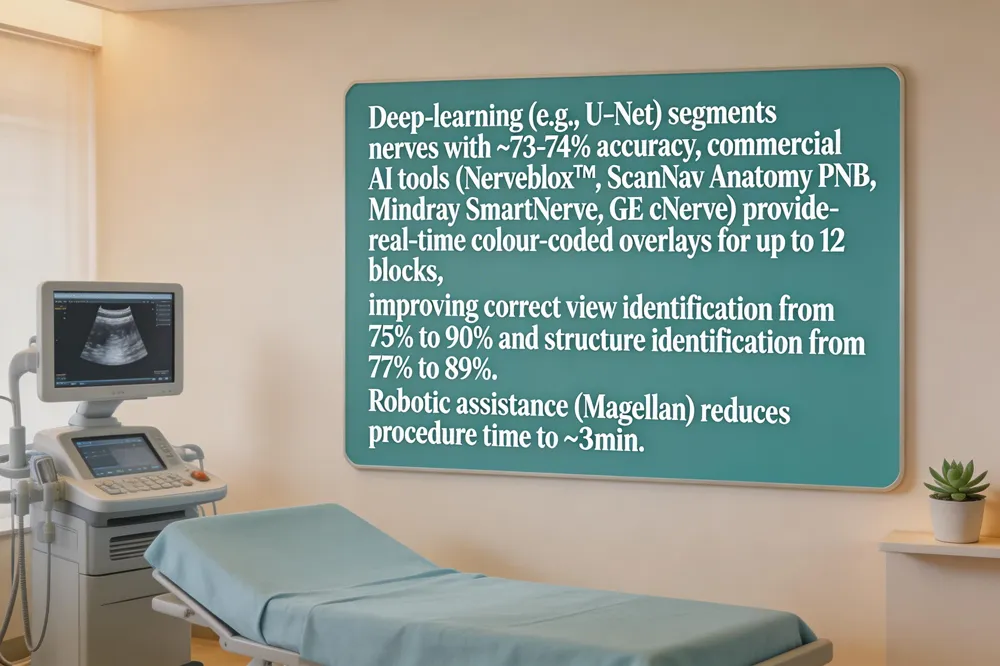 Deep‑learning models such as U‑Net now segment ultrasound images with ~73‑74 % accuracy for the transverse abdominis plane and femoral nerve, providing reliable real‑time anatomy maps. Commercial AI platforms build on this foundation. Nerveblox™ automatically highlights up to 12 common peripheral nerve blocks, giving clinicians instant colour‑coded overlays of nerves, vessels, muscles and bone. ScanNav Anatomy PNB, cleared by the FDA in 2022, uses a database of 800 000 images and U‑Net to generate anatomical overlays for ten widely used blocks. Integrated solutions like Mindray SmartNerve and GE cNerve embed AI detection directly into the ultrasound console, eliminating external devices. Robotic assistance, exemplified by the Magellan semi‑automatic system, controls needle speed and trajectory, cutting average procedure time to three minutes without reported complications. Clinical data show AI‑assisted scanning raises correct view identification from 75 % to 90 % and structure identification from 77 % to 89 %, while expert surveys report 100 % agreement that AI highlighting improves safety.
Nerveblox – This FDA‑cleared AI software detects and colour‑codes up to 12 peripheral nerve blocks in real time, helping clinicians place needles accurately, reduce passes, and lower vascular puncture risk, thereby shortening block onset and decreasing local anesthetic volume.
ScanNav ultrasound – ScanNav overlays AI‑generated colour guides on live ultrasound, streamlining nerve localisation and improving workflow in busy pain‑management clinics, such as the California Pain Institute, while maintaining safety and standardising care.
Benefits of ultrasound‑guided nerve blocks – Real‑time visualization of nerves, vessels and needle trajectory raises first‑attempt success rates, reduces anesthetic volume, lowers vascular puncture and LAST risk, shortens onset time, and ultimately diminishes opioid reliance, providing safer, faster pain relief for patients.
Fundamentals of Ultrasound‑Guided Regional Anesthesia
 Q&A
Q&A
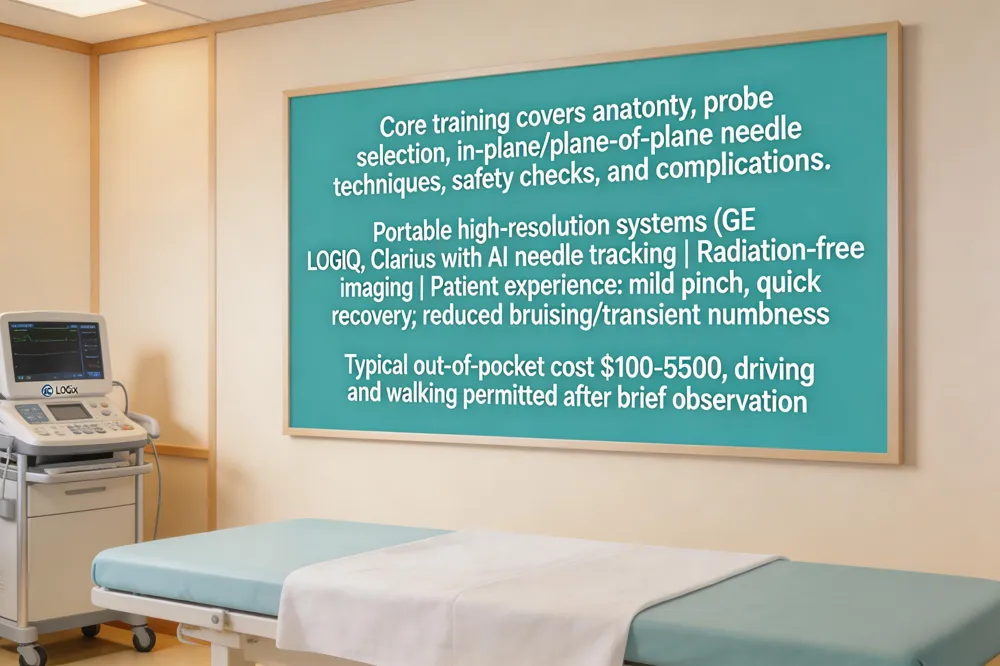
- Ultrasound guided nerve blocks ppt: A concise deck covering anatomy, probe choice, needle in‑plane/plane‑of‑plane technique, safety steps, and common complications to train clinicians.
- Ultrasound guided injection machine: Portable, high‑resolution system (e.g., GE LOGIQ, Clarius) that provides real‑time, radiation‑free imaging with AI‑assisted needle tracking for precise medication delivery.
- Ultrasound guided injection pain: Real‑time visualization minimizes needle‑related discomfort; patients usually feel only a mild pinch and recover quickly.
- Ultrasound guided injection side effects: Minor bruising, transient numbness, infection risk, or steroid‑related glucose rise; ultrasound reduces these by accurate placement.
- Ultrasound guided injection cost: Typically $100‑$500 out‑of‑pocket in the U.S.; insurance may lower the copay. Contact the California Pain Institute for exact pricing.
- Can I drive after ultrasound guided injection?: After a 15‑minute observation and if no dizziness or numbness occurs, most patients can drive; otherwise arrange transport.
- Can I walk after an ultrasound guided injection?: Light walking is allowed immediately, but rest for 30 minutes and avoid strenuous activity for 1‑2 weeks.
- Ultrasound guided injection recovery time: Light activity resumes after 2‑3 days; full anti‑inflammatory effect appears in 7‑10 days; avoid heavy lifting for a week.
Peripheral Nerve Blocks in Clinical Practice
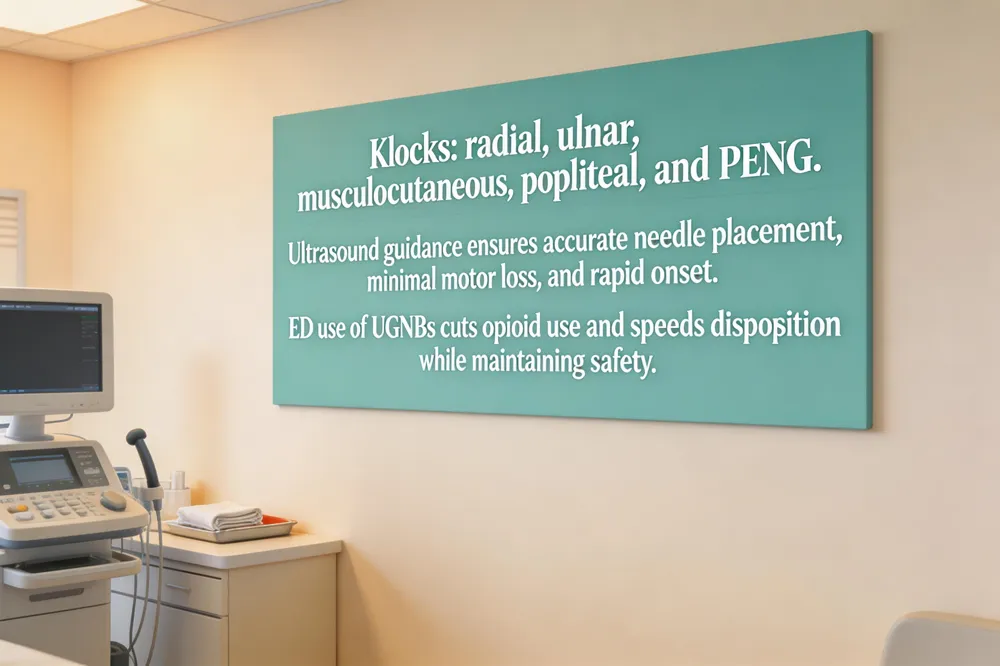 Radial nerve block – An ultrasound‑guided injection of 5–10 mL anesthetic lateral to the radial artery in the forearm, providing dorsal‑lateral hand analgesia for lacerations, burns, or foreign‑body removal. Minimal motor loss and rapid onset make it ideal for outpatient procedures.
Ulnar nerve block – Using a high‑frequency linear probe the ulnar nerve is visualized adjacent to the ulnar artery in the volar forearm. A 20–22 G needle is advanced in‑plane and 5–10 mL anesthetic is deposited around the nerve, delivering sensory blockade of the ulnar hand for wrist injuries or fifth‑metacarpal fractures.
Musculocutaneous nerve block – The probe is placed at the junction of the pectoralis major and biceps; the nerve is seen between the coracobrachialis and biceps. A 22‑G needle delivers 5–10 mL anesthetic, giving precise forearm anesthesia with reduced vascular risk.
Popliteal nerve block – In the popliteal fossa, the tibial and common peroneal branches of the sciatic nerve are visualized. Fifteen–twenty mL anesthetic yields dense sensory‑motor blockade for ankle/foot surgery while preserving hamstring function.
PENG block – The probe aligns with the inguinal ligament to locate the femoral head and iliopubic eminence. A needle is placed between the psoas tendon and ilium, depositing 20–30 mL anesthetic to block articular branches of the hip, preserving quadriceps strength for hip fractures or arthroplasty.
Emergency department application – Ultrasound‑guided nerve blocks (UGNBs) are a vital component of multimodal analgesia for acute pain in emergency settings, reducing reliance on opioids and their associated adverse effects. Real‑time visualization improves accuracy, reduces vascular puncture, and shortens procedure time, allowing faster patient disposition and enhanced safety.
Ultrasound‑Guided Musculoskeletal Injections
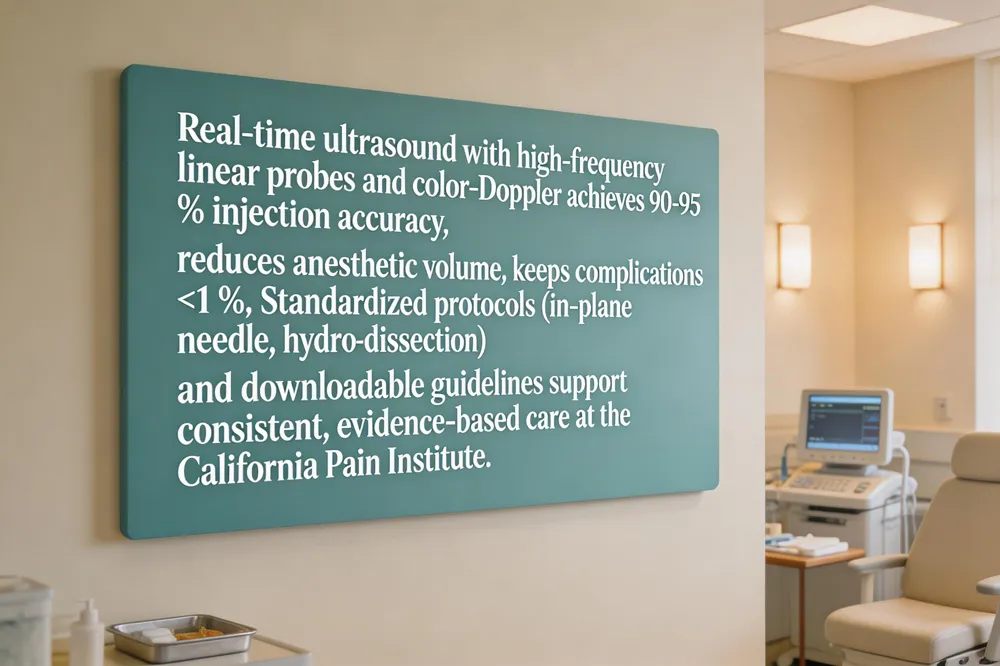 Joint, tendon and bursa injections performed under real‑time ultrasound provide precise medication delivery, improve pain relief, and reduce procedural complications. Standard imaging protocols begin with a high‑frequency linear probe, optimal gain and depth settings, and color‑Doppler to locate vessels; the needle is introduced in‑plane, using hydro‑dissection to confirm fascial plane placement before injecting ate‑15 mL of anesthetic or steroid. Large‑scale studies and systematic reviews demonstrate 90‑95 % accuracy, lower local‑anesthetic volume, and a complication rate of <1 %, confirming both efficacy and safety. Clinicians rely on downloadable PDFs—such as the BMUS 2023 guidelines for musculoskeletal injections, the ultrasound‑guided regional anesthesia handbook, and the nerve‑block protocol sheet—which outline indications, contraindications, dosing tables, consent checklists, and post‑procedure monitoring. These resources are essential for training at the California Pain Institute and ensure consistent, evidence‑based care. Frequently asked questions are addressed: the PDFs guide joint, tendon, and bursa injections; therapeutic ultrasound works by delivering controlled thermal and mechanical effects; injection relief typically lasts 3‑4 months for steroids, up to a year for hyaluronic acid; nerve block duration varies from 6 to 36 hours depending on drug choice and site.
Future Directions, Limitations, and Clinical Integration
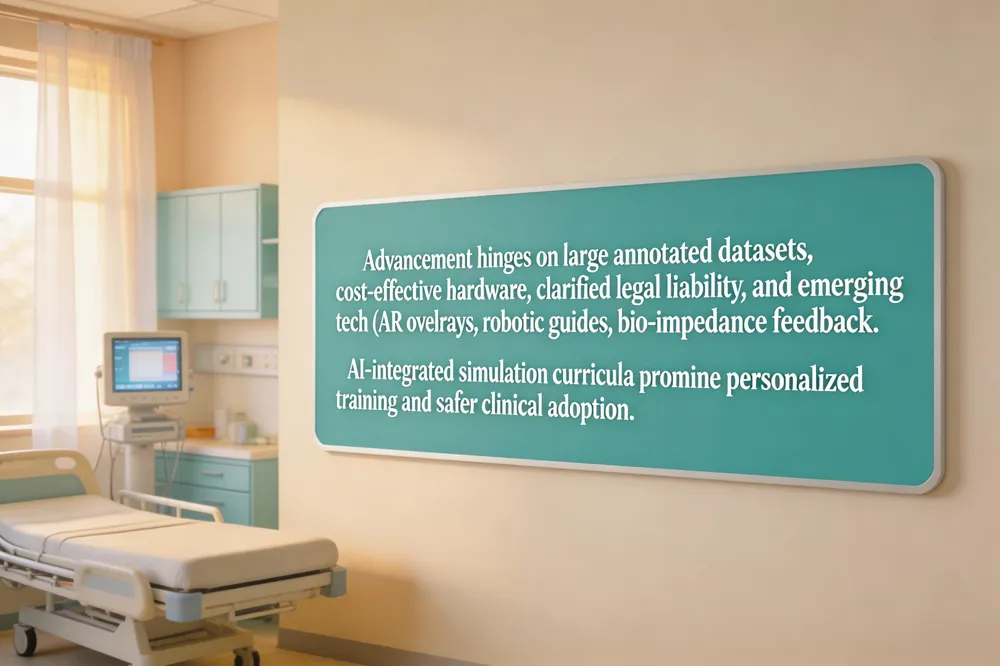 Artificial‑intelligence‑enhanced ultrasound is poised to reshape regional anesthesia, but its evolution depends on several critical factors. First, high‑quality, large‑scale annotated image datasets are essential to improve segmentation accuracy and to expand model performance across diverse patient groups, including pediatrics, geriatric, and obese populations. Second, the cost of AI‑enabled devices and the need for compatible hardware (e.g., high‑frequency probes, needle‑tracking modules) can be a barrier for smaller clinics; budgeting for acquisition, maintenance, and software licensing must be balanced against downstream savings from reduced complications and shorter procedure times. Third, legal responsibilities remain unsettled—malpractice insurers and regulatory bodies are still defining liability when AI‑related errors occur, underscoring the need for clear documentation and operator oversight. Fourth, emerging refinements such as augmented‑reality overlays, semi‑automatic robotic needle guides, and real‑time bio‑impedance feedback promise even greater precision and safety. Finally, simulation‑based curricula that integrate AI feedback can deliver personalized training, accelerating skill acquisition and ensuring that clinicians retain the anatomical expertise needed to interpret the technology safely.
Conclusion
Ultrasound‑guided nerve blocks provide real‑time visualization of nerves, vessels and needle trajectory, which markedly improves first‑attempt success, lowers the required volume of local anesthetic, and reduces complications such as vascular puncture and inadvertent intraneural injection. In Los Angeles, where chronic musculoskeletal pain is prevalent, these benefits translate into faster pain relief, fewer opioid prescriptions, and shorter recovery times for patients ranging from athletes to elderly retirees. The California Pain Institute embraces these advances by integrating FDA‑cleared AI‑enhanced platforms, such as ScanNav Anatomy PNB and Mindray SmartNerve, into a multidisciplinary practice. Ongoing clinician training, rigorous safety protocols and ready access to lipid‑emulsion therapy ensure that every procedure is performed with the highest standards of precision and patient‑centered care. We continually evaluate outcomes to enhance patient satisfaction.