Introduction to Specialist‑Led Pain Management
Specialist‑led pain programs are multidisciplinary treatment pathways coordinated by board‑certified pain physicians who work alongside physical therapists, psychologists, pharmacists and other allied health professionals. These programs are built on the biopsychosocial model, which recognizes that chronic pain is shaped by biological factors, psychological processes such as fear‑avoidance and catastrophizing, and social influences including work, family and socioeconomic status. By addressing all three domains, the team can modify neuroplastic pathways, promote graded activity and provide peer support, leading to better functional outcomes. The target population includes adults whose pain has persisted for more than three months and interferes with daily activities—conditions such as fibromyalgia, complex regional pain syndrome, refractory back pain, and post‑surgical pain. Patients with high‑impact pain, opioid dependence, or work‑related disability are especially encouraged to seek specialist‑led care early.
What Are Specialist‑Led Pain Programs?
Specialist‑Led Pain Program Overview
| Team Member | Primary Role | Key Contributions |
|---|---|---|
| Pain Physician (Board‑certified) | Medical oversight & interventional procedures | Medication optimization, nerve blocks, spinal cord stimulation |
| Physical Therapist | Graded physical restoration | Core strengthening, posture training, paced exposure |
| Occupational Therapist | Functional activity training | ADL (activities of daily living) adaptation, work‑related tasks |
| Psychologist | Behavioral therapy | CBT/ACT, mindfulness, coping strategies |
| Pharmacist | Medication management | Opioid tapering, non‑opioid analgesic selection |
| Complementary‑medicine provider (e.g., acupuncturist, chiropractor) | Adjunctive therapies | Pain modulation, musculoskeletal alignment |
| Case Manager | Care coordination | Seamless communication, appointment scheduling, follow‑up |
Biopsychosocial Model – Simultaneous targeting of biological, psychological, and social domains drives the average 40 % pain reduction and 70 % functional improvement.
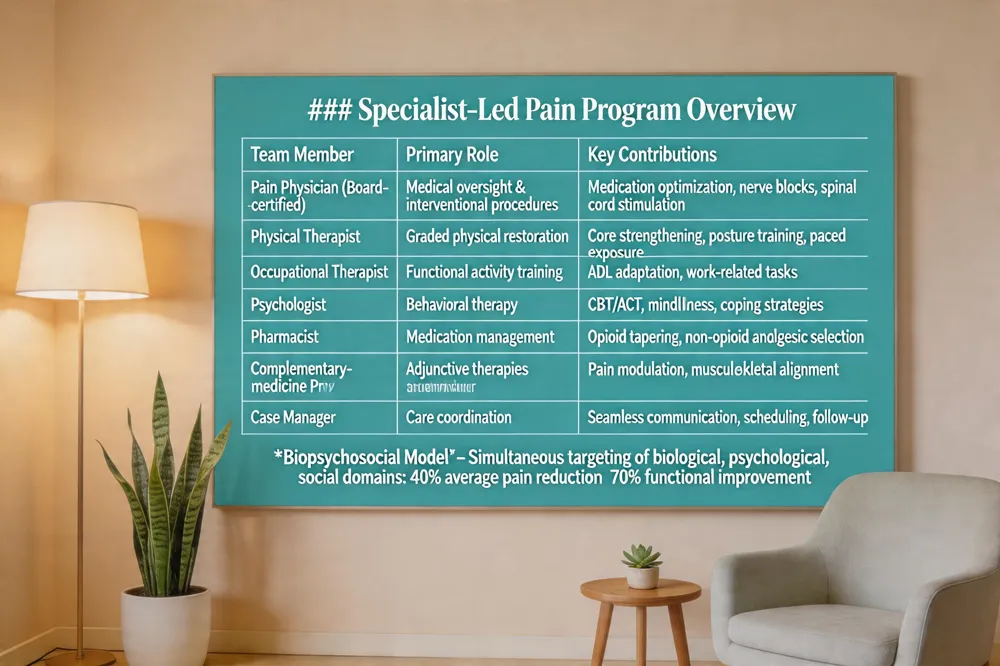 Specialist‑led pain programs are Intensive, team‑based rehabilitation programs designed for adults whose pain has persisted for more than three months and interferes with daily life. The core of these programs is a multidisciplinary team that typically includes board‑certified pain physicians, physical and occupational therapists, psychologists, pharmacists, and often complementary‑medicine providers such as acupuncturists or chiropractors. Each specialist contributes a unique expertise—physicians oversee medication optimization and interventional procedures, therapists deliver graded physical restoration, and psychologists provide cognitive‑behavioral or acceptance‑based therapies—while a dedicated case manager ensures seamless communication.
The Biopsychosocial model underlies every aspect of care. Treatment plans address biological factors (e.g., nerve pathology, inflammation), psychological components (e.g., fear‑avoidance, depression), and social influences (e.g., work demands, family support). By simultaneously targeting these domains, programs achieve the average 40 % reduction in pain intensity and a 70 % rate of patients reporting at least a 50 % improvement in quality of life.
Three mechanisms drive these outcomes: neuroplasticity, graded activity, and peer support. Neuroplasticity‑focused interventions—such as graded motor imagery, mirror therapy, and mindfulness training—re‑wire maladaptive pain pathways, reducing central sensitization. Graded activity introduces incremental, supervised exposure to feared movements, fostering confidence and functional gains without triggering flares. Finally, peer support groups embedded within the program provide motivation, shared coping strategies, and a sense of community that further reinforces adherence and long‑term success.
Program Formats, Durations, and Costs
Program Formats, Durations, and Costs
| Format | Setting | Length (weeks) | Days/Week | Typical Cost (USD) | Typical Candidates |
|---|---|---|---|---|---|
| Inpatient Residential | On‑site facility (24‑hr) | 2.7 (≈19 days) | 7 (full‑time) | $15,000 – $30,000 | Severe pain, complex medication needs |
| Outpatient Intensive | Clinic (patient home) | 3 – 8 | 2 – 5 | $8,000 – $15,000 | Adults with chronic pain seeking structured rehab |
| Virtual / Hybrid | Telehealth + occasional in‑person | 5 – 8 | 1 – 3 (remote) | $2,000 – $5,000 | Tech‑savvy patients, travel barriers |
| Functional Restoration | Clinic (focus on work) | 4 – 8 | 2 – 4 | $10,000 – $20,000 | Patients needing return‑to‑work preparation |
Insurance coverage varies; pre‑authorization often required for inpatient stays.
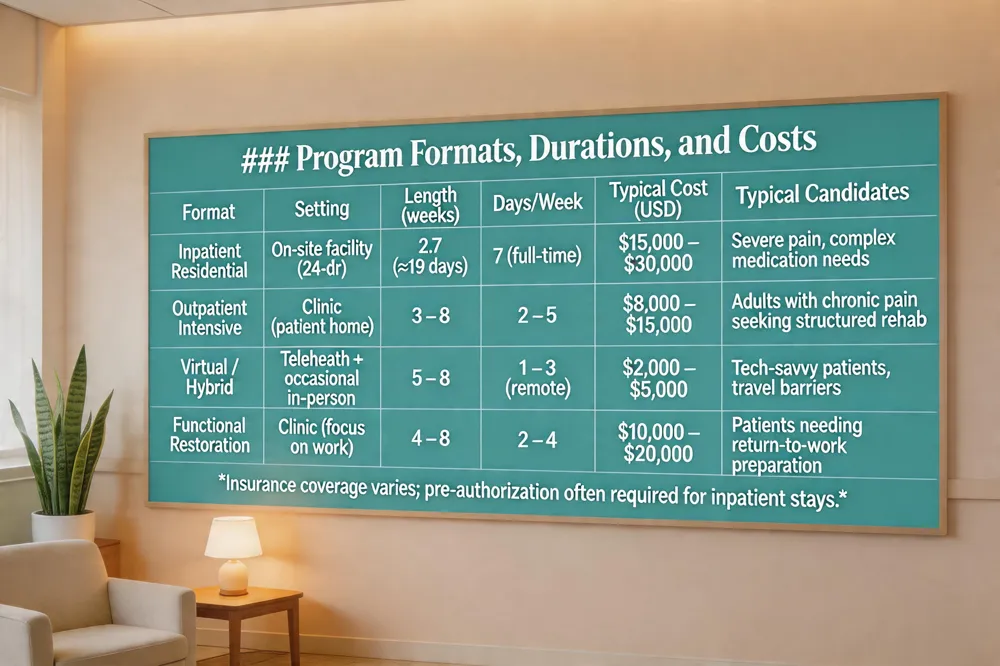 Chronic pain recovery programs come in several evidence‑based formats that differ in setting, length, and price.
Inpatient residential programs provide round‑the‑clock care for 19‑day stays, offering intensive physical therapy, cognitive‑behavioral therapy, medication management and peer support. Costs range from $15,000 to $30,000, reflecting 24‑hour staffing and comprehensive services for patients with severe pain or complex medication needs.
Outpatient intensive programs run 3–8 weeks, typically 2–5 days per week, allowing patients to stay at home between sessions. They deliver the same multidisciplinary curriculum—physical restoration, CBT/ACT, opioid tapering and education—at a lower price point of $8,000–$15,000.
Virtual and hybrid models use secure telehealth platforms to deliver education, CBT, and medication review over 5–8 weeks. Hybrid formats blend in‑person visits with remote sessions, offering flexibility while preserving outcomes. These programs cost $2,000–$5,000.
Functional restoration tracks focus on returning patients to work or daily activities and usually last 4–8 weeks. They combine graded activity, core strengthening, posture training and psychosocial coping strategies, with pricing between $10,000 and $20,000. Across all models, insurance coverage varies, often requiring pre‑authorization for inpatient stays, while outpatient and virtual services may be billed under physical‑therapy or mental‑health benefits.
Core Components and Success Mechanisms
Core Components & Success Mechanisms
| Component | Description | Mechanism of Action |
|---|---|---|
| Physical Therapy & Core Strengthening | Graded activity, posture, core stability | Improves biomechanics, promotes neuroplastic change |
| CBT / Mindfulness / ACT | Cognitive‑behavioral, acceptance‑based therapies | Reduces catastrophizing, enhances coping |
| Medication Optimization & Opioid Tapering | Pharmacologic review, supervised taper | Decreases opioid reliance, balances analgesia |
| Patient Education & Family Support | Pain neurobiology, pacing, self‑management | Empowers patients, reinforces adherence |
| Peer Support Groups | Group sessions within program | Provides motivation, shared strategies, community |
These pillars collectively achieve the 40 % pain reduction and 70 % functional gains reported.
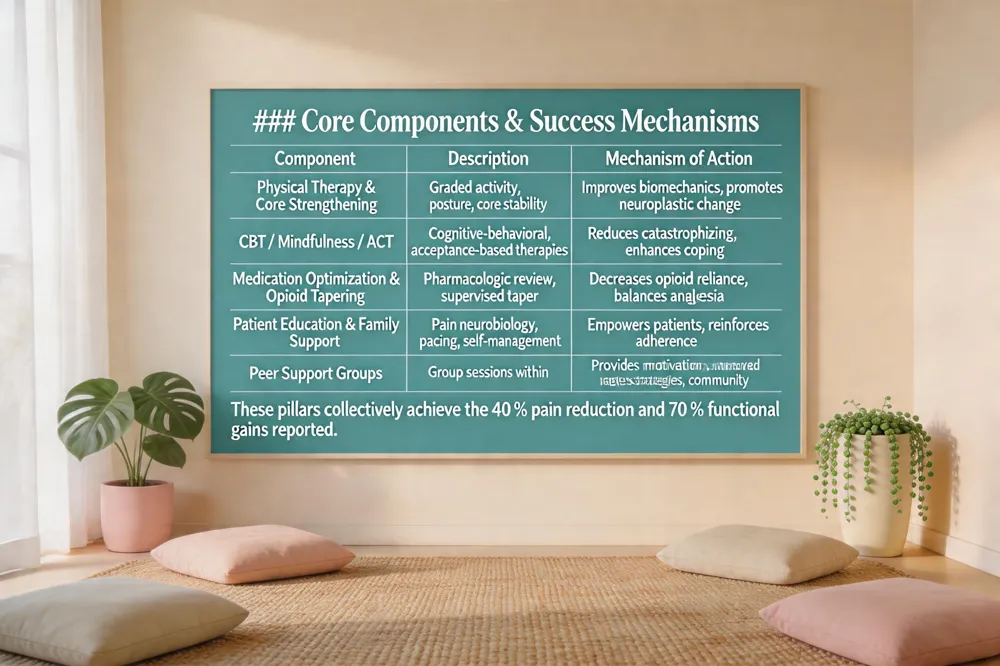 Specialist‑led chronic pain recovery programs hinge on four interrelated pillars that together drive the 40‑% average pain reduction and the 70‑% rate of patients achieving at least a 50‑% functional improvement.
Physical therapy and core strengthening – Structured, graded activity restores mobility, corrects posture, and builds core stability, reducing biomechanical stress and promoting neuroplastic change. Therapists use individualized exercise plans, flexibility drills, and paced exposure to feared movements, ensuring safe progression without exacerbating pain.
Cognitive‑behavioral therapy (CBT), mindfulness, and Acceptance‑Commitment Therapy (ACT) – These evidence‑based psychological interventions target maladaptive pain cognitions, catastrophic thinking, and avoidance behaviors. CBT teaches coping skills and relaxation techniques; mindfulness cultivates non‑judgmental awareness of sensations; ACT encourages values‑driven action despite discomfort. Together they lower pain catastrophizing and improve quality of life.
Medication optimization and opioid tapering – A multidisciplinary team, including pain physicians and pharmacists, reviews each patient’s medication regimen, prioritizing non‑opioid analgesics, anticonvulsants, and antidepressants. Supervised opioid tapering is performed when appropriate, reducing reliance while maintaining adequate pain control.
Patient education and family support – Comprehensive education on pain neurobiology, activity pacing, and self‑management empowers patients to engage actively in their recovery. Family and social‑support sessions reinforce home environments, improve adherence, and mitigate psychosocial stressors that can amplify pain. These integrated components create a biopsychosocial framework that maximizes functional restoration and long‑term resilience.
Outcomes, Follow‑Up, and Evidence
Outcomes, Follow‑Up, and Evidence Summary
| Outcome Metric | Average Result | Evidence Source |
|---|---|---|
| Pain Intensity Reduction | 40 % decrease (vs. baseline) | Multi‑site program evaluations |
| Quality‑of‑Life Improvement | ≥50 % improvement in 70 % of patients | Patient‑reported outcome measures |
| Return‑to‑Work Rate | ~50 % after program completion | Comparative studies vs. post‑spine surgery |
| Follow‑Up Duration | Structured support 3 – 12 months | Refresher sessions, tele‑check‑ins |
| Opioid Use Reduction | Significant tapering in majority | Medication optimization data |
Long‑term support (refresher sessions, tele‑health) sustains gains and minimizes relapse.
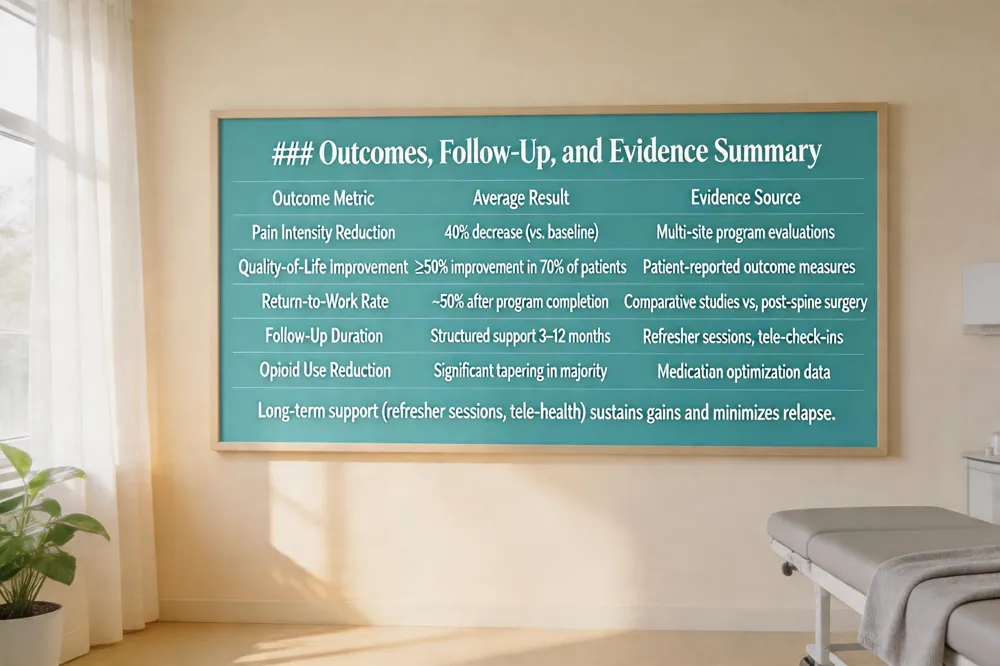 Extensive research on specialist‑led chronic pain recovery programs consistently shows robust outcomes. Participants experience an average 40 % reduction in pain intensity, and more than 70 % achieve at least a 50 % improvement in pain and quality of life. Functional gains are evident, with approximately 50 % of patients returning to work after program completion—significantly higher than the 20‑36 % return‑to‑work rate reported after spine surgery. Programs typically provide structured follow‑up for three to twelve months, offering refresher sessions, support groups, or telehealth check‑ins to sustain gains and prevent relapse. This long‑term support is crucial for maintaining reduced opioid use and reinforcing coping strategies. Overall, the evidence underscores that multidisciplinary, biopsychosocial‑based programs deliver meaningful pain relief, functional restoration, and lasting patient‑centered care.
Insurance, Referral, and Access Considerations
Insurance, Referral, and Access Considerations
| Consideration | Details |
|---|---|
| Pre‑Authorization | Often required for inpatient residential tracks |
| Billing Codes | Outpatient & virtual services may be billed under PT, OT, or mental‑health CPT codes |
| Screening Tools | Brief Pain Inventory, PHQ‑9, Pain Catastrophizing Scale to assess eligibility |
| Telehealth Expansion | Hybrid models reduce travel barriers; many plans cover tele‑sessions with physician referral |
| Out‑of‑Pocket Costs | Vary by plan; patients should confirm coverage and discuss billing with clinic staff |
| Referral Requirement | Physician referral typically needed for insurance reimbursement |
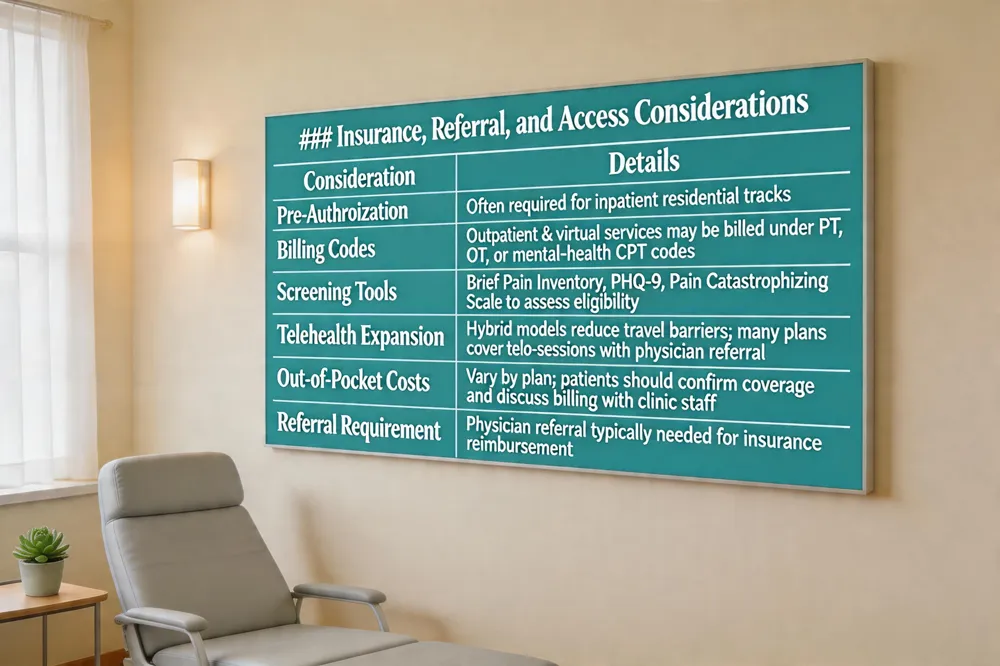 Insurance coverage for specialist‑led chronic‑pain programs varies widely. Inpatient residential tracks often require pre‑authorization, while outpatient and virtual formats may be billed under physical‑therapy or mental‑health benefits. Before enrollment, clinicians screen candidates with validated tools such as the Brief Pain Inventory, which quantifies pain’s impact on work, relationships, and daily activities and helps determine program eligibility. Telehealth and hybrid models expand accessibility, allowing patients to receive education, CBT, and medication review remotely, while still offering occasional in‑person sessions for hands‑on therapy. These flexible delivery options reduce travel barriers, improve adherence, and can be covered by many plans when a physician referral is documented. Patients should verify their specific plan’s requirements and discuss potential out‑of‑pocket costs with the clinic’s billing team to ensure seamless access to care.
Local Specialist‑Led Programs in Los Angeles – Clinic Overviews
Los Angeles Specialist‑Led Pain Clinics Overview
| Clinic | Location | Core Services | Contact |
|---|---|---|---|
| California Pain Institute | Los Angeles (various sites) | Spinal cord stimulation, ketamine infusions, PRP, RF ablation, regenerative therapies | (555) 123‑4567 |
| University Spine & Pain Center – Torrance | 3111 Lomita Blvd, Torrance, CA 90505 | Injections, RF ablation, spinal cord stimulation, telehealth | (424) 488‑0500 |
| Cedars‑Sinai Pain Center – Main | 444 S San Vicente Blvd, Suite 1101, LA | Nerve blocks, spinal injections, oral appliance therapy, psychological support | (310) 423‑9600 |
| Cedars‑Sinai Pain Center – Beverly Hills | 8501 Wilshire Blvd, Suite 220, BH | Same as main campus | (310) 385‑3530 |
| UCLA Pain Management – Multiple Locations | Downtown LA, North Hollywood, Santa Monica, Torrance, Encino | Diagnostics, medication management, interventional procedures, PT, behavioral support | Varies by site |
| Torrance Memorial Physician Network Pain Management | 23550 Hawthorne Blvd, Suite 120, Torrance | Epidural steroid injections, RF ablation, intrathecal pumps, regenerative medicine | (310) 891‑6795 |
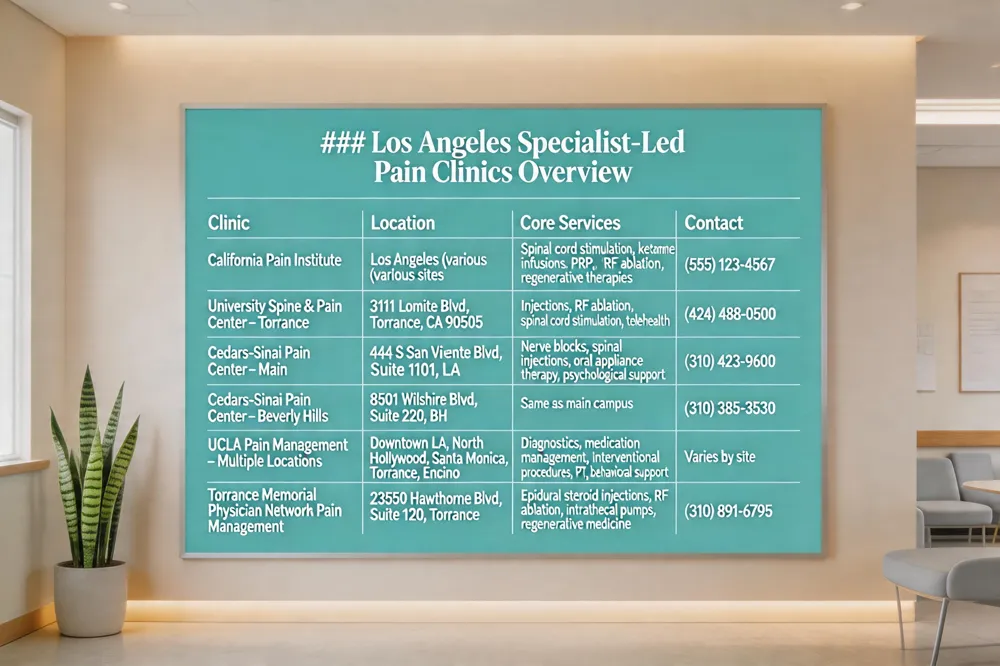 Pain management in Los Angeles is delivered through a multidisciplinary, board‑certified team that combines advanced diagnostics with personalized treatment plans. At the California Pain Institute we evaluate the root cause of both acute and chronic pain, offering interventions such as spinal cord stimulation, ketamine infusions, PRP injections, radiofrequency ablation, and regenerative therapies. Our physicians—trained at leading academic centers—focus on non‑narcotic, minimally invasive solutions while also addressing the emotional and functional impacts of pain. Patients benefit from a collaborative approach that integrates medication management, physical therapy, and psychological support to improve overall quality of life. Conveniently located in the Los Angeles area, we provide compassionate, evidence‑based care designed to restore mobility and relieve suffering.
Specific Provider Q&A for the Greater Los Angeles Area
Specific Provider Q&A – Greater Los Angeles
| Provider | Specialty / Role | Location(s) | Contact |
|---|---|---|---|
| Dr. Hayley Osen | Minimally invasive spine procedures | Downtown LA (UCLA) | (323) 555‑0101 |
| Dr. Najmeh P. Sadoughi | Chronic back/joint pain, multimodal care | Encino Specialty Care | (310) 555‑0202 |
| Dr. Francis M. Ferrante | Multimodal pain management | Santa Monica (UCLA) | (310) 555‑0303 |
| Dr. Laura G. Audell | Multidisciplinary team lead | Cedars‑Sinai | (323) 555‑0404 |
| Dr. Jerry Markar | Image‑guided injections | North Hollywood (UCLA) | (310) 555‑0505 |
| Dr. Bao Nguyen | Interventional pain procedures | University Spine & Pain Center – Torrance | (424) 488‑0500 |
| Dr. Matthew Robinson | Pain medicine, physiotherapy | University Spine & Pain Center – Torrance | (424) 488‑0500 |
| Dr. Joseph Peck | Pain management, telehealth | University Spine & Pain Center – Torrance | (424) 488‑0500 |
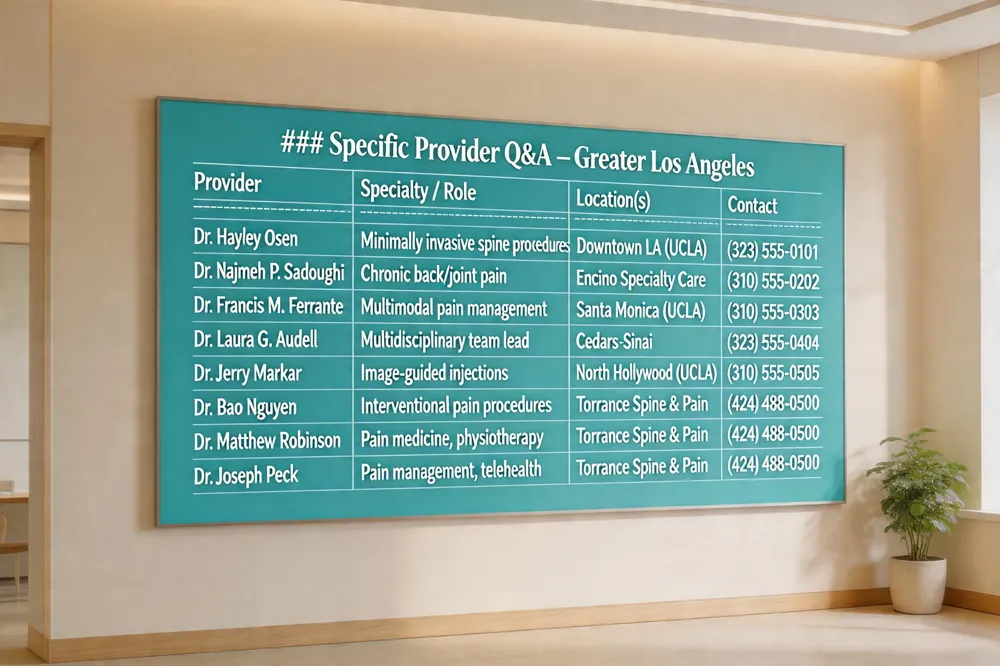 University Spine & Pain Center – Torrance – Located at 3111 Lomita Blvd, Torrance, CA 90505, this board‑certified clinic offers back, neck, joint and headache pain treatment, ultrasound‑guided injections, radiofrequency ablation and spinal cord stimulation. Telehealth appointments are available; physicians include Dr. Bao Nguyen, Dr. Matthew Robinson and Dr. Joseph Peck. Call (424) 488‑0500 to schedule.
Best Pain‑Management Doctors in Los Angeles – Dr. Hayley Osen (downtown LA, minimally invasive spine procedures), Dr. Najmeh P. Sadoughi (Encino Specialty Care, comprehensive chronic back/joint pain), Dr. Francis M. Ferrante (Santa Monica, multimodal plans), Dr. Laura G. Audell (Cedars‑Sinai, multidisciplinary team) and Dr. Jerry Markar (North Hollywood, image‑guided injections).
Cedars‑Sinai Pain Center – Main campus at 444 S San Vicente Blvd, Suite 1101; Beverly Hills satellite at 8501 Wilshire Blvd, Suite 220. Services: nerve blocks, spinal injections, oral appliance therapy, psychological support. Call 310‑423‑9600 (LA) or 310‑385‑3530 (BH).
Beverly Hills Pain Management – Cedars‑Sinai BH clinic (Dr. Joseph C. Tu) and local institutes offer injections, nerve blocks, rehabilitation, and telehealth. Call 310‑385‑3530.
UCLA Pain Management Locations – Downtown LA, North Hollywood, Santa Monica (1245 16th St., Suite 225), Torrance (3500 Lomita Blvd.), Encino. Board‑certified anesthesiologists provide diagnostics, medication management, and interventional procedures. Call the respective clinic numbers.
UCLA Pain‑Management Doctors – Dr. Hayley Osen, Dr. Najmeh P. Sadoughi, Dr. Jonathan T. Varghese, Dr. Jerry Markar, Dr. Francis M. Ferrante, Dr. Eric S. Hsu, Dr. Jakun W. Ing, Dr. Andrea Poon, Dr. Irene I. Wu, among others, all delivering multidisciplinary, evidence‑based care.
Pain Management in Torrance, CA – Torrance Memorial Physician Network Pain Management (23550 Hawthorne Blvd, Suite 120) and Southern California Pain Consultants provide epidural steroid injections, radiofrequency ablation, intrathecal pumps, regenerative medicine and coordinated therapy. Call 310‑891‑6795.
UCLA Pain Management Santa Monica – 1245 16th St., Suite 225; phone 310‑794‑1841. Team includes Drs. Ferrante, Hsu, Ing, Poon, and Wu. Offers medication, interventional procedures, physical therapy, and behavioral support. Accepts major insurances.
Conclusion – The Promise of Specialist‑Led Care
Specialist‑led programs provide a holistic, evidence‑based model that improves functional outcomes, cuts opioid use, and connects patients with Los Angeles’ premier pain physicians, therapists, and psychologists for lasting relief and comprehensive follow‑up support always.