Introduction: The Rise of Specialist‑Driven Pain Rehabilitation
Over the past two decades, specialist‑driven pain rehabilitation has expanded dramatically, with an estimated 1,200 organized multidisciplinary pain clinics now operating across the United States. These programs are grounded in the rehabilitation‑medicine philosophy of preserving residual function and preventing secondary complications rather than merely eliminating pain. A typical team includes a pain‑medicine physician or physiatrist, physical and occupational therapists, psychologists, social workers, and nursing staff, all collaborating to create individualized plans. Admission criteria are consistent: patients must have pain persisting at least six months, no active disease process requiring alternative treatment, and a willingness to actively engage in therapy—often supported by family involvement. This biopsychosocial approach aims to restore mobility, self‑care, and social participation, setting the foundation for lasting functional improvement.
Coordinated, Evidence‑Based Treatment Approaches
Coordinated, Evidence‑Based Treatment Approaches
| Component | Description |
|---|---|
| Pain Assessment | Comprehensive history, physical exam, imaging, nerve studies, functional assessments |
| Pharmacologic | NSAIDs, muscle relaxants, neuropathic agents, opioids (as needed) |
| Interventional | Epidural steroid injections, nerve blocks, spinal‑cord stimulation, intrathecal pumps |
| Physical Therapy / Occupational Therapy | Individualized exercise, range‑of‑motion training, functional restoration |
| Behavioral Health | CBT, relaxation training, mindfulness, coping‑skill education |
| Patient Education | Medication counseling, self‑management techniques, lifestyle modifications |
| Monitoring & Follow‑up | Regular pain scores, functional outcome tracking, plan adjustments |
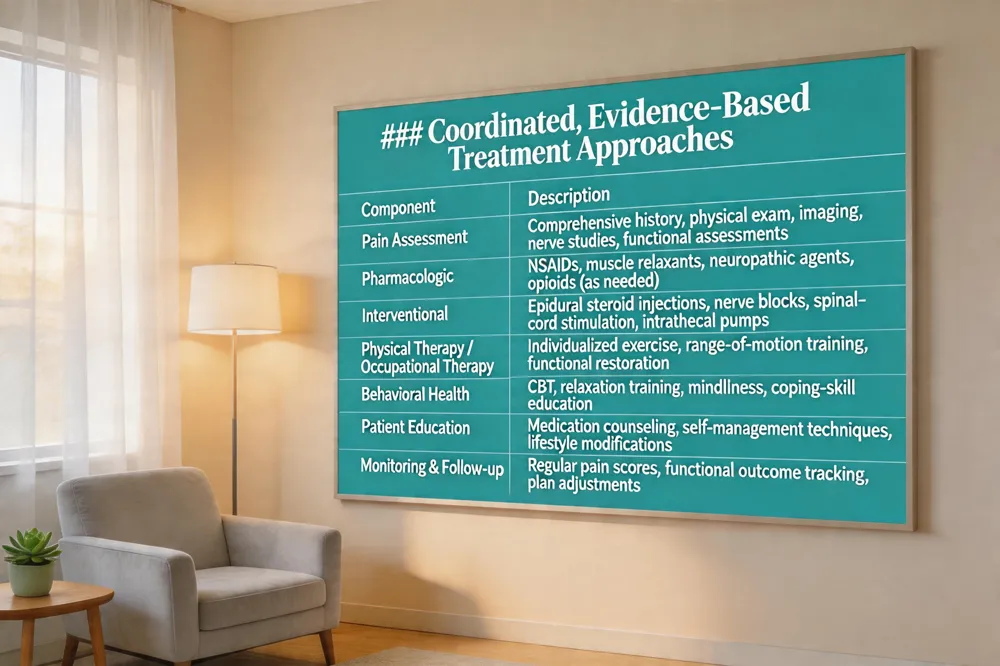 What is a coordinated treatment approach that provides extensive information about pain control? A coordinated approach is a multidisciplinary, evidence‑based program that begins with a pain assessment and combines pharmacologic options, interventional procedures, physical therapy, and behavioral health into an individualized plan. Patient education on medication, self‑management, and lifestyle changes, plus regular monitoring for adjustments, supports long‑term relief.
What are the 3 P’s of pain? Psychological (counseling, CBT, relaxation), Physical (exercise, PT, modalities), Pharmacological (NSAIDs, muscle relaxants, neuropathic agents). Together they form a stool of relief.
California pain clinic overview – The California Pain Institute in Los Angeles offers board‑certified physicians, interventional and regenerative therapies, PT/OT, and neuromodulation, delivering plans.
California pain management resources – The California Pain Medicine Center (Santa Monica), guidelines, Pain Foundation, Chronic Pain Association, and MyChronicPainTeam.
Center for Rehabilitation of Pain Syndromes services – Medical evaluation, medication management, spinal cord and peripheral nerve stimulation, PT/OT, pain psychology, mindfulness, and lifestyle counseling, all coordinated by a multidisciplinary team.
Los Angeles Pain Management Services and Leading Physicians
Los Angeles Pain Management Services & Leading Physicians
| Service | Provider / Physician | Notes |
|---|---|---|
| Comprehensive Evaluation | California Pain Institute (CPI) | Board‑certified physicians, imaging, nerve studies |
| Interventional Procedures | CPI, California Pain Medicine Center, UCLA Health | Injections, spinal‑cord stimulation, intrathecal pumps |
| Regenerative Therapies | CPI, California Pain Medicine Associates | PRP, stem‑cell options |
| Physical / Occupational Therapy | CPI, Rehabilitation centers | Tailored PT/OT programs |
| Psychological Support | CPI, UCLA Health | CBT, mindfulness, counseling |
| Key Physicians | Dr. Joshua P. Prager, Dr. Fowler (CPI) | Dr. Hayley Osen, Dr. Jessica P. Sadoughi (UCLA Health) |
| Dr. Eric S. Hsu, Dr. Andrea Poon (Santa Monica Pain Medicine) | ||
| Kaiser Permanente Program | Kaiser Permanente | Biopsychosocial model, integrates med mgmt, PT, CBT |
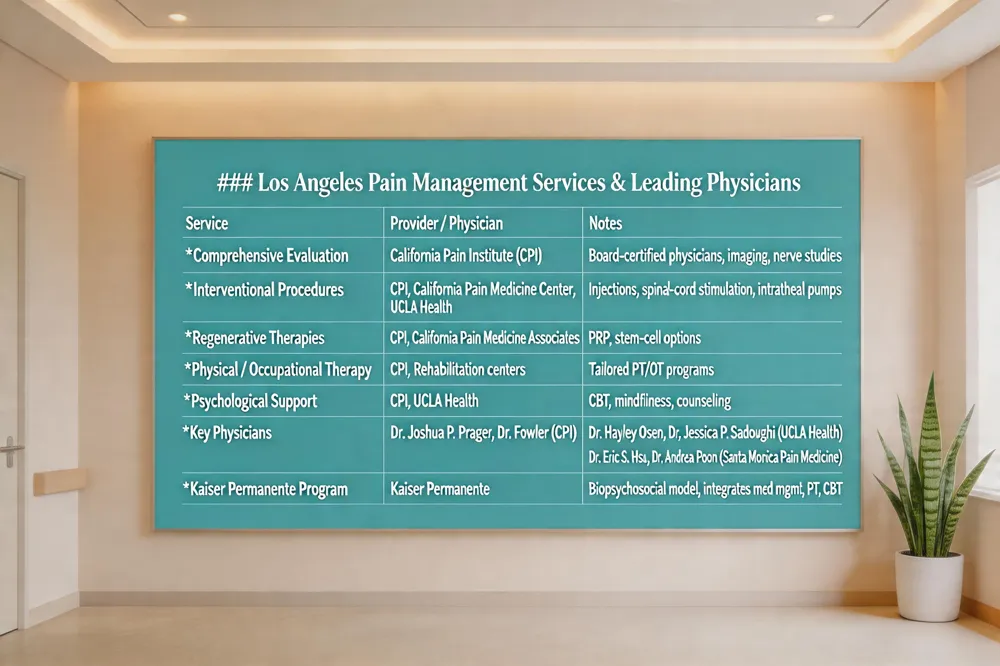 Los Angeles pain management services at the California Pain Institute combine expert diagnosis with a full spectrum of therapeutic options to relieve both acute and chronic pain. Board‑certified physicians conduct comprehensive evaluations—including imaging, nerve studies, and functional assessments—to pinpoint the exact source of discomfort. Treatment plans may include targeted injections, spinal cord stimulation, intrathecal pumps, ketamine infusions, PRP therapy, and advanced neuromodulation techniques, together with multidisciplinary support such as physical therapy, counseling, and lifestyle coaching. The top pain‑management physicians in the region include Dr. Joshua P. Prager and Dr. Fowler at the California Pain Medicine Center, Dr. Hayley Osen and Dr. Jessica P. Sadoughi at UCLA Health, and Dr. Eric S. Hsu and Dr. Andrea Poon at the Santa Monica Pain Medicine clinic. Kaiser Permanente’s chronic‑pain program follows a biopsychosocial model, integrating medication management, physical therapy, CBT, and, when needed, interventional procedures to improve function and quality of life while reducing reliance on high‑risk drugs.
Emerging Therapies and Cutting‑Edge Treatments
Emerging Therapies & Cutting‑Edge Treatments
| Therapy | Modality | Key Benefits |
|---|---|---|
| Suzetrigine (Journavx™) | Oral non‑opioid analgesic (sodium‑channel blocker) | First novel non‑opioid class in decades; reduces peripheral pain signaling |
| Scrambler Therapy® | Device‑based nerve‑signal modulation | Non‑invasive, high‑percentage pain reduction |
| Wearable Peripheral‑Nerve Stimulators | Portable electrical stimulation | Targets localized neuropathic pain without systemic meds |
| AI‑Guided Spinal‑Cord Stimulation | Closed‑loop neurostimulation | Adaptive pain control, optimized programming |
| VR Pain Reprocessing | Virtual‑reality immersion | Alters central sensitization, distracts from pain |
| EEG Neurofeedback | Brain‑wave training | Improves pain coping, reduces catastrophizing |
| Precision Pain‑Psychology Protocols | Tailored CBT + psychophysiology | Addresses individual psychological pain drivers |
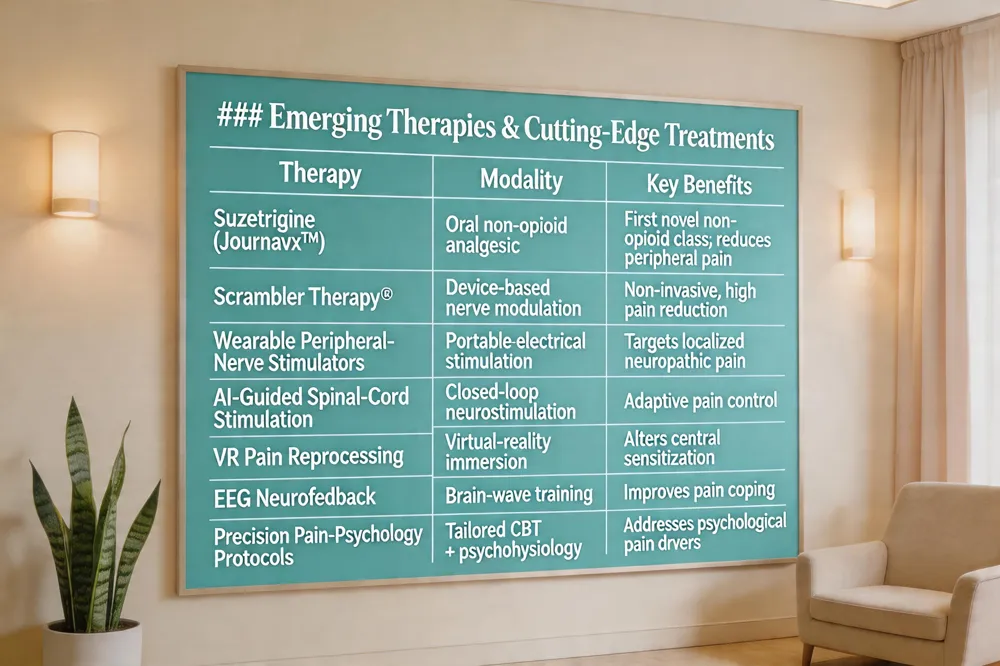 Chronic pain relief new treatments
New chronic‑pain therapies are expanding far beyond traditional opioids, offering safer, more targeted relief. The FDA’s recent approval of suzetrigine (Journavx™) introduces the first novel non‑opioid analgesic class in decades, acting on peripheral sodium‑channel pathways to dampen pain signals before they reach the brain. Device‑based options such as Scrambler Therapy®, wearable peripheral‑nerve stimulators, and AI‑guided spinal‑cord stimulation achieve high‑percentage pain reduction without systemic medication. Mind‑body innovations—including virtual‑reality pain reprocessing, EEG neurofeedback, and precision pain‑psychology protocols—address central sensitization and the psychological components of chronic pain.
Best inpatient chronic pain treatment centers
The Mayo Clinic’s Pain Rehabilitation Center and Johns Hopkins Hospital’s Pain Treatment Program are nationally ranked for their multidisciplinary, evidence‑based inpatient care, combining intensive physical therapy, occupational therapy, CBT, and structured medication tapering. In Los Angeles, the California Pain Institute can coordinate referrals to these benchmark programs while continuing outpatient support.
California Pain Medicine Associates services
California Pain Medicine Associates delivers comprehensive chronic‑pain care, including non‑opioid and opioid medication management, interventional epidural and facet injections, spinal‑cord stimulation, intrathecal pumps, ketamine infusions, PRP injections, and neuromodulation. A multidisciplinary team tailors treatment to functional goals, aiming to restore function and improve quality of life.
Education, Resources, and Patient‑Centric Tools
Education, Resources & Patient‑Centric Tools
| Resource Type | Example | Purpose |
|---|---|---|
| Books | The Way Out (Alan Gordon); The Mindbody Prescription (John E. Sarno); Living with Chronic Pain (Jennifer Schneider) | Scientific insight + mind‑body techniques |
| Inspirational Quotes | "Even the darkest night will end and the sun will rise" – Victor Hugo; "Tough times never last, but tough people do" – Robert H. Schuller; "You have survived 100 % of your worst days" – unknown; "Although the world is full of suffering, it is also full of overcoming it" – Helen Keller | Motivation & resilience |
| Symptom Checklist | Persistent aching, burning, shooting pain >3 months; numbness/tingling; joint stiffness; fatigue; sleep disturbance; heightened pressure/temperature sensitivity | Early identification of chronic pain |
| Multimodal Treatment Overview | Medication (acetaminophen, NSAIDs, antidepressants, anticonvulsants, opioids); PT (exercise, manual therapy); Mind‑body (yoga, mindfulness, biofeedback); Interventional (injections, spinal‑cord stimulation); Behavioral health (CBT, coping‑skill training) | Comprehensive, interdisciplinary plan |
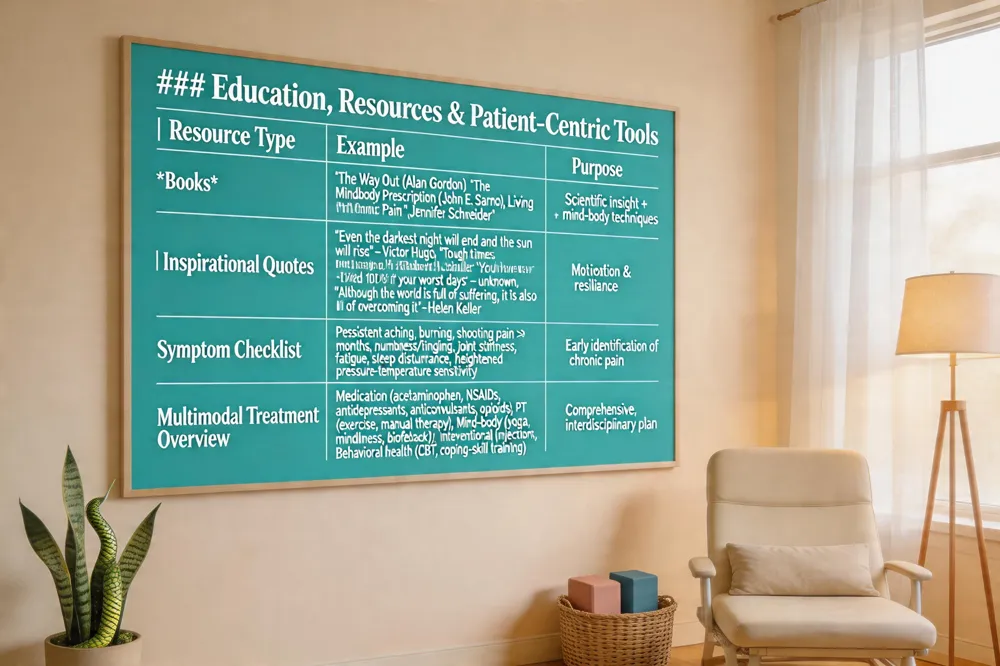 Reading recommendations for chronic‑pain patients – Books such as The Way Out (Alan Gordon), The Mindbody Prescription (John E. Sarno) and Living with Chronic Pain (Jennifer Schneider) blend scientific insight with mind‑body techniques, while memoirs like The Sound of a Wild Snail Eating and The Invisible Kingdom provide emotional support.
Key quotes that inspire resilience – “Even the darkest night will end and the sun will rise” (Victor Hugo); “Tough times never last, but tough people do” (Robert H. Schuller); “You have survived 100 % of your worst days” (unknown); “Although the world is full of suffering, it is also full of overcoming it” (Helen Keller).
Symptom checklist for early identification – Persistent aching, throbbing, burning, shooting or electrical pain lasting >3 months; numbness/tingling; joint stiffness and reduced range of motion; fatigue, sleep disturbances, irritability; heightened sensitivity to pressure or temperature.
Comprehensive treatment options overview – A multimodal, interdisciplinary plan combines medication (acetaminophen, NSAIDs, antidepressants, anti‑seizure agents, supervised opioids), physical therapy with individualized exercise, and mind‑body practices (yoga, mindfulness, biofeedback). Interventional procedures (epidural steroid injections, nerve blocks, radiofrequency ablation, spinal‑cord stimulation) and behavioral health services (CBT, coping‑skill training) address both physical and psychosocial aspects, promoting functional recovery and long‑term self‑management.
Psychological Support, Coping Strategies, and Nursing Perspectives
Psychological Support, Coping Strategies & Nursing Perspectives
| Strategy | Description |
|---|---|
| Breathing & Progressive Relaxation | Lowers sympathetic tone, reduces stress‑related pain amplification |
| Mindfulness Meditation | Enhances pain acceptance, changes pain perception |
| Cognitive‑Behavioral Therapy (CBT) | Re‑frames maladaptive thoughts, reduces catastrophizing, teaches pacing |
| Complementary Modalities | Acupuncture, massage, yoga, guided imagery – improve circulation, release endogenous analgesics |
| Short Meditations & Activity Grading | Breaks pain‑stress cycle, encourages graded exposure to activity |
| Nursing Role | Frequent pain assessments, TENS/biofeedback administration, medication titration, patient education, advocacy for individualized plans |
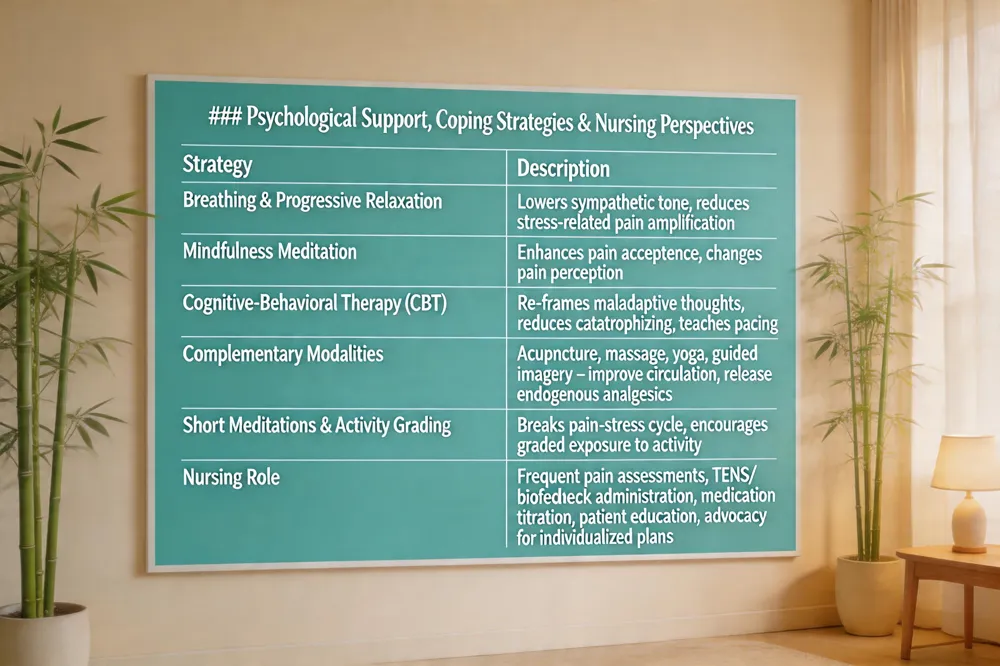 Effective chronic‑pain management begins with mental‑technique training. Mind‑body practices such as breathing exercises, progressive relaxation, and mindfulness meditation lower sympathetic tone, reduce stress‑related amplifiers, and re‑frame pain perception. Cognitive‑behavioral therapy (CBT) reinforces adaptive thoughts, diminishes catastrophizing, and teaches pacing to avoid over‑exertion. Complementary modalities—acupuncture, massage, yoga, and guided imagery—target muscle tension, improve circulation, and release endogenous analgesics, providing symptom relief that enhances the benefits of physical therapy and medication. When pain feels overwhelming, patients are encouraged to break the pain‑stress cycle through short meditations, activity grading, and social support, while maintaining nutrition, sleep hygiene, and gentle exercise. Nursing staff play a pivotal role: they perform frequent pain assessments, administer multimodal interventions (e.g., TENS, biofeedback, medication titration), educate patients on self‑management, and advocate for individualized, evidence‑based plans. By integrating psychological, complementary, and nursing strategies, a multidisciplinary program achieves better functional outcomes and a higher quality of life for chronic‑pain sufferers.
Hope, Meaning, and the Referral Journey
Hope, Meaning & The Referral Journey
| Aspect | Key Points |
|---|---|
| Living with Meaning | Pace activities, stay hydrated, balanced nutrition, gentle exercise, stress‑management tools, social connection |
| Why Referral? | Persistent pain unresponsive to standard care; specialist provides advanced diagnostics, interventional options, multidisciplinary therapies; aims to reduce medication reliance and restore function |
| Inspirational Quotes | "Even the darkest night will end and the sun will rise" – Victor Hugo; "Tough times never last, but tough people do" – Robert H. Schuller; "You have survived 100 % of your worst days" – unknown; "Although the world is full of suffering, it is also full of overcoming it" – Helen Keller |
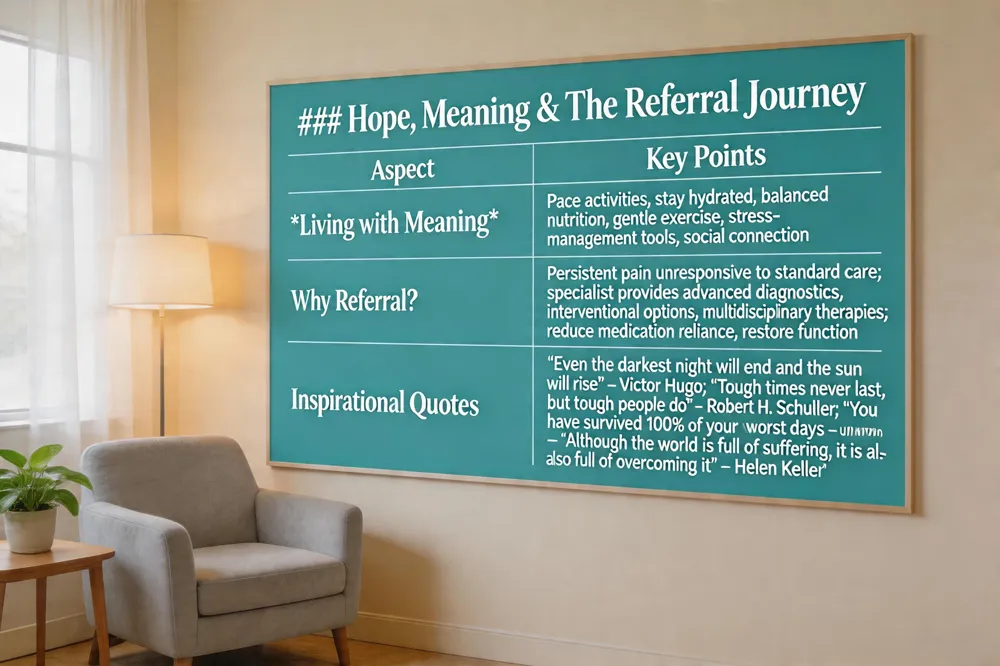 Living with meaning despite chronic pain
Life with chronic pain can feel overwhelming, yet many patients discover purpose by pacing activities, staying hydrated, eating balanced meals, and engaging in gentle exercise. Stress‑management tools, constructive self‑talk, and regular connection with friends or support groups foster resilience. Working with a pain‑medicine specialist and a mental‑health professional tailors coping skills to each individual, turning challenges into opportunities for growth and joy.
Why is my doctor referring me to pain management?
Your physician refers you because persistent pain has not responded to standard care. Pain‑management specialists bring advanced diagnostics, interventional procedures, targeted injections, and multidisciplinary therapies unavailable in primary care. This referral signals a proactive, personalized plan aimed at reducing medication reliance, restoring function, and improving quality of life.
Living with chronic pain quotes
"Even the darkest night will end and the sun will rise" – Victor Hugo;
"Tough times never last, but tough people do" – Robert H. Schuller;
"You have survived 100 % of your worst days" – unknown author;
"Although the world is full of suffering, it is also full of overcoming it" – Helen Keller.
These words nurture hope, strengthen mindset, and remind us that fulfillment is possible despite ongoing pain.
Conclusion: Embracing Specialist‑Driven Rehabilitation for a Pain‑Free Future
Multidisciplinary pain rehabilitation consistently outperforms single‑modality care by combining physical conditioning, behavioral therapy, and psychosocial support to break the cycle of deconditioning, reduce pain intensity, and restore function. Patients who engage in coordinated, specialist‑driven programs experience greater improvements in mobility, mood, and return‑to‑work rates, while also decreasing reliance on opioids and other high‑risk medications. Because chronic pain is a biopsychosocial condition, an evaluation by a pain‑medicine physician, physiotherapist, psychologist, and occupational therapist is essential to develop an individualized plan that addresses the unique mechanisms and goals of each patient. In Los Angeles, the California Pain Institute exemplifies this model, offering a comprehensive team‑based program, evidence‑based therapies, and seamless integration of medical, physical, and psychological interventions to empower patients toward lasting relief and improved quality of life.