Introduction
Sciatica is a symptom complex caused by irritation or compression of the sciatic nerve, the body’s largest nerve that runs from the lower spine through the hips and down each leg. Most often it results from a bulging or herniated disc, but spinal stenosis, spondylolisthesis, piriformis syndrome, tumors, or trauma can also be culprits. Patients typically describe sharp, burning or electric‑shock pain that radiates from the lower back to the buttock and down one leg, often accompanied by tingling, numbness or weakness. The purpose of this article is to provide a clear, evidence‑based overview of sciatica, dispel common misconceptions, and guide readers toward safe, effective management strategies—including activity modification, guided physical therapy, medication, and when necessary, minimally invasive interventions—so they can regain function and avoid complications such as permanent nerve damage.
Understanding Sciatica: Causes, Symptoms, and Myths
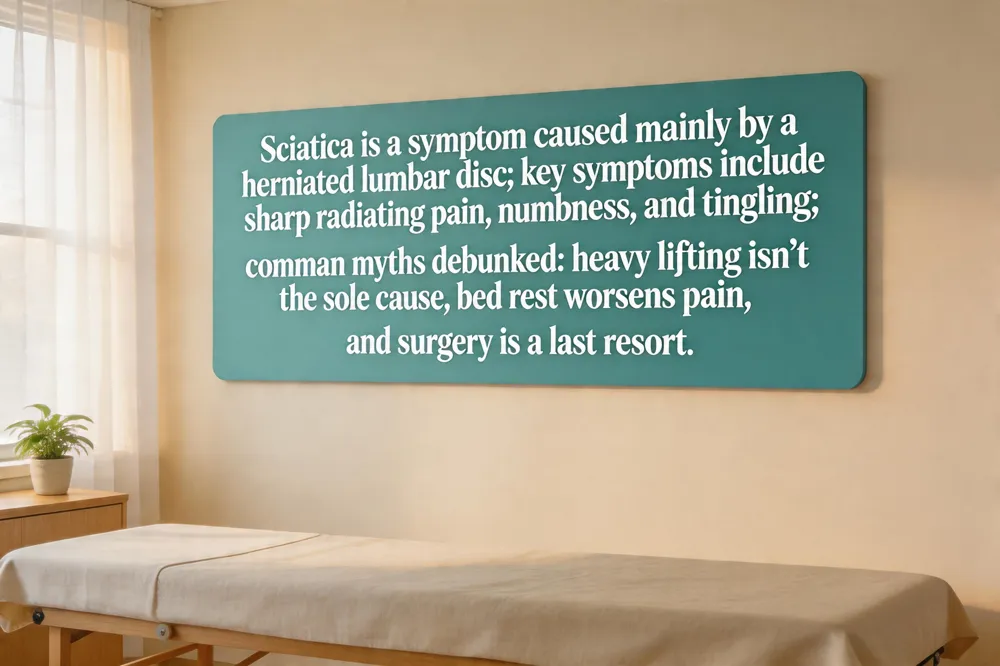 Sciatica is a symptom, not a disease, that results from irritation or compression of the sciatic nerve— the body’s longest nerve—originating in the lower spine and traveling down the buttock, thigh, calf, and foot. What is the biggest cause of sciatica? The most frequent trigger is a herniated or “slipped” lumbar disc, which bulges or ruptures and presses on the nerve root. Age‑related disc degeneration, spinal stenosis, spondylolisthesis, and piriformis syndrome also contribute but represent a smaller share of cases.
Sciatica symptoms typically begin as sharp, burning, or electric‑shock pain in the lower back or buttock and radiate down one leg, often accompanied by numbness, tingling, or muscle weakness. Symptoms worsen with prolonged sitting, coughing, or heavy lifting and usually affect only one side. Red‑flag signs—sudden severe weakness, loss of bladder or bowel control, or saddle anesthesia—require immediate medical attention.
Myths about back pain: 1) Lifting heavy objects is not the sole cause; sedentary lifestyle, poor posture, obesity, and genetics are major contributors. 2) Prolonged bed rest worsens sciatica; gentle activity (walking, low‑impact exercise) promotes recovery. 3) A bulky wallet in a back pocket can irritate the nerve but is not a common primary cause. 4) Surgery is a last‑resort option, reserved for progressive neurological deficits or failure of conservative care.
Can sciatica be psychosomatic? Chronic stress can heighten muscle tension and inflammation, increasing pain perception and potentially aggravating sciatica.
What’s the worst thing you can do for sciatica? High‑impact activities, repeated bending, and twisting place additional stress on the lumbar discs and can worsen nerve compression.
Is sciatica dangerous? While usually non‑life‑threatening, severe compression that leads to weakness, numbness, or bowel/bladder dysfunction signals cauda equina syndrome—a medical emergency that demands prompt evaluation and possible surgery.
Typical Course and Flare‑Ups
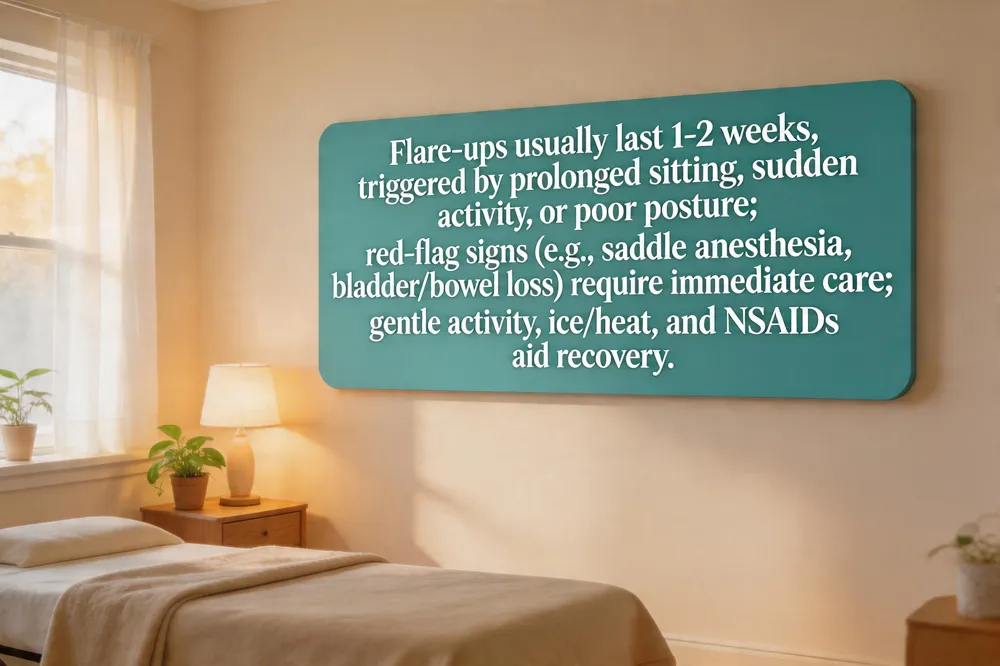 Sciatica flare‑ups usually last one to two weeks, but the exact duration varies; most patients feel improvement within a few days, while some may have lingering soreness up to four weeks. A flare begins when the sciatic nerve becomes more irritated or compressed—common triggers include prolonged sitting (especially on hard surfaces), sudden increases in activity, heavy lifting, twisting motions, poor posture, stress, and even coughing or sneezing. Episodes can recur several times a year; sedentary habits or ergonomic lapses often lead to flares every few weeks or months, while others may experience only a single episode. Red‑flag signs that require immediate medical attention are new or worsening weakness, loss of sensation in the saddle area, bladder or bowel dysfunction, or severe, unrelenting pain that does not improve with self‑care. Early management focuses on staying gently active—short walks, low‑impact stretches (piriformis, hamstring, nerve glides), alternating ice and heat, and short‑term NSAIDs or muscle relaxants. Physical‑therapy programs that strengthen the core and improve posture reduce the frequency and severity of future flare‑ups. If red‑flag symptoms appear, seek prompt evaluation to rule out cauda equina syndrome or progressive nerve damage.
Managing Acute Sciatica: Home Care and Immediate Relief
 Sciatica is usually caused by a bulging or herniated disc compressing the sciatic nerve. Prolonged rest or excessive sitting can worsen sciatica; staying moderately active and changing positions aids recovery.
Self‑care strategies: stay lightly active with short walks, use a supportive mattress and lumbar pillow, and avoid sitting for long periods; change positions every 30‑45 minutes.
Exercise and stretches: low‑impact moves such as glute bridges, hamstring pulls, and the Figure‑Four (piriformis) stretch lengthen surrounding muscles and reduce pressure on the nerve. A sciatic nerve glide—alternating knee extension and ankle dorsiflexion while supine—promotes nerve mobility. Perform each stretch 8‑10 times, holding 15‑30 seconds, 1‑2 times daily.
Heat/ice therapy: apply ice for 15‑20 minutes during the first 48 hours to cut inflammation, then switch to heat (warm pack or shower) to relax tight muscles and improve blood flow.
Medication: NSAIDs are first‑line medication for acute sciatica pain. If symptoms persist beyond 4‑6 weeks, or if Red‑flag symptoms: loss of bladder/bowel control, severe muscle weakness, sudden loss of sensation appear, seek prompt evaluation from a pain‑medicine specialist.
Quick relief methods: a 10‑minute routine of nerve‑flossing, piriformis stretch, and brief heat‑cold contrast can provide noticeable pain reduction within minutes. Consistent, guided home care usually leads to significant improvement within six weeks, while individualized treatment plans ensure optimal long‑term outcomes.
When to Seek Professional Help and Advanced Treatments
 Red‑flag symptoms & medical evaluation – Sudden loss of bladder or bowel control, severe leg weakness, numbness in the saddle area, fever, unexplained weight loss, or pain that worsens at night signal possible cauda‑equina syndrome or serious pathology. Prompt evaluation by a pain‑medicine specialist, including a focused history, physical exam (straight‑leg raise, gait, reflex testing) and, when indicated, MRI or CT, is essential.
What to do for severe lower back pain – Stop aggravating activities, apply ice for the first 48 hours, then heat. Use over‑the‑counter NSAIDs (ibuprofen or naproxen) unless contraindicated, and remain gently active (short walks, low‑impact movement). Schedule a specialist visit early; a guided physical‑therapy program can improve core stability and reduce nerve irritation.
Interventional options – If conservative care fails, epidural steroid injections or selective nerve‑root blocks can decrease inflammation and enable participation in therapy. These provide short‑term relief while the underlying compression is addressed.
Surgical considerations – Persistent, progressive neurological deficits, severe pain unrelieved after 6–8 weeks, or cauda‑equina syndrome warrant surgical decompression (micro‑discectomy, laminectomy, or fusion). Surgery is a last resort after exhaustive non‑surgical measures.
When to seek urgent care – Any red‑flag sign, rapid loss of function, or worsening pain despite self‑care should prompt immediate medical attention.
Lifestyle, Prevention, and Common Misdiagnosis
 Sciatica most often arises from a herniated disc, spinal stenosis, spondylolisthesis, or piriformis syndrome that compresses the sciatic nerve. Risk factors include age‑related disc wear, excess weight, weak core muscles, prolonged sitting, poor posture, diabetes, and tobacco use. Preventive strategies focus on regular low‑impact activity such as walking or swimming, core‑strengthening and flexibility exercises, weight management, ergonomic workstations, and avoiding prolonged static positions.
Is sciatica overdiagnosed? Yes—clinicians frequently label any unilateral leg pain as sciatica, when conditions such as piriformis syndrome, sacroiliac joint dysfunction, or facet‑joint arthritis are the true source. Standard imaging may appear normal, leading to ineffective, sciatica‑focused treatments. Precise physical exams and image‑guided diagnostic injections are essential to identify the correct pain generator and avoid years of unnecessary therapy.
Sciatica treatment begins with self‑care: alternating heat and ice, gentle stretching, staying active with short walks, and using NSAIDs for inflammation. Structured physical‑therapy programs strengthen the core, improve posture, and reduce recurrence. Persistent pain may merit corticosteroid injections; surgery is reserved for severe compression, progressive weakness, or loss of bowel/bladder control.
Red‑flag awareness is critical. Sudden severe weakness, loss of bladder or bowel function, saddle anesthesia, or fever indicate possible cauda equina syndrome or infection and require immediate medical evaluation. Prompt assessment and targeted interventions can prevent permanent nerve damage and facilitate recovery.
Conclusion
Key takeaways: • Sciatica is a symptom of nerve irritation, most often from a herniated disc or spinal stenosis, not a disease itself. • The majority of cases improve within 4‑6 weeks with conservative care—gentle activity, guided physical therapy, heat/ice, and NSAIDs. • Prolonged bed rest or excessive sitting can worsen symptoms; staying moderately active and changing positions frequently promotes recovery. • Surgery is a last‑resort option, reserved for severe, progressive weakness, loss of bladder/bowel control, or failure of non‑surgical treatments. • Red‑flag signs such as saddle anesthesia or bowel dysfunction require immediate medical attention.
Call to action: If you are experiencing radiating leg pain, schedule a visit with a qualified spine or pain specialist. Early, individualized assessment and a structured, active rehabilitation program can shorten recovery, prevent chronic disability, and improve quality of life. Take the first step toward relief—consult your healthcare provider today.