Introduction
Chronic pain management often entails ongoing doctor visits, prescription medications, and interventional procedures that can generate substantial out‑of‑pocket expenses. Many patients face high co‑pays, deductibles, and gaps in insurance coverage, especially when using Medicare, Medicaid, or high‑deductible private plans. These financial pressures can lead to delayed treatment, medication non‑adherence, and increased overall suffering. Proactive payment planning—such as verifying insurance benefits before care, obtaining itemized cost estimates, and exploring sliding‑scale fee schedules—helps patients anticipate costs and avoid surprise bills. Assistance programs further ease the burden: the Patient Advocate Foundation’s Co‑Pay Relief and Health Equity Funds, disease‑specific grants from the PAN and HealthWell Foundations, and third‑party financing like CareCredit or the California Pain Institute’s Patient Lending Program all provide targeted support. By engaging financial counselors early and leveraging these resources, patients can focus on recovery rather than financial stress, ensuring timely access to effective, multimodal pain‑relief therapies.
Understanding Insurance and Direct Payment Choices
 The California Pain Institute (CPI) works with a broad network of insurers to maximize coverage for chronic‑pain treatments. Major carriers accepted include Medicare, Medi‑Cal, and private plans such as Aetna, Blue Cross Blue Shield, Cigna, Humana, United Healthcare, Molina Healthcare, and many regional PPO, HMO and EPO networks. When a service is covered, patients are responsible for any deductible, co‑insurance, or co‑pay at the time of care, and CPI’s billing staff assists with pre‑authorizations and appeals to reduce out‑of‑pocket expenses.
For patients who are uninsured, under‑insured, or have high co‑pays, CPI offers a transparent self‑pay fee structure. The basic self‑pay option includes an initial office visit, a recommended in‑office procedure, and a follow‑up appointment for a one‑time fee of $650. This package provides a predictable cost for those who prefer to avoid insurance billing.
CPI also partners with third‑party financiers such as CareCredit and Republic Bank & Trust’s Patient Lending Program. CareCredit offers interest‑free promotional periods for purchases over $200 and longer‑term financing with APRs ranging from 0 % to 17.90 % depending on the plan. The Patient Lending Program provides fixed‑rate loans with no hidden fees, approved regardless of credit history, allowing patients to spread payments over 6‑24 months.
Cash‑pay patients may use any major credit card (Visa, MasterCard, American Express, Discover) or pay with cash, checks, and electronic transfers (Venmo, Zelle). CPI’s commitment to upfront pricing, flexible financing, and comprehensive insurance acceptance helps ensure that cost does not become a barrier to timely, effective pain management.
Patient Assistance Programs and Grants
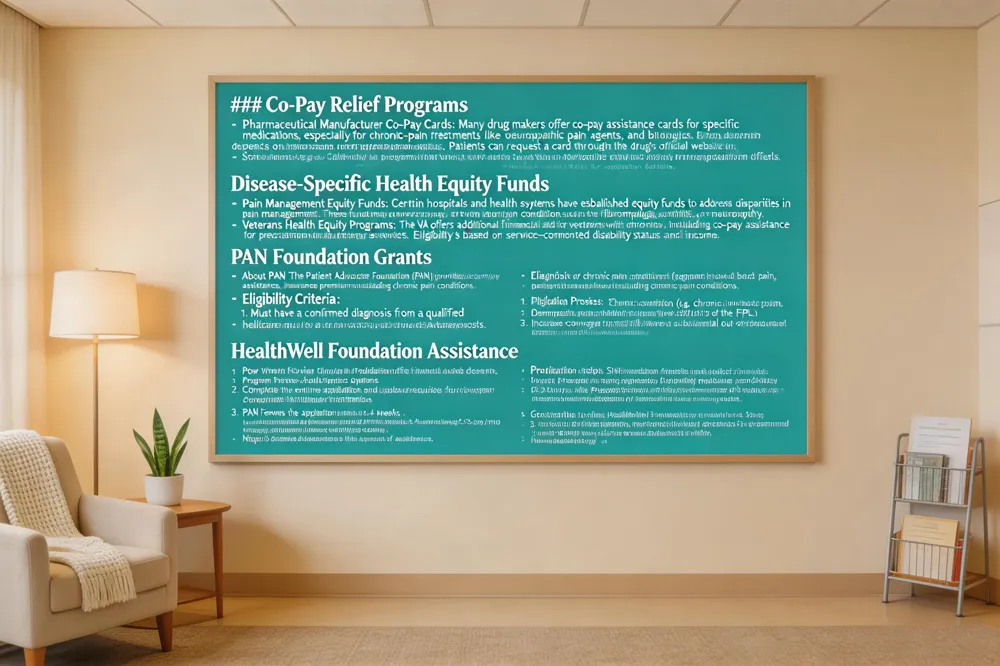 The Patient Advocate Foundation (PAF) helps reduce out‑of‑pocket costs through its Co‑Pay Relief program and disease‑specific Health Equity Funds. Eligible patients—identified by income, insurance status and zip‑code—can apply online or have a provider submit the request. Health Equity Funds target conditions such as multiple sclerosis, rheumatoid arthritis and neuropathic pain, and many California counties, including those in Los Angeles, are on the eligibility list.
The PAN Foundation offers disease‑specific grant funds that cover medication and treatment co‑pays for over 80 chronic illnesses. Patients search for a fund by disease, verify eligibility (income, insurance, diagnosis) and apply online. Grants range from $500 to $18,200 and can be combined with other assistance.
HealthWell Foundation grants provide up to 500 % of the federal poverty level coverage for prescription copays, premiums, deductibles and travel. The 100 % donation‑to‑grant model means every donor dollar goes directly to patients.
Medicare beneficiaries can use the federal Extra Help program to lower Part D premiums, deductibles and coinsurance. State Medicaid (Medi‑Cal) and California‑run assistance programs further reduce Part B co‑pays for pain‑management services.
California patients verify eligibility by entering their zip code on the PAF portal; many Los Angeles and surrounding counties qualify for both Co‑Pay Relief and Health Equity Funds, ensuring timely access to chronic‑pain therapies without financial delay.
Non‑Opioid and Evidence‑Based Alternative Therapies
 Evidence‑based alternative pain management includes a range of non‑opioid therapies that have demonstrated modest but clinically meaningful reductions in chronic pain intensity and improvements in function. Randomized trials and CDC guidelines support acupuncture for low‑back and knee pain, especially in older adults, and show that Tai Chi, yoga, and other mind‑body movement practices improve pain‑related disability and quality of life through gentle, coordinated activity and enhanced psychosocial coping. Mindfulness‑Based Stress Reduction (MBSR) and cognitive‑behavioral therapy (CBT) are non‑inferior to opioid therapy for chronic low‑back pain, providing skills for pain coping, mood regulation, and stress reduction. Physical‑therapy‑guided exercise programs—whether clinic‑based or community‑based low‑cost options such as group aerobics in public parks—strengthen musculature, promote flexibility, and reduce reliance on medication. Digital therapeutics, including AI‑driven mobile apps and virtual‑reality pain‑management platforms, are emerging as evidence‑based tools that can be covered by Medicare and deliver personalized interventions at home. Advances in neuromodulation, such as closed‑loop spinal cord stimulation, offer precise, adaptive stimulation that minimizes side effects. Integrating these modalities into a multimodal pain program allows clinicians to tailor treatment to individual preferences and comorbidities, aligning with the California Pain Institute’s mission of comprehensive, non‑opioid pain care.
Medication Strategies and Anti‑Inflammatory Options
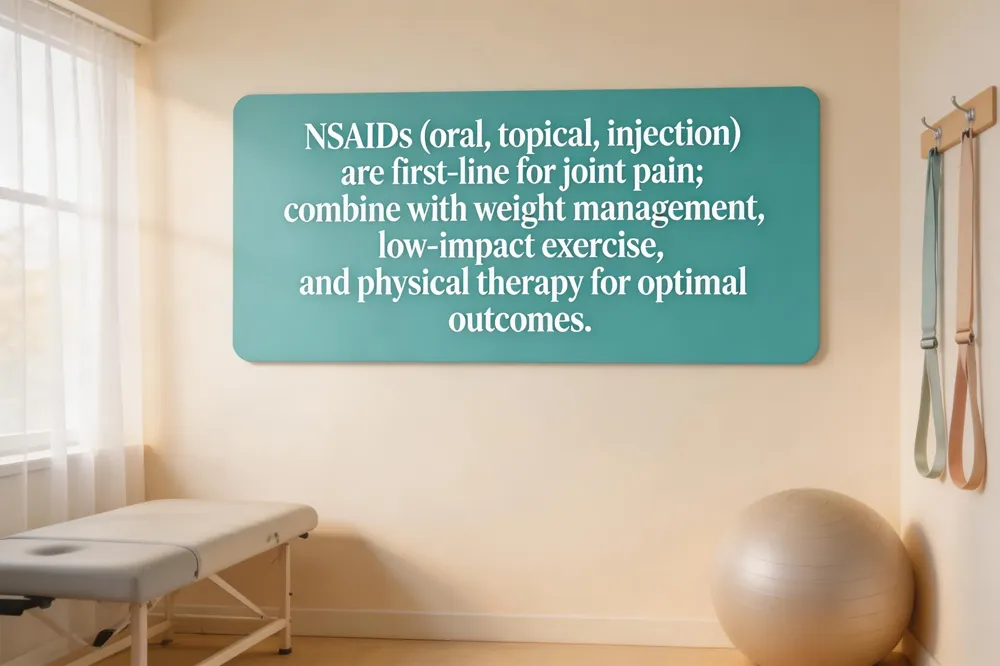 Non‑steroidal anti‑inflammatory drugs (NSAIDs) are the cornerstone for joint pain and stiffness. Over‑the‑counter ibuprofen and naproxen sodium are effective for mild‑to‑moderate osteoarthritis, while prescription agents such as diclofenac, meloxicam, and the COX‑2‑selective celecoxib provide stronger relief for persistent inflammation. Topical NSAID gels (e.g., diclofenac gel) and image‑guided intra‑articular injections deliver high local concentrations with minimal systemic exposure. Safety is paramount: NSAIDs increase gastrointestinal bleeding risk, can diminish renal function, and may raise cardiovascular events, especially in older adults or those with existing heart disease. To mitigate risks, take NSAIDs with food, use the lowest effective dose, and avoid concurrent use with anticoagulants unless directed by a clinician.
Best anti‑inflammatory medicine for joint pain – NSAIDs, chosen based on severity, comorbidities, and route (oral, topical, injection).
Best pain medication for chronic pain – No single drug works for all; start with non‑opioid agents (acetaminophen, NSAIDs, gabapentin, pregabalin, duloxetine) and consider low‑dose opioids only if needed, within a multimodal treatment plan.
Treatment for joint pain and stiffness – Combine weight management, low‑impact exercise (aquatic therapy, tai‑chi), physical‑therapy‑guided strengthening, supportive devices, and pharmacologic options (oral/topical NSAIDs, corticosteroid injections). This integrated approach maximizes function while minimizing medication‑related risks.
Stress, Psychology, and Comprehensive Care
 Chronic pain and stress are tightly linked; stress triggers hormonal and neural responses that amplify pain signals, creating a vicious cycle where pain fuels stress and stress intensifies pain. This feedback loop can worsen both acute episodes and long‑standing discomfort, making stress management a critical component of any pain‑relief plan.
Does stress make pain worse? Yes—stress can amplify both acute and chronic pain. When we experience stress, the body releases hormones and activates neural pathways that heighten pain signals, making existing discomfort feel more intense. Chronic pain patients are especially vulnerable because stress can reinforce threat‑learning circuits in the brain, leading to a feedback loop where pain triggers stress and stress, amplified pain. Managing stress through relaxation techniques, counseling, or medication is a key component of comprehensive pain treatment.
Psychological therapy for pain management Psychological therapy is a core component of comprehensive chronic‑pain management, helping patients reduce distress, improve coping, and enhance function. Cognitive‑behavioral therapy (CBT) has the strongest evidence base, consistently lowering depression and anxiety and boosting quality of life. Acceptance and commitment therapy (ACT) and mindfulness‑based interventions (MBIs) are newer “third‑wave” approaches that target psychological flexibility and pain acceptance, with growing trials showing reductions in pain‑related distress and improved activity. Integrating these therapies with medical treatment at a pain‑specialty clinic such as the California Pain Institute provides a holistic, evidence‑based pathway toward better pain control and overall wellbeing.
Conclusion
The California Pain Institute (CPI) offers a comprehensive financial safety net: patients can leverage major insurance carriers—including Medicare, Medicaid, and private plans—while also accessing a range of payment options such as self‑pay bundles, CareCredit and other low‑interest financing, and flexible monthly installments. In addition, disease‑specific assistance programs like the Patient Advocate Foundation’s Co‑Pay Relief, PAN Foundation grants, HealthWell Open Funds, and local Health Equity Funds can offset co‑pays, deductibles, and medication costs for eligible individuals. We strongly encourage every patient to speak openly with CPI’s financial counselors and clinical staff to review eligibility, explore sliding‑scale fees, and submit applications for charitable grants before treatment begins. Acting promptly ensures that financial concerns do not delay essential pain‑management therapies, allowing you to receive timely, affordable care and focus on achieving lasting relief.