Why a Personal Migraine Action Plan Matters
Migraine is a chronic neurological disorder that can cause severe, recurring head pain, nausea, and light‑ and sound‑sensitivity, often disrupting work, school, and daily life. A written, personalized Migraine Action Plan (MAP) translates a patient’s headache history, typical aura or prodrome symptoms, and medication list into clear, step‑by‑step instructions for at‑home rescue, travel, and urgent‑care situations. Evidence shows that early, guideline‑driven treatment reduces attack duration, lowers emergency‑room visits, and prevents progression to chronic migraine. The California Pain Institute in Los Angeles offers expert neurologists who help patients create and regularly update MAPs, integrate newer therapies such as CGRP‑targeted drugs and neuromodulation devices, and tailor travel‑ and pregnancy‑specific recommendations—providing a trusted, local resource for comprehensive migraine management.
Foundations of a Migraine Action Plan (MAP)
Core Elements of a Migraine Action Plan (MAP)
| Component | Details |
|---|---|
| Personal Info | Name, age, allergies, diagnosis, emergency contacts |
| Typical Attack | Aura, dizziness, hemiplegic features, prodrome/ post‑drome |
| Home‑ Algorithm** | Separate‑‑to‑moderate vs. moderate‑to‑severe; rescue meds, timing, backup meds |
| Prevention | Daily preventive meds, lifestyle measures, trigger list |
| Red‑Flag Criteria | >72 h headache, worst‑ever, new neuro deficits, fever, thunderclap |
| References | AHS 2018 template, CGRP mAbs, gepants, neuromodulation updates, pediatric & hemiplegic templates |
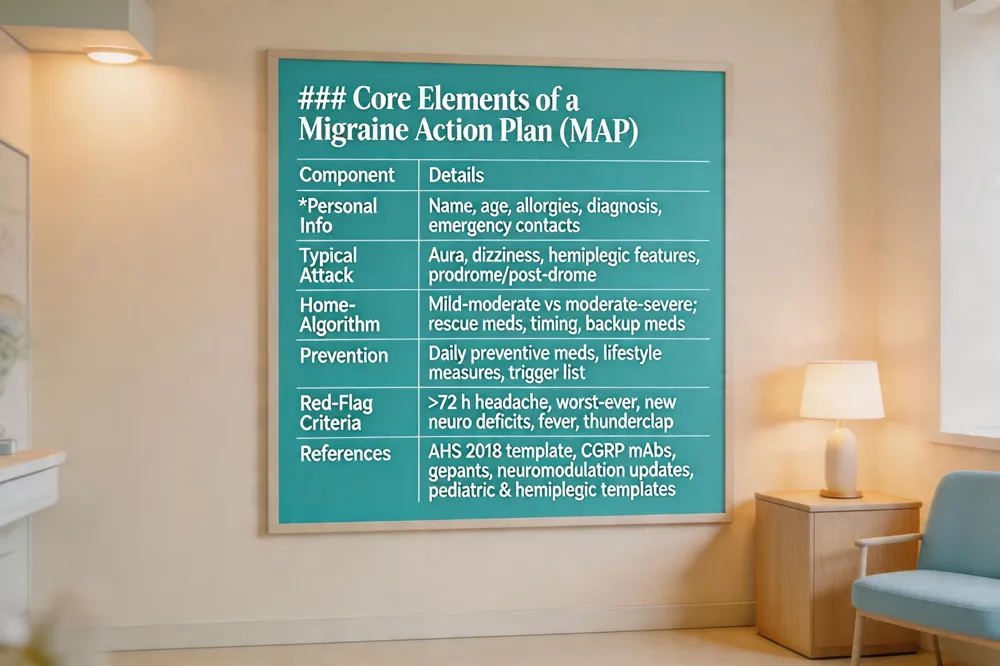 A Migraine Action Plan (MAP) is a personalized, written strategy that guides patients through early recognition, acute rescue, prevention, and when to seek urgent care. Core components include personal health details (name, age, allergies, diagnosis, emergency contacts), a description of typical attack presentation (aura, dizziness, hemiplegic features), at‑home treatment algorithms that separate mild‑to‑moderate from moderate‑to‑severe attacks, backup medication options, and clear red‑flag criteria for emergency evaluation. The American Headache Society (AHS) released a 2018 template that captures these elements, though it predates newer therapies such as CGRP monoclonal antibodies, gepants, and neuromodulation devices. Pediatric MAPs adapt the adult format into a three‑zone (green‑yellow‑red) system for school staff and parents, while the CACNA1A Foundation offers a hemiplegic‑migraine‑specific template that emphasizes rapid neurology notification and avoidance of unnecessary imaging.
Migraine treatment guidelines PDF – The AHS and American Academy of Neurology provide freely downloadable PDF guidelines covering acute and preventive migraine care; international guidelines (e.g., German Migraine and Headache Society 2019) are also available.
[Migraine Action Plan template](https://www.migrainedisorders.org/migraine-action-plan/) – The template starts with basic demographics, lists typical triggers and attack features, outlines rescue medication regimens with dosages and timing for different severity levels, includes preventive medication schedules, lifestyle recommendations, and supplies transportation‑flag symptoms and emergency contact information.
Building Your Emergency Migraine Kit
Recommended Items for an Emergency Migraine Kit
| Category | Items (travel‑ready) |
|---|---|
| Medications | Fast‑acting triptan or gepant, OTC NSAID (ibuprofen), anti‑nausea pill, acetaminophen (≤3 g/day) |
| Non‑Pharmacologic | Reusable cold‑compress pack, lightweight heating pad, dark sunglasses/eye mask, earplugs or noise‑cancelling headphones, essential‑oil rollers (lavender/peppermint) |
| Hydration & Nutrition | Small water bottle, electrolyte packet, snack (crackers, nuts, protein bar) |
| Tracking & Documentation | Pocket‑size notebook or migraine‑tracking app, emergency contact card, copy of MAP PDF |
| Travel Adaptations | TSA‑friendly pouch, travel‑size caffeine (instant coffee/dark‑chocolate), portable charger, blackout eye mask |
| DIY Extras | Ginger chew, magnesium tablet, mini neuromodulation device (Cefaly or gammaCore) |
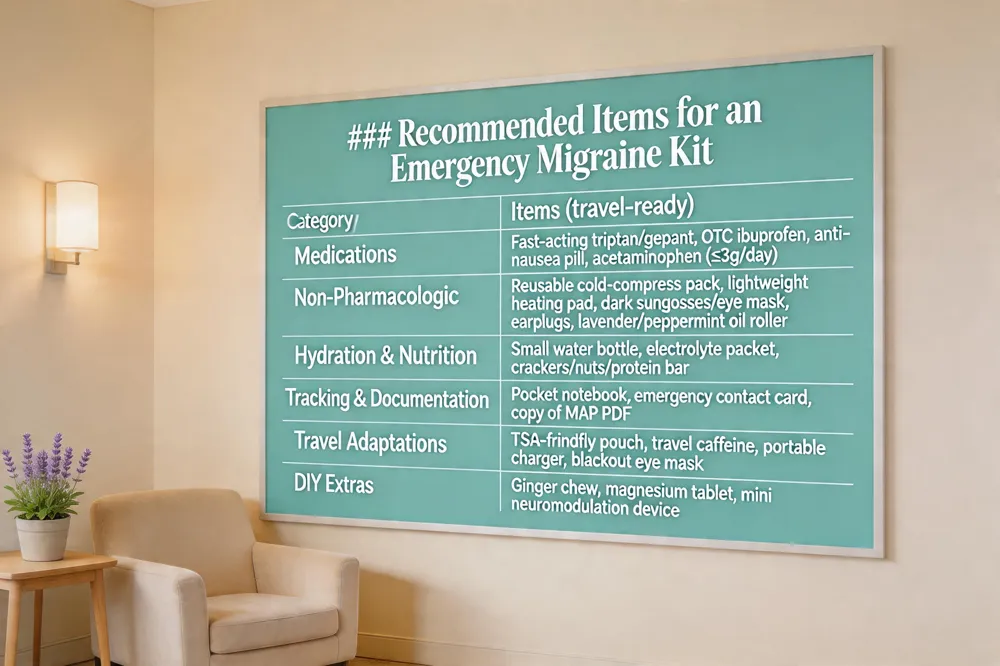 A well‑stocked migraine kit lets you treat attacks the moment they begin. Essential medication and non‑pharmacologic items – keep a fast‑acting triptan or a prescribed gepant, an OTC NSAID such as ibuprofen, and an anti‑nausea pill. Add a reusable cold‑compress pack, a small heating pad, dark sunglasses or an eye mask, earplugs or noise‑cancelling headphones, and a few essential‑oil rollers (lavender or peppermint). A water bottle, electrolyte packet, and a snack (crackers or nuts) guard against dehydration and low blood sugar. A pocket‑size notebook or migraine‑tracking app records triggers and response. Travel‑ready adaptations – pack the same essentials in a compact, TSA‑friendly pouch; include a travel‑size caffeine source (instant coffee or dark‑chocolate tablet), a portable charger for relaxation apps, and a lightweight blackout eye mask for hotel rooms. DIY migraine relief kit ideas – assemble a pouch with your prescription meds, an OTC pain reliever, a ginger chew for nausea, a magnesium tablet, a reusable cold pack, dark glasses, earplugs, and, if prescribed, a mini neuromodulation device (Cefaly or gammaCore). Carry this kit in your bag, car, or desk drawer for instant access.
Medication Management and Safety
Medication Dosing & Safety Quick‑Reference
| Medication | Max Daily Dose | Frequency Limits | Key Safety Notes |
|---|---|---|---|
| Acetaminophen | 3 g (6 × 500 mg) typical; 4 g absolute ceiling | One dose every 4‑6 h; ≤6 dages 24 h | Avoid alcohol; watch for combination products |
| Ibuprofen | 1.2 g OTC; 3.2 g prescription | ≤4 g/24 h; 6‑8 h spacing | GI irritation; take with food |
| Triptans | Varies (e.g., sumatriptan 100 mg) | ≤9 days/month for triptans | Contraindicated with cardiovascular disease |
| Gepants | e.g., rimegepant 75 mg | ≤10 days/month (general) | Generally safe in pregnancy (after 1st trimester) |
| Anti‑Nausea | Metoclopramide 10 mg | Every 6‑8 h | Watch for tardive dyskinesia with long‑term use |
| CGRP mAbs | Quarterly injection (e.g., erenumab 140 mg) | As prescribed | Monitor for constipation, injection site reactions |
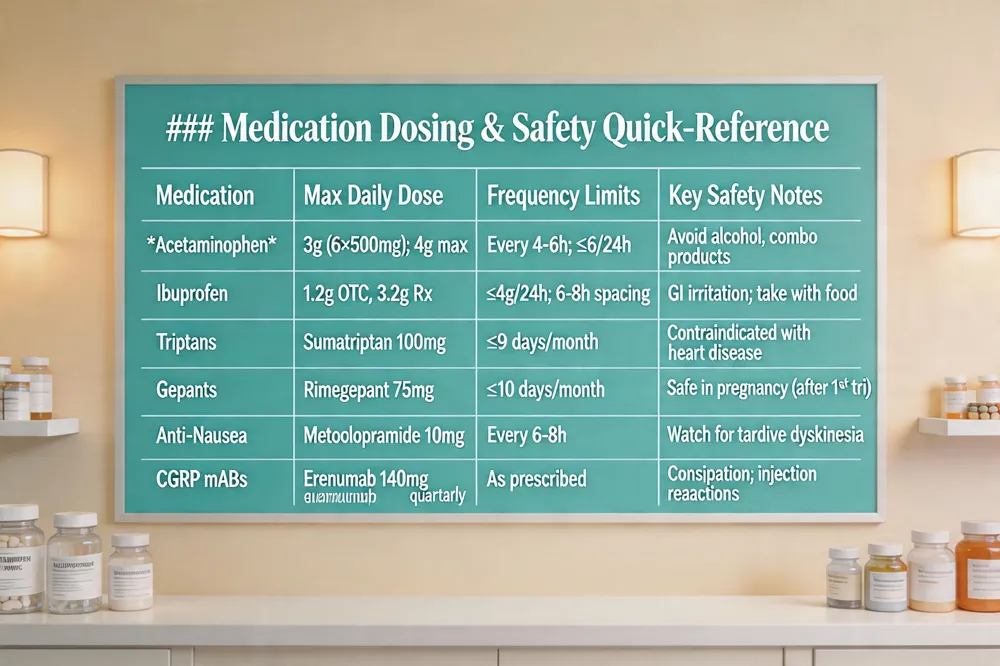 Acute dosing limits for acetaminophen – Extra‑strength Tylenol (500 mg) can be taken 1‑2 tablets every 4‑6 hours, not exceeding 3,000 mg (six tablets) in 24 hours for most adults; the absolute ceiling is 4,000 mg but a lower limit reduces liver risk, especially with alcohol or other acetaminophen‑containing drugs.
When to seek urgent care – Go to the ER or urgent‑care if headache persists >72 hours, is the “worst ever,” presents with new neurological deficits, fever, or red‑flag signs such as thunderclap onset.
Red‑flag symptoms & medication‑overuse – Warning signs include sudden severe pain, focal weakness, visual changes, or vomiting. Overuse of acute meds (>10‑14 days/month for most drugs, >9 days for triptans) can cause medication‑overuse headache, necessitating a treatment review.
How many 500 mg Tylenol can I take? – Up to six tablets (3,000 mg) per day, spaced ≥4 hours apart; avoid exceeding 4,000 mg.
How to cure migraine permanently? – No cure exists; control relies on acute abortives, preventive CGRP‑targeted therapies, lifestyle changes, and non‑pharmacologic tools.
American Headache Society Migraine Action Plan – Provides a personalized, step‑by‑step guide with trigger identification, medication dosing, and clear criteria for urgent care.
Migraine complications – Chronic daily headache, medication‑overuse headache, stroke risk with aura, status migrainosus, and mood disorders.
Chronic migraine treatment guidelines – Combine optimized acute therapy (triptans, gepants, NSAIDs) with preventives (CGRP antibodies, Botox, topiramate) and lifestyle measures, monitored regularly for efficacy and safety.
Special Situations: Pediatric, Pregnancy, and Travel
Tailored Guidance for Special Populations
| Situation | Key Recommendations |
|---|---|
| Pediatric (PedMAP) | Traffic‑light (green/yellow/red) zones; school permission slip; rescue dose (NSAID/triptan) in yellow; emergency care in red |
| Pregnancy | Avoid opioids & butalbital; acetaminophen & metoclopramide safe; triptans only after 1st trimester if benefits outweigh risks |
| Travel | Compact kit in TSA‑friendly pouch; include backup dexamethasone or olanzapine for status migrainosus; copy of MAP for urgent‑care use |
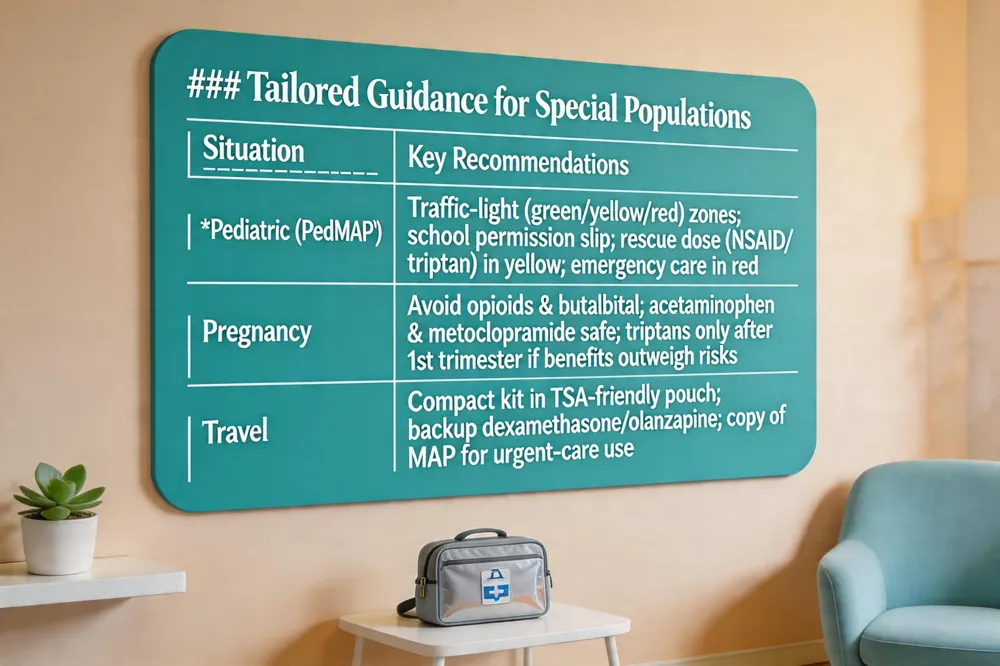 A Pediatric Migraine Action Plan (PedMAP) is a traffic‑light‑style guide that helps children and adolescents manage migraines at home, school, and during activities. The green zone focuses on daily prevention—regular sleep, balanced meals, hydration, exercise, stress‑relief techniques, and any prescribed daily medication or supplement. The yellow zone provides rapid‑action instructions: take the prescribed rescue dose (often an NSAID, triptan, or combination), hydrate, rest in a dark quiet room, and use relaxation exercises, with clear dosing intervals. The red zone alerts caregivers to seek emergency care for warning signs such as visual loss, facial weakness, severe confusion, or persistent pain despite treatment. For school, a written permission slip authorizes staff to administer quick‑relief medication, outlines green/yellow/red zones, and lists emergency contacts and a designated quiet recovery space.
Pregnancy considerations: avoid opioids and butalbital‑containing drugs; acetaminophen and metoclopramide are generally safe, while triptans are used only after the first trimester if benefits outweigh risks.
Travel preparedness: pack a migraine kit with rescue meds, water, electrolyte packets, a cold pack, dark glasses, and earplugs. For status migrainosus, include backup treatments such as dexamethasone or olanzapine and a copy of the migraine action plan for use in urgent‑care or emergency settings.
Integrating Technology and Non‑Pharmacologic Therapies
Technology & Non‑Drug Options
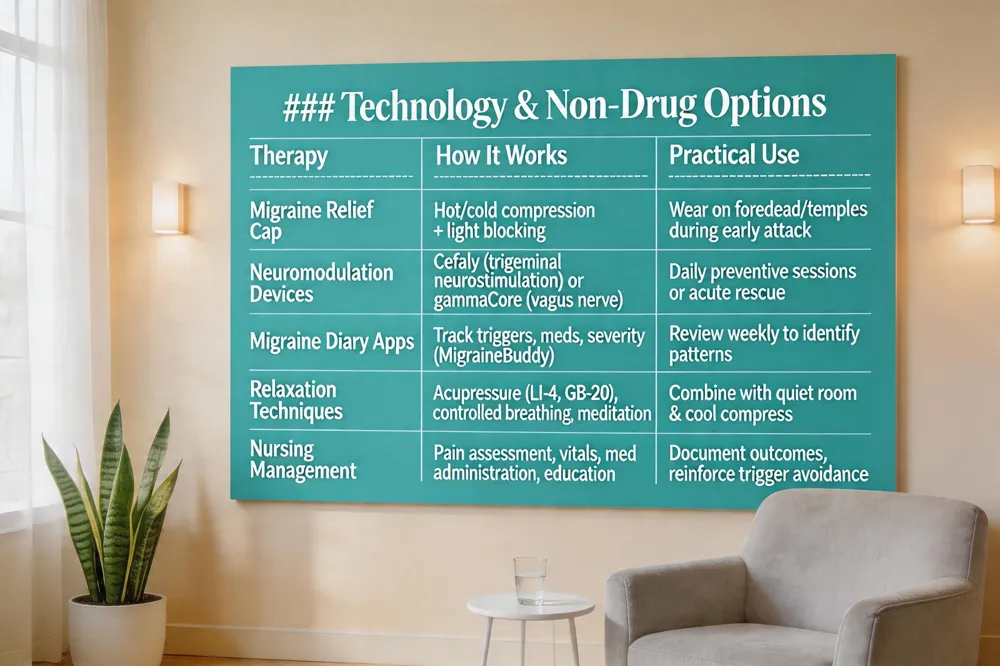
| Therapy | How It Works | Practical Use |
|---|---|---|
| Migraine Relief Cap | Hot/cold compression + light blocking | Wear on forehead/temples during early attack |
| Neuromodulation Devices | Cefaly (external trigeminal neurostimulation) or gammaCore (vagus nerve) | Daily preventive sessions or acute rescue |
| Migraine Diary Apps | Track triggers, meds, severity (e.g., MigraineBuddy) | Review weekly to identify patterns |
| Relaxation Techniques | Acupressure (LI‑4, GB‑20), controlled breathing, meditation | Combine with quiet room & cool compress |
| Nursing Management | Pain assessment, vitals, med administration, education | Document outcomes, reinforce trigger avoidance |
 Migraine Symptoms
Migraine typically presents with a moderate‑to‑severe unilateral throbbing headache worsened by routine activity, often accompanied by nausea, vomiting, photophobia, and phonophobia. Aura (visual disturbances) may precede the pain, and prodrome signs such as mood changes or yawning can appear beforehand. A post‑drome may leave fatigue and fogginess.
Migraine Symptoms
Migraine typically presents with a moderate‑to‑severe unilateral throbbing headache worsened by routine activity, often accompanied by nausea, vomiting, photophobia, and phonophobia. Aura (visual disturbances) may precede the pain, and prodrome signs such as mood changes or yawning can appear beforehand. A post‑drome may leave fatigue and fogginess.
Migraine Treatment at Home Rest in a dark, quiet room, apply a 15‑minute cold or warm pack, stay hydrated, and consider modest caffeine if tolerated. Early use of OTC analgesics (acetaminophen, ibuprofen, naproxen) or prescribed triptans/CG‑ agents aborts attacks. Track triggers and response in a migraine diary or app (e.g., MigraineBuddy) for pattern analysis.
Migraine Relief Cap A wearable cap provides therapeutic hot or cold compression to forehead and temples, reducing pain via vasoconstriction or muscle relaxation. Its snug design also blocks light, serving as a drug‑free adjunct to medication.
Nursing Management of Migraine Nurses assess pain severity, monitor vitals, administer abortive meds, and educate on trigger avoidance, diary use, and lifestyle modifications. They incorporate relaxation and biofeedback tools, recommend neuromodulation devices (Cefaly, gammaCore) and document outcomes for the interdisciplinary team.
Practical Tips and Quick Resources
Quick‑Reference Checklists & Resources
| Tip | Action |
|---|---|
| 5‑Step Instant Relief | Dark room → cool compress → caffeine + snack → acupressure → hydration → breathing/meditation |
| 20‑20‑20 Rule | Every 20 min screen time → look 20 ft away for 20 sec |
| Downloadable PDFs | AHS & California Pain Institute Migraine Action Plan PDFs (green‑yellow‑red zones) |
| Emergency Contact Card | Include MAP copy, physician phone, nearest ER |
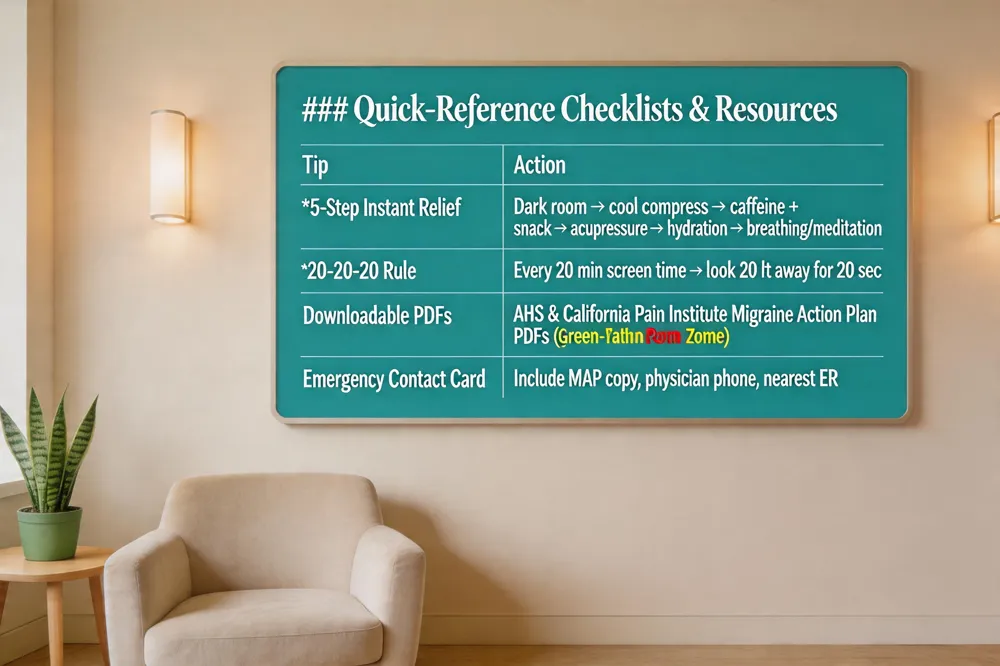 5‑step instant relief checklist
- Lie in a quiet, dark room, elevate your legs, and apply a cool compress to the forehead while a warm pad rests on the neck.
- Within 30 minutes of onset, sip a modest caffeine dose (≈100 mg) with a light snack if you’re not a regular caffeine user.
- Press the LI‑4 (thumb‑index web) and GB‑20 (base‑of‑skull hollows) points while breathing deeply.
- Hydrate promptly—drink water and avoid alcohol or excess caffeine.
- Practice controlled breathing or a brief meditation to lower stress.
20‑20‑20 rule for screen‑related migraines Every 20 minutes of screen work, look at something ≥20 feet away for 20 seconds. This relaxes eye‑focusing muscles, reducing visual fatigue that can trigger migraines. Set a timer or phone reminder to remember the break.
Where to find downloadable PDFs The American Headache Society and the California Pain Institute offer printable Migraine Action Plan PDFs (green‑yellow‑red zones, medication list, emergency contacts). Access them from the California Pain Institute website or the AHS resource page, then keep a copy at home, work, and in your medical record.
Putting It All Together: Your Customized Kit
Step‑by‑Step Kit Checklist & Maintenance
| Step | Action |
|---|---|
| 1 | Gather acute meds (triptan, NSAID, anti‑nausea) and write dosages |
| 2 | Add non‑pharma tools (cold pack, heat wrap, dark mask, earplugs) |
| 3 | Include portable diary/app, emergency card, CGRP agents or neuromodulation device |
| 4 | Pack snack (protein bar/nuts) and ginger tablets for nausea |
| 5 | Store in lightweight pouch (bag, car, desk) |
| Review | Update every 3‑6 months or after med changes; check expirations |
| Collaboration | Discuss kit with neurologist/PCP; share with caregivers, coworkers, school staff |
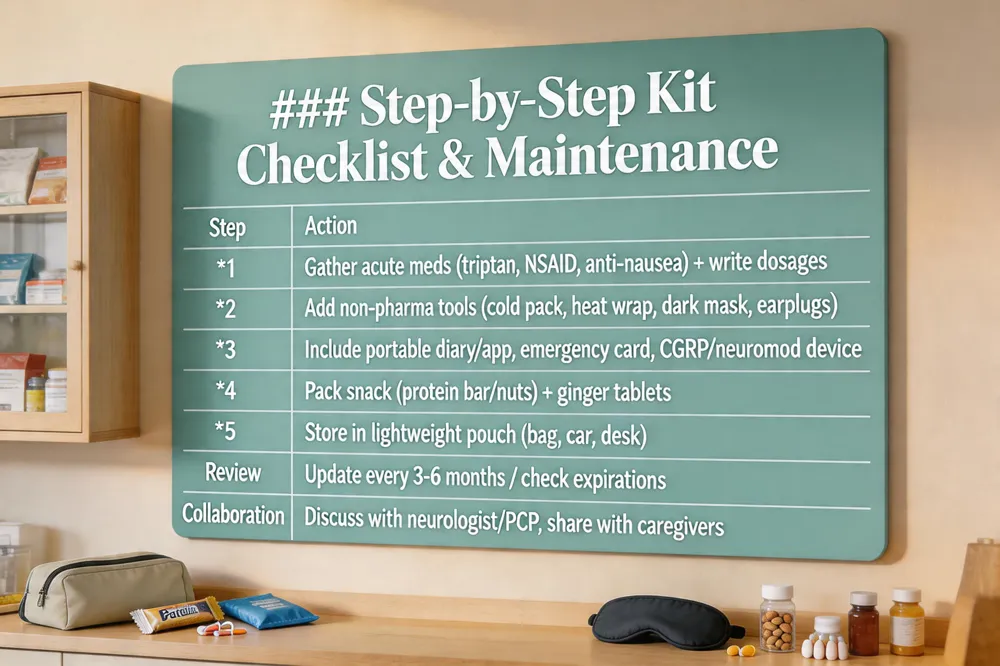 Step‑by‑step checklist for building the kit
- Gather acute medications (triptan, NSAID, anti‑nausea) and keep dosages listed.
- Add non‑pharmacologic tools: instant cold pack, reusable heat wrap, dark eye mask, earplugs, and a small water bottle with electrolyte packets.
- Include a portable migraine diary or app, an emergency contact card, and any prescribed CGRP‑targeted agents or neuromodulation device (e.g., Cefaly).
- Pack a snack (protein bar or nuts) and ginger tablets for nausea.
- Store everything in a lightweight pouch that fits in a bag, car, or desk drawer.
Review and update schedule
- Re‑evaluate the kit every 3‑6 months or after any medication change.
- Record new triggers or side‑effects in the diary and adjust tools accordingly.
- Ensure expiration dates on medications and replace used items promptly.
Collaboration with healthcare providers
- Discuss the kit contents with your neurologist or primary‑care physician at each visit.
- Share the emergency card and medication list with caregivers, coworkers, and school staff.
- Use the provided templates to keep a current Migraine Action Plan (PDF) and a nursing care plan for headache (PDF) on file.
Nursing care plan for headache PDF A nursing care plan for headache PDF typically begins with a comprehensive assessment that records the patient’s pain intensity, location, duration, associated symptoms, and potential triggers. It then identifies nursing diagnoses such as Acute Pain, Impaired Comfort, or Deficient Knowledge and sets measurable goals like reducing headache frequency or improving patient understanding of trigger avoidance. Interventions focus on pain‑relief measures (medication administration, positioning, relaxation techniques), monitoring vital signs, encouraging adequate hydration, and providing education on lifestyle modifications and medication use. The plan also outlines evaluation criteria to determine whether pain levels have decreased and whether the patient can implement self‑management strategies effectively. For clinicians at the California Pain Institute, this PDF can be customized to reflect individualized treatment plans for migraine, tension‑type, or cluster headaches.
Migraine Action Plan template A Migraine Action Plan template begins with basic personal information—patient name, age, allergies, diagnosis, and emergency contacts. It then lists the patient’s typical migraine triggers and a brief description of how an attack usually presents, including aura or other neurological symptoms. The core of the plan outlines at‑home rescue strategies, separating mild‑to‑moderate and moderate‑to‑severe attacks, with specific acute medications, dosages, and timing. Preventive therapy is detailed next, noting daily medications, dosing schedule, and any lifestyle measures that support prevention. Finally, the template provides clear guidelines for when to seek urgent or emergency care, including red‑flag symptoms and contact information for the treating physician and emergency services.
Migraine Action Plan PDF The Migraine Action Plan PDF is a printable, step‑by‑step guide that helps patients identify early warning signs, initiate quick‑relief medication, and track preventive strategies. It is organized into three zones—green for daily lifestyle and preventive measures, yellow for early‑stage treatment, and red for emergency symptoms that require immediate medical attention. The form also includes a “headache toolbox” with tips on hydration, sleep hygiene, stress‑reduction techniques, and when to seek professional help. By filling out the plan with your physician, you create a personalized roadmap that can be shared with family, coworkers, or school personnel for consistent care. Download the PDF from the California Pain Institute website and keep it handy at home, work, and in your medical record.
Your Next Steps Toward Migraine Control
After creating a Migraine Action Plan (MAP), turn it into practice. First, schedule a MAP review with your neurologist or headache specialist within a month; bring your headache diary, medication list, and recent attack details so the clinician can adjust dosing, consider options such as CGRP antibodies or gepants, and confirm contact information. Second, assemble a migraine toolkit that mirrors the rescue options in your MAP—include meds, cold pack, sunglasses, earplugs, water bottle, and a copy of the plan. Test the kit in a setting to ensure accessibility. Finally, leverage technology: use a migraine‑tracking app for triggers and medication timing, set reminders, and share data with care team. Stay linked to support groups or nurse hotline for advice on attacks.