Welcome to the California Pain Institute’s Fibromyalgia Resource
Fibromyalgia is a chronic pain disorder marked by widespread musculoskeletal pain, fatigue, sleep disruption, and cognitive difficulties (“fibro fog”). It affects roughly 3–6 % of the global population—over 200 million people—and is three times more common in women. Patients often miss a workday each week, lose about 10 % of earnings, and incur annual health‑care costs of $3,400–$3,600. Because symptoms stem from central‑nervous‑system dysregulation, no single treatment resolves the condition. A multidisciplinary approach—combining medication, tailored low‑impact exercise, cognitive‑behavioral therapy, sleep hygiene, nutrition, and complementary modalities such as massage or acupuncture—addresses the physical, emotional, and functional dimensions of fibromyalgia. The California Pain Institute offers coordinated care teams to guide each patient toward individualized, evidence‑based management. Follow‑up pacing education, and personalized goal‑setting help patients build confidence and achieve measurable gains in pain, sleep, and daily function.
Core Symptoms and Gender‑Specific Experiences
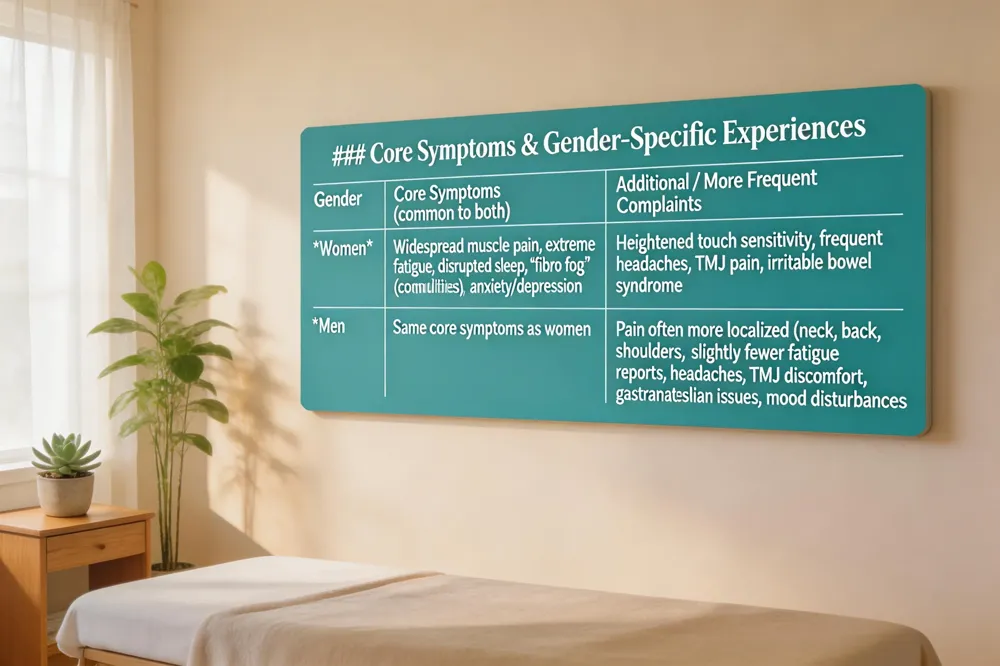
Core Symptoms & Gender‑Specific Experiences
| Gender | Core Symptoms (common to both) | Additional / More Frequent Complaints |
|---|---|---|
| Women | Widespread muscle pain, extreme fatigue, disrupted sleep, “fibro fog” (cognitive difficulties), anxiety/depression | Heightened touch sensitivity, frequent headaches, TMJ pain, irritable bowel syndrome |
| Men | Same core symptoms as women | Pain often more localized (neck, back, shoulders), slightly fewer fatigue reports, headaches, TMJ discomfort, gastrointestinal issues, mood disturbances |
 Fibromyalgia is a chronic pain disorder with widespread musculoskeletal pain, fatigue, sleep disturbances, and cognitive difficulties. Cognitive difficulties—commonly termed “fibro fog”—manifest as memory lapses, reduced concentration, and slowed thought processes, while anxiety and depression frequently co‑occur.
What are the most common symptoms of fibromyalgia in women? Women typically report the classic triad of widespread muscle pain, extreme fatigue, and disrupted sleep, along with heightened touch sensitivity. “Fibro fog” and mood disturbances such as anxiety or depression are prevalent. Additional complaints often include frequent headaches, temporomandibular joint (TMJ) pain, and irritable bowel syndrome.
What are the most common symptoms of fibromyalgia in men? Men experience the same core symptoms—widespread pain, fatigue, sleep disturbance, and cognitive fog—but often describe pain as more localized (neck, back, shoulders). Headaches, TMJ discomfort, gastrointestinal issues, and mood disturbances are also common, though men may report slightly fewer fatigue‑related complaints than women.
Diagnosis, Guidelines, and FDA‑Approved Medications
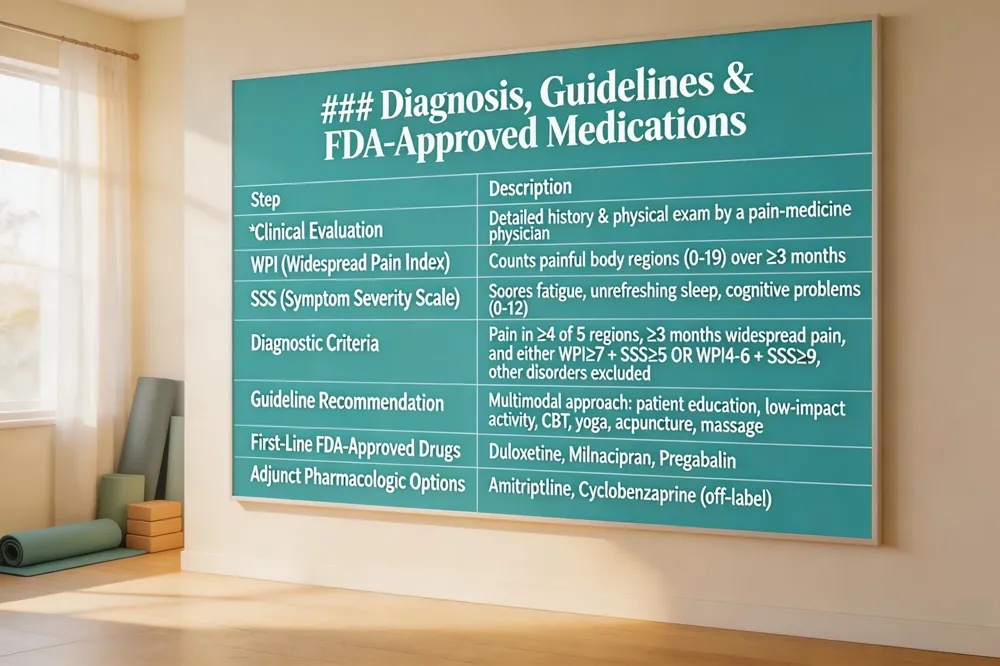
Diagnosis, Guidelines & FDA‑Approved Medications
| Step | Description |
|---|---|
| Clinical Evaluation | Detailed history & physical exam by a pain‑medicine physician |
| WPI (Widespread Pain Index) | Counts painful body regions (0‑19) over ≥3 months |
| SSS (Symptom Severity Scale) | Scores fatigue, unrefreshing sleep, cognitive problems (0‑12) |
| Diagnostic Criteria | Pain in ≥4 of 5 regions, ≥3 months widespread pain, and either WPI ≥ 7 + SSS ≥ 5 or WPI 4‑6 + SSS ≥ 9; other disorders excluded by labs/imaging |
| Guideline Recommendation | Multimodal approach: patient education, regular low‑impact aerobic activity, CBT, mindfulness, yoga/tai‑chi, acupuncture, massage |
| First‑Line FDA‑Approved Drugs | Duloxetine, Milnacipran, Pregabalin |
| Adjunct Pharmacologic Options | Amitriptyline, Cyclobenzaprine (off‑label) |
 How to get a proper fibromyalgia diagnosis?
A qualified pain‑medicine physician conducts a detailed history and physical exam, then applies the American College of Rheumatology diagnostic criteria. The Widespread Pain Index (WPI) counts painful body regions (0‑19) over ≥3 months, and the Symptom Severity Scale (SSS) scores fatigue, unrefreshing sleep, and cognitive problems (0‑12). Diagnosis requires pain in at least four of five regions, ≥3 months of widespread pain, and either WPI ≥ 7 + SSS ≥ 5 or WPI 4‑6 + SSS ≥ 9, while other disorders are excluded by labs or imaging.
What are the latest treatment guidelines for fibromyalgia?
Current guidance recommends a multimodal, multidisciplinary approach: patient education, regular low‑impact aerobic activity, and psychosocial therapies such as cognitive‑behavioral therapy. FDA‑approved drugs (duloxetine, milnacipran, and pregabalin) are first‑line pharmacologic options; additional agents like amitriptyline or cyclobenzaprine may be added. Complementary modalities—yoga, tai chi, acupuncture, massage, mindfulness—support pain, sleep, and fatigue management. Treatment is individualized and reassessed regularly.
Are there any FDA‑approved medications specifically for fibromyalgia?
Yes. The FDA has approved duloxetine (Cymbalta), milnacipran (Savella), and pregabalin (Lyrica) for fibromyalgia. They target central nervous‑system pathways to reduce pain and improve function. Other drugs are used off‑label but are not FDA‑approved for this condition.
Medication Options, Over‑the‑Counter Relief, and Side Effects
Medication Options & OTC Relief
| Medication | Class | Primary Indication(s) | Common Side Effects |
|---|---|---|---|
| Duloxetine | SNRI | Pain, fatigue, mood, sleep | Nausea, dizziness, sexual dysfunction, weight change |
| Milnacipran | SNRI | Pain, fatigue, mood | Nausea, headache, hypertension, sexual dysfunction |
| Pregabalin | α‑2‑δ ligand (gabapentinoid) | Pain, sleep disturbance | Drowsiness, dry mouth, edema, coordination issues |
| Amitriptyline | Tricyclic antidepressant | Pain, sleep, mood | Dry mouth, constipation, weight gain, sedation |
| Cyclobenzaprine | Muscle relaxant (off‑label) | Muscle stiffness, pain | Drowsiness, anticholinergic effects |
| Ibuprofen / Naproxen | NSAIDs (OTC) | Occasional aches, inflammation | GI upset, renal effects, cardiovascular risk |
| Acetaminophen | Analgesic (OTC) | Mild pain, fever | Hepatotoxicity at high doses |
 Over‑the‑counter (OTC) analgesics such as ibuprofen, naproxen, and acetaminophen can help with occasional aches but do not treat the central‑pain mechanisms, fatigue, or sleep problems that define fibromyalgia; they are best used as short‑term adjuncts within a broader plan. FDA‑approved prescription options include duloxetine, milnacipran (both SNRIs) and pregabalin, which target abnormal pain processing, as well as tricyclic antidepressants like amitriptyline for pain, sleep, and mood. Common adverse effects span nausea, dizziness, drowsiness, weight changes, and sexual dysfunction (SNRIs), or dry mouth and coordination issues (pregabalin). Serious side effects are rare but require clinician oversight. Fibromyalgia is a chronic, non‑progressive syndrome; there is no cure, but multidisciplinary management—medication, gentle exercise, stress‑reduction, and education—can markedly improve symptoms and quality of life. Personalized care is essential for optimal relief.
Lifestyle, Exercise, and Stress Management
Lifestyle, Exercise & Stress Management
| Intervention | Benefits | Example |
|---|---|---|
| Gentle Aerobic Exercise | Improves cardiovascular fitness, reduces pain & fatigue | Walking, swimming, stationary cycling, water aerobics |
| Flexibility & Mind‑Body | Increases range of motion, reduces stiffness, promotes relaxation | Yoga, Tai‑Chi, gentle stretching |
| Heat Therapy | Relaxes trigger points, improves circulation, short‑term pain relief | Warm showers, heating pads, microwavable wraps |
| Stress‑Reduction Techniques | Lowers cortisol, improves sleep, reduces “fibro fog” | Mindfulness meditation, deep‑breathing, progressive muscle relaxation |
| Sleep Hygiene | Enhances sleep quality, reduces fatigue | Consistent bedtime, cool dark room, limited caffeine, CBT‑I |
| Weight Management | Decreases inflammatory mediators, eases joint load | Balanced anti‑inflammatory diet + regular low‑impact activity |
 Gentle aerobic activity—walking, swimming, stationary cycling, or water‑based aerobics—improves cardiovascular fitness without over‑loading joints, while low‑impact flexibility work such as yoga, tai‑chi, and gentle stretching maintains range of motion and reduces stiffness (Mayo Clinic, American Fibromyalgia Syndrome Association). Heat therapy (warm showers, heating pads, microwavable wraps) raises muscle temperature, expands blood vessels, relaxes trigger points and improves circulation, offering short‑term pain relief without medication (American Fibromyalgia Syndrome Association). Stress elevates cortisol and adrenaline, heightening pain perception, disrupting sleep, and worsening “fibro fog”; mindfulness, deep‑breathing, and regular gentle exercise are effective stress‑reduction tools (NIH, WebMD). Weight management combines low‑impact aerobic exercise with a balanced, anti‑inflammatory diet rich in whole foods, lean protein, and vegetables, while tracking activity in a journal (CDC, Mayo Clinic). Better sleep is achieved through a consistent schedule, a cool dark bedroom, limited caffeine, and evening relaxation techniques; CBT‑I or low‑dose antidepressants may be added under medical guidance (Mayo Clinic, NIH).
Managing Flare‑Ups, Coping Strategies, and Support Resources
Managing Flare‑Ups & Support Resources
| Strategy | Details |
|---|---|
| Pacing & Activity Modification | Break tasks into small steps, schedule activities during 10 a.m.–4 p.m. peak‑energy window, avoid over‑exertion |
| Heat Application | Warm packs or showers to tender muscles during flare‑ups |
| Medication Use | OTC analgesics as needed; prescribed duloxetine/pregabalin per physician guidance |
| Gentle Movement | Light walking, swimming, yoga to maintain circulation without over‑loading |
| Stress‑Reduction | Deep‑breathing, meditation, mindfulness during symptom spikes |
| Symptom Diary | Track triggers, pain levels, sleep, activity to inform treatment adjustments |
| Non‑Pharmacologic Therapies | CBT, mindfulness‑based stress reduction, acupuncture, therapeutic massage, chiropractic care |
| Financial Assistance | Insurance coverage, manufacturer patient‑assistance programs, state/federal aid, NeedyMeds, clinic social worker support |
| Support Groups (Los Angeles) | California Pain Institute, local hospitals, Fibromyalgia Association of America, online directories, clinician referrals |
 How can I manage fibromyalgia flare‑ups?
Use pacing and activity modification: break tasks into small steps, schedule essential activities during your 10 a.m.–4 p.m. peak‑energy window, and avoid over‑exertion. Apply heat (warm packs, showers) to tender muscles and take OTC analgesics or prescribed duloxetine/pregabalin as directed. Incorporate gentle low‑impact movement (walking, swimming, yoga) and stress‑reduction techniques (deep‑breathing, meditation) while maintaining consistent sleep hygiene. Keep a symptom diary to spot triggers and discuss adjustments with your pain‑medicine team.
How can I manage fibromyalgia flare‑ups?
Use pacing and activity modification: break tasks into small steps, schedule essential activities during your 10 a.m.–4 p.m. peak‑energy window, and avoid over‑exertion. Apply heat (warm packs, showers) to tender muscles and take OTC analgesics or prescribed duloxetine/pregabalin as directed. Incorporate gentle low‑impact movement (walking, swimming, yoga) and stress‑reduction techniques (deep‑breathing, meditation) while maintaining consistent sleep hygiene. Keep a symptom diary to spot triggers and discuss adjustments with your pain‑medicine team.
What non‑pharmacologic treatments are recommended? A multidisciplinary plan includes regular aerobic/low‑impact exercise (walking, water aerobics, tai chi), cognitive‑behavioral therapy or mindfulness‑based stress reduction, and complementary modalities such as acupuncture, therapeutic massage, or chiropractic care. Ergonomic adjustments, pacing, and sleep‑hygiene education further reduce pain and fatigue.
What financial assistance options exist? Leverage health‑insurance coverage (Medicare, Medicaid, private PPO/HMO) and manufacturer patient‑assistance programs for duloxetine, pregabalin, or milnacipran. State/federal aid (Senior Pharmaceutical Assistance, Prescription‑Card programs) and non‑profits like NeedyMeds can offset medication and travel costs. A clinic social worker can guide applications.
How to find reputable support groups in Los Angeles? Contact the California Pain Institute, local hospitals, or the Fibromyalgia Association of America, which host in‑person and virtual meetings. Ask your rheumatologist or clinic social worker for referrals and use online directories to locate nearby peer‑support networks.
Nutrition, Prognosis, and the Role of the California Pain Institute
Nutrition, Prognosis & California Pain Institute Role
| Recommendation | Rationale |
|---|---|
| Whole‑Food, Anti‑Inflammatory Diet | Fresh fruits/vegetables, whole grains, lean proteins, omega‑3 sources lower systemic inflammation |
| Limit Refined Carbs & Sugary Snacks | Reduces glucose spikes and potential flare‑ups |
| Moderate Caffeine | Prevents sleep disruption and heightened anxiety |
| Maintain Healthy Weight | Decreases inflammatory mediators and joint stress |
| Prognosis | Non‑progressive; symptoms can wax and wane but are controllable with comprehensive care; life expectancy unchanged |
| California Pain Institute | Multidisciplinary team (rheumatologists, pain specialists, PT/OT, psychologists, dietitians) creates individualized plans combining medication, gentle exercise, stress‑management, and nutrition to improve long‑term quality of life |
 What dietary recommendations help fibromyalgia? A diet rich in whole, unprocessed foods—fresh fruits and vegetables, whole‑grain breads, lean proteins (fish, poultry) and omega‑3 sources such as flaxseed and walnuts—lowers inflammation and supports nervous‑system health; limiting refined carbs, sugary snacks, additives and excess caffeine prevents flare‑ups, and maintaining a healthy weight reduces inflammatory mediators.
What is the prognosis for fibromyalgia patients? The condition is non‑progressive and does not shorten life expectancy; symptoms may wax and wane but can be controlled through comprehensive care, allowing most patients to achieve pain reduction, better sleep, and continued work and social activity.
The California Pain Institute’s multidisciplinary team—rheumatologists, pain specialists, physical and occupational therapists, psychologists, and dietitians—creates individualized plans that combine medication, gentle exercise, stress‑management, and nutritional counseling to support long‑term quality of life.
Take Control of Your Fibromyalgia Journey with Expert Care
Fibromyalgia presents with widespread musculoskeletal pain, persistent fatigue, sleep disturbances, and cognitive “fibro fog,” often accompanied by anxiety, mood changes, and gastrointestinal discomfort. Diagnosis is clinical, requiring at least three months of pain in four of five body regions, a thorough history, and exclusion of other conditions through labs and imaging. Management rests on three pillars: targeted pharmacologic therapy (e.g., duloxetine, pregabalin, milnacipran), structured non‑pharmacologic interventions (low‑impact aerobic exercise, cognitive‑behavioral therapy, sleep hygiene, pacing, and ergonomic adjustments), and complementary modalities such as massage, heat therapy, and acupuncture. The California Pain Institute offers individualized evaluations that integrate these evidence‑based strategies. We encourage you to schedule your appointment today and to connect with reputable support groups, educational resources, and multidisciplinary teams to empower your self‑care and improve quality of life.