Why Accurate Differentiation Matters
Misdiagnosing fibromyalgia can delay effective treatment, prolong pain, and increase the risk of unnecessary medications or invasive procedures. Patients who receive an incorrect inflammatory or structural diagnosis may be exposed to immunosuppressants, opioids, or surgery that do not target the central nervous system sensitization underlying fibromyalgia, leading to poorer functional outcomes, heightened anxiety, and increased health‑care costs. An interdisciplinary evaluation—combining rheumatology, neurology, primary care, physical therapy, and mental‑health specialists—helps clinicians systematically rule out autoimmune, endocrine, hematologic, and orthopedic conditions through history, tender‑point assessment, laboratory panels (ANA, RF, ESR/CRP, TSH, CBC), and imaging when indicated. Once other causes are excluded, fibromyalgia is recognized as a central pain disorder characterized by widespread musculoskeletal pain, fatigue, non‑restorative sleep, and cognitive fog, driven by central sensitization rather than tissue damage. Accurate differentiation thus guides patients toward evidence‑based multimodal therapies—graded aerobic exercise, cognitive‑behavioral therapy, sleep hygiene, and FDA‑approved agents such as duloxetine, milnacipran, or pregabalin—optimizing quality of life and preventing unnecessary interventions.
Understanding Fibromyalgia: Age, Causes, and Core Symptoms
| Aspect | Details |
|---|---|
| Typical Age of Onset | Adults 25‑55 years (can occur at any age, from childhood to late adulthood) |
| Multifactorial Causes | Genetic susceptibility; central nervous system dysregulation (central sensitization); abnormal neurotransmitter activity; hormonal fluctuations; sleep disturbances; chronic fatigue; triggering events (physical injury, surgery, infection, emotional stress) |
| Core Symptoms | Widespread musculoskeletal pain (constant dull ache); non‑restorative fatigue; sleep disturbances (unrefreshed); cognitive impairment (“fibro‑fog”); hyperalgesia & allodynia (heightened sensitivity to light touch, temperature, environmental stimuli) |
 Fibromyalgia most often presents in adults between 25 and 55 years, but it can be diagnosed at any age—from childhood to late adulthood—because the condition is defined by clinical criteria rather than a lab test. The exact cause remains elusive; current evidence points to a multifactorial etiology that includes genetic susceptibility, central nervous system dysregulation (central sensitization), abnormal neurotransmitter activity, and triggering events such as physical injury, surgery, infection, or significant emotional stress. Hormonal fluctuations, sleep disturbances and chronic fatigue further amplify pain processing. The most disabling symptoms are widespread musculoskeletal pain described as a constant dull ache, profound non‑restorative fatigue, and sleep disturbances that leave patients feeling unrefreshed. Cognitive impairment—often called “fibro‑fog”](https://www.webmd.com/fibromyalgia/common-misdiagnoses-of-fibromyalgia)—and heightened sensitivity to light touch, temperature, and environmental stimuli (hyperalgesia and allodynia) compound functional limitations, making daily activities and quality of life challenging.
Diagnostic Process and Differentiation
| Diagnostic Element | Key Points |
|---|---|
| ACR 2010/2016 Criteria | Pain in ≥4 of 5 body regions ≥3 months; Widespread Pain Index (WPI) ≥ 7; Symptom Severity Scale (SSS) ≥ 5 |
| Exclusion Labs/Imaging | CBC, ESR/CRP, thyroid panel, ANA, RF, X‑ray/MRI (to rule out inflammatory, autoimmune, endocrine, structural disorders) |
| Historic Tender‑Point Exam | 18 points, ≥4 kg pressure; ≥11 painful points supportive but not required |
| Misdiagnosis Rate | ≈30‑40 % receive an incorrect label before correct diagnosis |
| Differentiation Clues | Diffuse pain pattern, normal labs/imaging, absence of disease‑specific markers, broad symptom checklist (≥20 items) |
 Fibromyalgia is diagnosed primarily through a thorough clinical evaluation. The 2010/2016 ACR criteria require widespread musculoskeletal pain in at least four of five body regions for ≥3 months, a Widespread Pain Index (WPI) ≥ 7, and a Symptom Severity Scale (SSS) ≥ 5. Because no specific laboratory or imaging test confirms the disorder, physicians order CBC, ESR/CRP, thyroid studies, ANA, RF, and imaging only to exclude inflammatory, autoimmune, endocrine, or structural conditions such as rheumatoid arthritis, lupus, hypothyroidism, or axial spondyloarthritis. The historic 18‑point tender‑point exam applies ~4 kg pressure to 18 predefined sites; pain at ≥11 points supports the diagnosis but is no longer required.
Misdiagnosis is common—≈30‑40 % of patients receive an incorrect label before fibromyalgia is recognized. A broad symptom checklist (≥20 items) includes widespread aching, fatigue, non‑restorative sleep, “fibro fog,” headaches, IBS, mood changes, and heightened environmental sensitivities; rare presentations may involve facial/jaw pain, Raynaud‑like changes, or dysphonia. Accurate differentiation hinges on the pattern of diffuse pain, normal imaging/labs, and exclusion of other mimicking disorders.
Fibromyalgia in the Context of Other Pain Disorders
| Condition | Overlap with Fibromyalgia | Distinguishing Features |
|---|---|---|
| Chronic Fatigue Syndrome | Fatigue, unrefreshing sleep, cognitive issues | Prominent post‑exertional malaise; less widespread musculoskeletal pain |
| Rheumatoid Arthritis / Lupus | Joint pain, fatigue, mood changes | Elevated ESR/CRP, specific autoantibodies, imaging shows joint erosions/inflammation |
| Multiple Sclerosis | Pain, fatigue, cognitive issues | Neurological deficits, MRI lesions, demyelination evidence |
| Hypothyroidism | Fatigue, muscle aches | Elevated TSH, low free T4, reversible with hormone replacement |
| Polymyalgia Rheumatica (PMR) | Stiffness, pain in shoulders/hips | Abrupt onset >50 y, high ESR/CRP, rapid steroid response, resolves within ~2 years |
| Others (IBS, TMJ, migraines, Lyme, etc.) | Shared pain/fatigue | Specific organ/system findings, pathogen serology, imaging, response to targeted therapy |
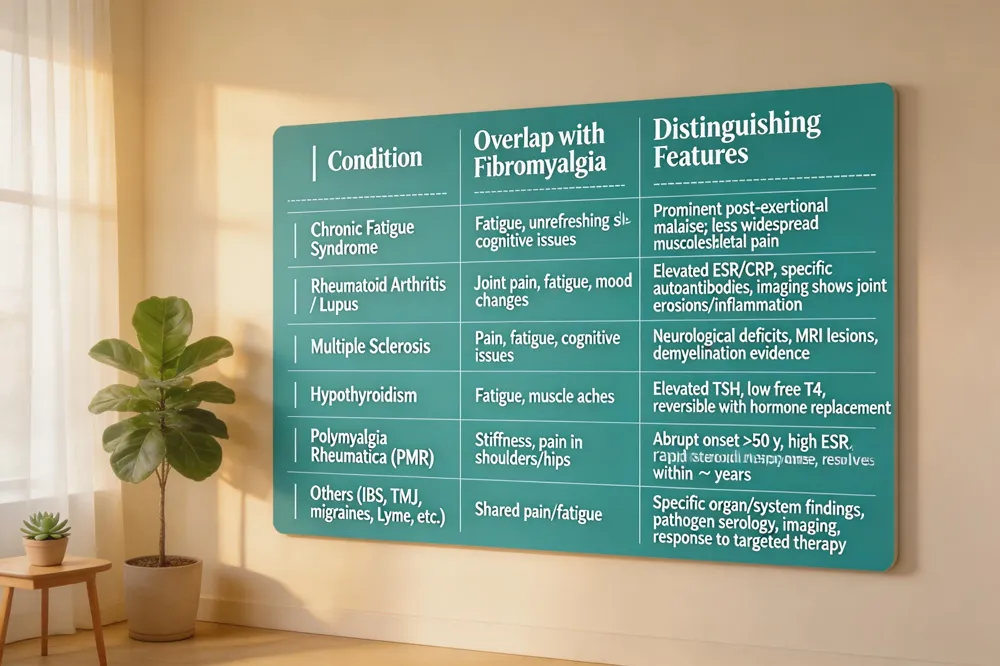 Fibromyalgia is often mistaken for conditions that share widespread pain, fatigue, and mood changes, such as chronic fatigue syndrome, rheumatoid arthritis, lupus, multiple sclerosis, hypothyroidism, sleep apnea, irritable bowel syndrome, TMJ dysfunction, migraines, Lyme disease, and certain malignancies. Other chronic‑pain diseases include osteoarthritis, disc herniation or spinal stenosis, cancer‑related pain, and chronic headaches or migraines. Compared with polymyalgia rheumatica (PMR), fibromyalgia is a lifelong, non‑inflammatory pain syndrome, whereas PMR presents abruptly in people > 50 years with severe shoulder‑hip stiffness, elevated ESR/CRP and resolves within two years with low‑dose steroids; PMR can progress to giant‑cell arteritis, a serious complication. Co‑occurrence of fibromyalgia and PMR is possible, requiring steroid treatment for the inflammatory component and multimodal therapy (exercise, CBT, neuromodulators) for fibromyalgia. Patients with severe, disabling fibromyalgia may qualify for Social Security Disability Insurance (SSDI) if they meet American College of Rheumatology criteria and demonstrate limited functional capacity.
Clinical Management and Treatment Approaches
| Modality | Examples | Primary Goal |
|---|---|---|
| Pharmacologic | FDA‑approved: duloxetine, milnacipran, pregabalin; adjuncts: low‑dose tricyclics, muscle relaxants | Reduce pain, improve sleep, lessen fatigue |
| Exercise | Low‑impact aerobic (walking, cycling), strength training, water‑based activities | Enhance functional capacity, decrease pain sensitivity |
| Psychological | Cognitive‑behavioral therapy, acceptance‑commitment therapy, patient education | Improve coping, reduce catastrophizing, address “fibro‑fog” |
| Complementary | Yoga, tai‑chi, acupuncture, mindfulness, graded exposure | Adjunct pain relief, stress reduction, sleep quality |
| Guideline‑Based | 2025 U.S. pain‑management (non‑opioid‑first, multimodal, risk assessment) | Minimize opioid exposure, prioritize functional outcomes |
| Assistive | Latex or gel‑infused memory‑foam mattress (pressure‑relief, temperature regulation) | Optimize nighttime comfort, improve sleep quality |
 Fibromyalgia treatment is multidimensional, combining FDA‑approved fibromyalgia drugs: duloxetine, milnacipran, pregabalin with low‑impact aerobic exercise, strength training, and water‑based activities; cognitive‑behavioral, acceptance‑commitment therapies, patient education, and complementary modalities such as yoga or acupuncture improve pain, fatigue, and sleep. The 2025 U.S. pain‑management guidelines prioritize a non‑opioid‑first, multimodal strategy, require individualized risk assessments, and mandate ongoing functional reassessment; opioids, if used, must follow strict monitoring and lowest‑effective‑dose principles. Chronic pain guidelines echo this approach, emphasizing functional outcomes, interdisciplinary collaboration, and minimization of opioid exposure. Nursing diagnoses differentiate acute from chronic pain, guiding assessments, pharmacologic and non‑pharmacologic interventions, and goal‑oriented outcomes. The “4 P’s” framework—Purpose, Pacing, Positivity, Pain—helps patients recognize triggers, set realistic activity limits, maintain hope, and modulate pain perception. For optimal nighttime comfort, a latex or gel‑infused memory‑foam mattress offering pressure‑relief and temperature regulation is recommended for fibromyalgia patients.
Underlying Mechanisms, Rare Manifestations, and Symptom Specifics
| Mechanism | Supporting Evidence |
|---|---|
| Central Sensitization | Neuroimaging shows altered pain‑processing activity in brain/spinal cord; heightened response to non‑nful stimuli |
| Genetic Predisposition | Family clustering, GWAS links to pain‑modulating genes |
| Neurotransmitter Dysregulation | Abnormal serotonin, norepinephrine, glutamate levels; target of SNRIs and gabapentinoids |
| Hormonal & Sleep Disruption | Correlation with cortisol rhythm abnormalities, non‑restorative sleep, increased pain perception |
| Rare Manifestations | Environmental hyper‑sensitivity (light, temperature), balance disturbances, episodic abdominal “gnawing” pain with cramp‑like spikes |
| Symptom Specifics | Abdominal pain described as chronic dull ache/tight knot, fullness, occasional cramping, exacerbated by stress or certain foods |
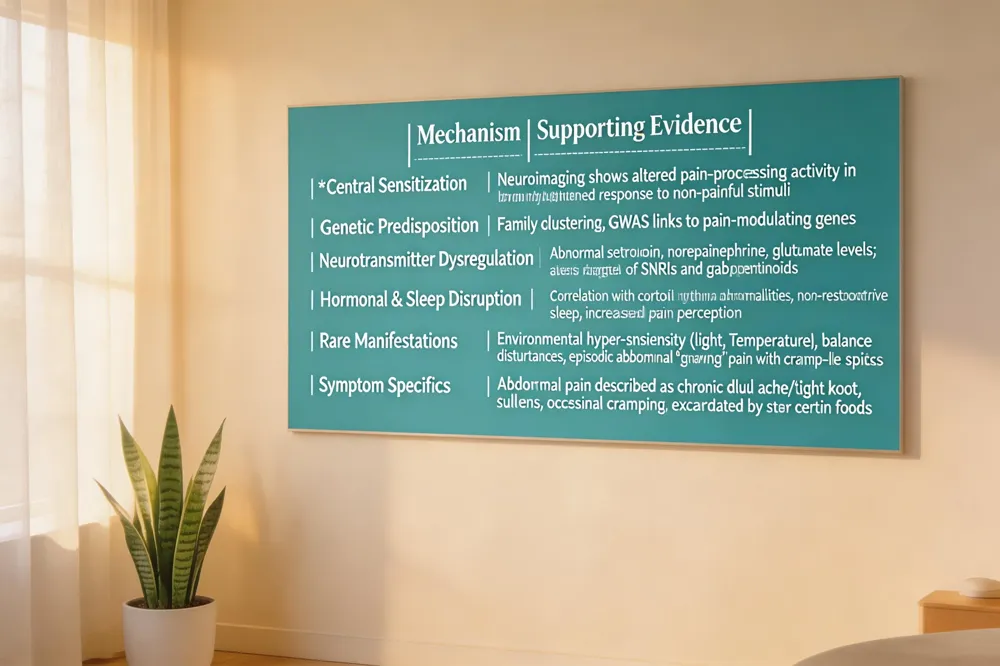 Fibromyalgia stems from a blend of genetic predisposition, chronic stress, infections, physical trauma, sleep disruption, hormonal imbalances, CNS dysfunction, environmental toxins, mental‑health comorbidities, and lifestyle factors such as vitamin D deficiency. Neuroimaging consistently shows altered pain‑processing activity in brain and spinal regions, confirming central sensitization rather than a purely psychological origin. Rare manifestations include heightened environmental sensitivity, balance disturbances, and episodic abdominal pain that feels like a gnawing, pressure‑filled ache with occasional cramp‑like spikes. This stomach pain reflects the same central amplification that produces widespread musculoskeletal discomfort.
Is fibromyalgia a real medical condition or “all in the mind”? Fibromyalgia is a validated disorder characterized by objective neuroimaging and biochemical abnormalities in pain pathways; mood and stress modulate symptoms but do not explain the underlying neuropathic mechanism.
What does fibromyalgia stomach pain feel like? Patients describe a chronic, dull ache or tight knot in the abdomen, often accompanied by fullness, occasional cramping, and heightened pain after stress or certain foods.
What is the diagnostic criteria for chronic pain? Pain persisting >3 months with significant emotional distress or functional impairment, after exclusion of acute injury or other disease, qualifies as chronic pain. ICD‑11 distinguishes chronic primary pain (no identifiable pathology) from secondary pain linked to a specific condition, guiding multidisciplinary assessment and treatment.
Putting It All Together
Fibromyalgia and other chronic‑pain syndromes share many symptoms, but they differ in pain distribution, laboratory findings, and underlying mechanisms. Fibromyalgia presents with widespread, bilateral musculoskeletal aching, tender points, fatigue, non‑restorative sleep, and "fibro fog," while inflammatory conditions such as rheumatoid arthritis or polymyalgia rheumatica show joint swelling, elevated ESR/CRP, and morning stiffness >30 minutes. Neuropathic disorders produce burning or tingling sensations and abnormal nerve studies, whereas fibromyalgia’s pain is amplified by central sensitization without nerve damage. Because diagnosis relies on exclusion, a thorough biopsychosocial assessment—history, physical exam, targeted labs, and imaging—is essential. A multidisciplinary approach brings together rheumatology, pain medicine, physical therapy, psychology, and nutrition to address the complex interplay of pain, sleep, mood, and function. The California Pain Institute offers this integrated model: expert clinicians perform comprehensive evaluations, rule out mimicking diseases, and deliver personalized treatment plans that combine FDA‑approved medications, graded exercise, cognitive‑behavioral therapy, and lifestyle coaching, helping patients regain quality of life.