Why Every Flare‑Up Plans a Proactive Plan
Fibromyalgia flares are sudden spikes in pain, fatigue, and brain‑fog triggered by stress, poor sleep, over‑exertion, or environmental changes. Acting early—by recognizing early warning signs and pausing demanding tasks—prevents the "boom‑or‑bust" cycle and limits nervous‑system overload. Building a personalized flare‑up toolkit (heat packs, gentle stretching guide, breathing script, medication list, and a short‑term activity‑pacing schedule) equips patients to respond quickly, reduces emotional distress, and accelerates return to baseline function.
Identifying the Most Debilitating Symptoms and What to Avoid
| Symptom | Description | Avoidance Strategies |
|---|---|---|
| Widespread musculoskeletal pain | Dull, aching, burning pain on both sides of the body | Avoid high‑intensity workouts and heavy lifting; prefer low‑impact, moderate activity |
| Persistent fatigue | Exhaustion despite full night’s rest, often worsened by poor sleep | Prioritize sleep hygiene (regular schedule, limit screens/caffeine, avoid large meals before bed) |
| Cognitive difficulties ("fibro fog") | Impaired concentration, memory, clear thinking | Reduce mental overload, schedule breaks, practice mindfulness |
| Headaches/migraines | Frequent painful head episodes | Identify triggers (stress, dehydration) and manage promptly |
| Mood disturbances (anxiety, depression) | Heightened pain perception and emotional distress | Seek mental‑health support, maintain regular medical appointments |
| Inactive periods / staying in one position | Leads to stiffness and worsened pain | Take frequent gentle movement breaks (e.g., every 30 min) |
| Poor diet (high sugar, refined carbs, processed foods) | Increases inflammation and fatigue | Adopt anti‑inflammatory Mediterranean‑style diet |
| Neglecting mental health / missed appointments | Exacerbates symptoms | Stay engaged with care team, attend scheduled visits |
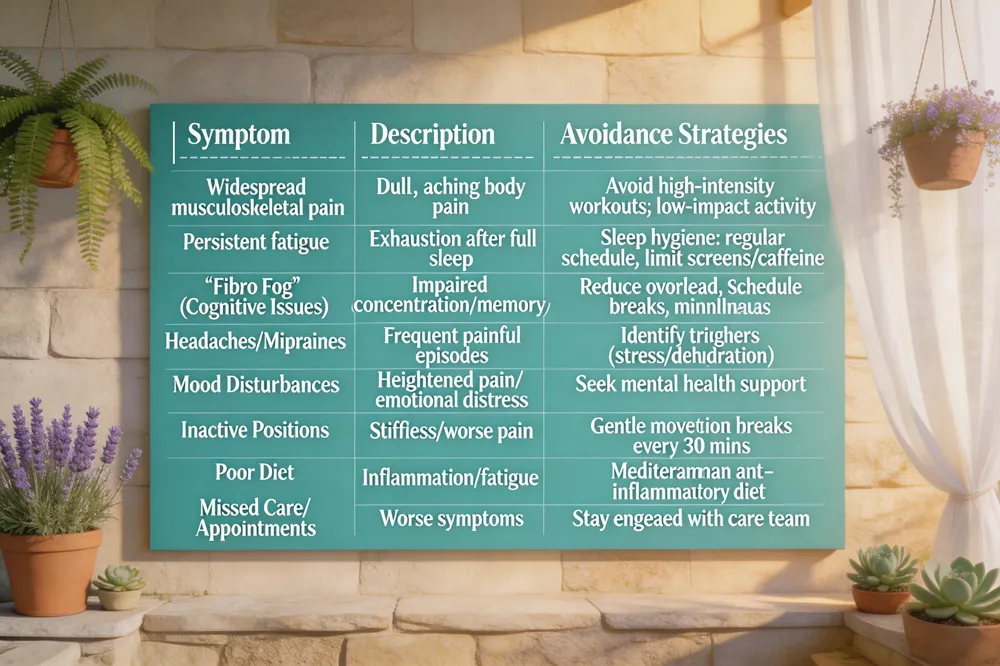 Fibromyalgia patients often report a constellation of symptoms that can be overwhelming. The most debilitating symptom is constant, widespread musculoskeletal pain that feels dull, aching, or burning and affects both sides of the body. Persistent fatigue, amplified by sleep disturbances such as restless‑leg syndrome or poor sleep quality, leaves individuals exhausted even after a full night’s rest. Cognitive difficulties—often called “fibro fog”—impair concentration, memory, and clear thinking, while frequent headaches or migraines and mood disturbances like anxiety and depression can further heighten pain perception. Together, these issues can severely limit daily activities and overall quality of life.
To avoid worsening flares, patients should not push through pain with high‑intensity workouts or heavy lifting; low‑impact, moderate activity is preferred. Long periods of inactivity or staying in one position should be broken up with frequent breaks and gentle movement. Sleep hygiene must be prioritized—maintain a regular schedule, limit screens, caffeine, and large meals before bed. Diets high in sugar, refined carbs, and processed foods should be avoided, as they can increase inflammation and fatigue. Finally, neglecting mental health or missing medical appointments can exacerbate symptoms; seeking support, managing stress, and staying in regular contact with the care team are essential.
Immediate Relief Techniques During a Flare‑Up
| Technique | How to Apply | Duration / Notes |
|---|---|---|
| Rest / pause activities | Cancel non‑essential plans, lie down or nap | Immediate; as needed |
| Heat therapy | Warm shower, heating pad, or hot water bottle on tight muscles | 15‑20 min per session |
| Cold therapy | Ice pack on sharp, inflamed spots | 10‑15 min, avoid skin frostbite |
| Gentle movement & pacing | Light stretching, short walk, slow yoga; break into 5‑min intervals with rest | 5‑10 min intervals throughout the day |
| Deep diaphragmatic breathing | Inhale slowly through nose, exhale through mouth; focus on belly rise | 5‑10 min, repeat as needed |
| Guided meditation | Use a 5‑minute audio or app | 5 min, can be repeated |
| Calming music | Listen to soothing playlists | Variable, helps shift focus |
| Hydration | Sip water regularly | Aim for 1.5‑2 L daily |
| Anti‑inflammatory Mediterranean diet | Emphasize fruits, veggies, whole grains, olive oil, fish | Ongoing, supports recovery |
| Medication adjustment (under doctor supervision) | Temporary dose increase if pain spikes | Only per clinician guidance |
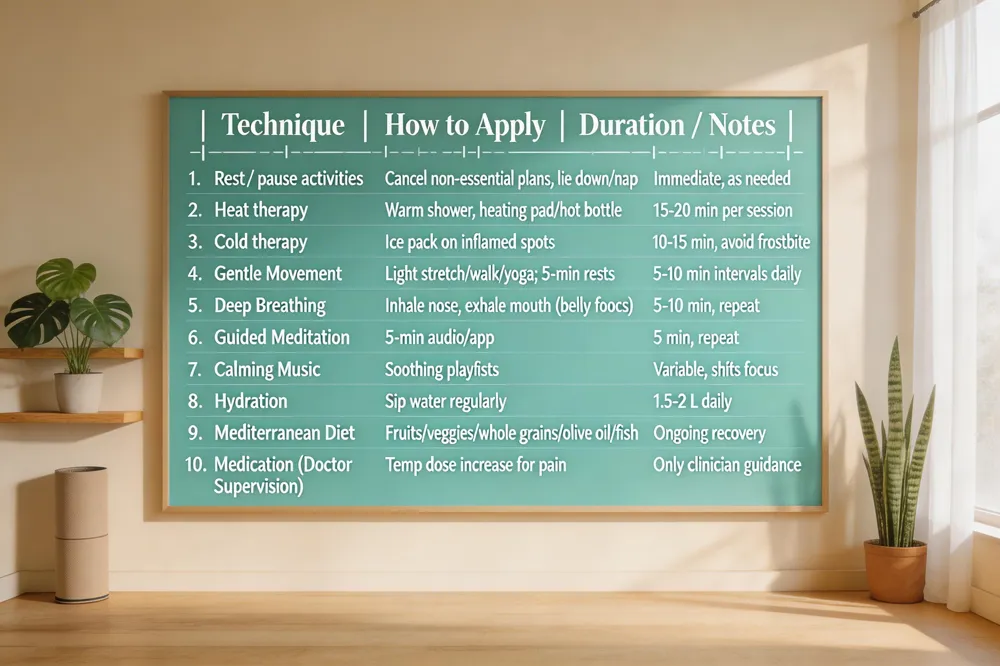 Rest and pausing are the first line of defense when a flare strikes. Allowing yourself to stop activities, cancel non‑essential plans, and nap or lie down removes the “fight‑or‑flight” drive that fuels pain. Heat and cold therapy can be applied immediately: a warm shower, heating pad, or hot water bottle relaxes tight muscles and improves circulation, while a brief ice pack can numb sharp, inflamed spots. Choose the modality that feels most soothing and limit each session to 15‑20 minutes.
Gentle movement and pacing keep the body from stiffening without over‑exertion. Light stretching, a short walk, or a few minutes of yoga performed slowly can maintain flexibility and boost mood, especially when broken into 5‑minute intervals with rest breaks.
Quick stress‑reduction tools reset the nervous system. Deep diaphragmatic breathing, a guided 5‑minute meditation, or listening to calming music shifts focus away from pain and lowers cortisol. Staying hydrated, sipping water, and adhering to an anti‑inflammatory Mediterranean‑style diet further supports recovery. When needed, an increase in medication under doctor supervision can bridge the gap while pacing and relaxation rebuild strength.
Medication Options and Long‑Term Pain Management
| Medication | Class | Primary Benefits | Typical Use |
|---|---|---|---|
| Duloxetine (Cymbalta) | SNRI | Reduces pain signaling, improves sleep, lessens fatigue | Ongoing symptom control |
| Milnacipran (Savella) | SNRI | Similar to duloxetine; May daytime pain and fatigue | Ongoing symptom control |
| Pregabalin (Lyrica) | Anticonvulsant | Modulates central sensitization, improves sleep | Ongoing symptom control |
| Analgesics (acetaminophen, NSAIDs) | Pain relievers | Short‑term relief for flare‑up spikes | As needed, limited duration |
| Combination therapy (medication + activity) | Multimodal | Synergistic pain reduction, functional improvement | Integrated long‑term plan |
| Complementary options (massage, acupuncture, vitamin D, magnesium) | Adjunctive | May reduce muscle tension, support nerve health | Discuss with specialist before adding |
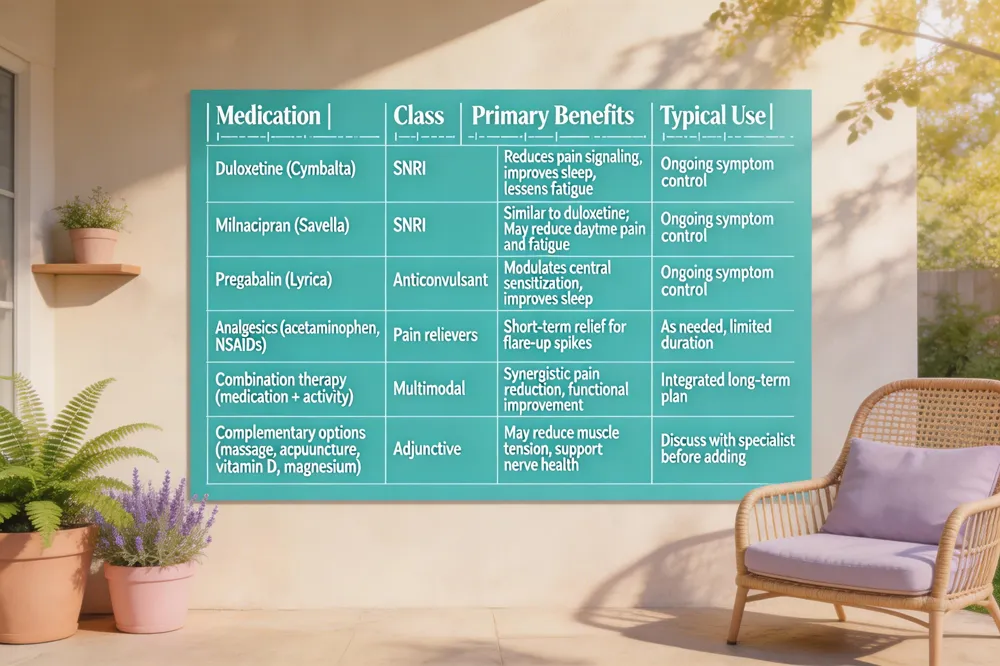 FDA‑approved drug classes for fibromyalgia include serotonin‑norepinephrine reuptake inhibitors (SNRIs) such as duloxetine and milnacipran, and the anticonvulsant pregabalin. These agents target central sensitization, decreasing pain signaling, improving sleep continuity, and reducing daytime fatigue. They are typically prescribed for ongoing symptom control, while short‑term use of analgesics or a brief increase in medication dose may be employed during an acute flare when pain spikes exceed baseline levels.
How to deal with fibromyalgia pain? Managing pain requires a multimodal plan: prescribed medications (e.g., duloxetine, pregabalin) to modulate nerve activity, gentle regular activity like walking, swimming, yoga, or tai chi to build stamina, and lifestyle adjustments such as consistent sleep hygiene, hydration, and a Mediterranean‑style diet. Cognitive‑behavioral therapy, acceptance‑and‑commitment therapy, and stress‑reduction techniques further help patients cope with flare‑ups and enhance sleep quality. Complementary options—massage, acupuncture, vitamin D and magnesium— can be added after discussing with a pain specialist.
What are the 3 medications for fibromyalgia? The three FDA‑approved drugs are pregabalin (Lyrica), duloxetine (Cymbalta), and milnacipran (Savella), each acting on the central nervous system to lessen pain, improve sleep, and curb fatigue.
What are the 5 coping skills every chronic pain patient needs? 1) Calm the nervous system with deep‑breathing, mindfulness, or short meditations. 2) Incorporate active coping: gentle movement, pacing, and low‑impact exercise. 3) Identify and restructure unhelpful thoughts using cognitive‑behavioral techniques. 4) Use relaxation methods—progressive muscle relaxation, guided imagery, yoga—to lower muscle tension. 5) Build a strong support network and seek professional help from pain psychologists or therapists for emotional backing and accountability.
Integrating Lifestyle, Sleep, and Mental Health
| Lifestyle Aspect | Recommendations | Rationale |
|---|---|---|
| Sleep hygiene | 7+ hrs uninterrupted sleep, consistent schedule, dark/quiet/cool bedroom, limit caffeine after noon, no screens 30 min before bed | Improves restorative sleep, reduces fatigue and pain perception |
| Anti‑inflammatory Mediterranean diet | Fresh fruits, leafy greens, whole grains, lean protein, olive oil, nuts, avocado; limit added sugars, processed foods, gluten, MSG | Lowers systemic inflammation, stabilizes energy levels |
| Hydration | Drink water throughout the day (≈1.5‑2 L) | Prevents fatigue, supports muscle function |
| Pacing & activity scheduling | Break tasks into small chunks, 10‑min rest every 30‑45 min, schedule demanding tasks 10 am‑4 pm | Avoids “boom‑or‑bust” cycle, maintains functional capacity |
| Low‑impact exercise | Gentle walking, stretching, yoga, tai chi | Improves circulation, mood, and flexibility without over‑exertion |
| Therapeutic counseling | CBT, mindfulness‑based stress reduction, support groups | Reframes pain thoughts, reduces catastrophizing, combats anxiety/depression |
| Mental‑health support | Regular therapy, consider SAMHSA helpline for crisis | Addresses depression, improves coping, enhances overall quality of life |
 Sleep hygiene practices
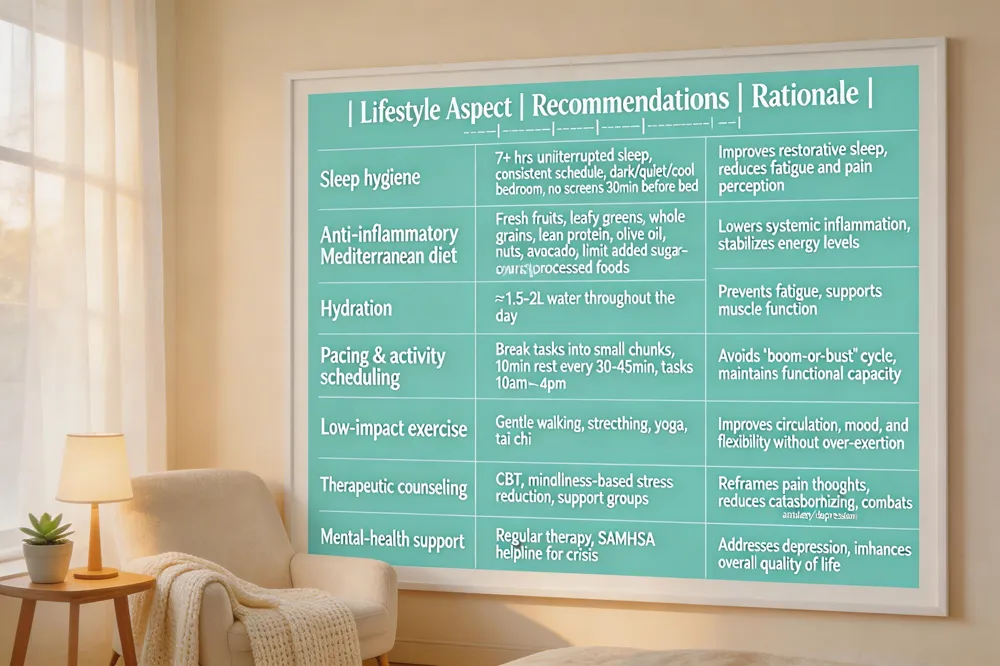
Consistent, restorative sleep is a cornerstone of fibromyalgia management. Aim for at least seven hours of uninterrupted rest each night. Keep a regular bedtime and wake‑time, even on weekends, and create a calming pre‑sleep routine—such as a warm bath, gentle stretching, or listening to soothing music. Make the bedroom dark, quiet, and cool (≈18‑20 °C) and reserve the bed for sleep and intimacy only. Limit caffeine after noon, avoid heavy meals close to bedtime, and reduce screen exposure at least 30 minutes before sleep.
Balanced anti‑inflammatory diet
A nutrient‑dense, Mediterranean‑style eating plan can lessen systemic inflammation and support energy levels. Emphasize fresh fruits, leafy vegetables, whole grains, lean proteins (fish, poultry, legumes), and healthy fats from olive oil, nuts, and avocado. Reduce added sugars, processed foods, gluten, and MSG, which some patients find aggravate pain and brain fog. Stay well‑hydrated—drink plenty of water throughout the day—to combat fatigue and improve muscle function.
Pacing and activity scheduling
Avoid the “boom‑or‑bust” cycle by breaking tasks into small, manageable chunks and interspersing regular rest breaks (e.g., 10‑minute pauses every 30‑45 minutes of activity). Schedule the most demanding chores during your personal peak‑energy window, typically between 10 a.m. and 4 p.m. Light, low‑impact movement such as gentle walking, stretching, yoga, or tai chi promotes circulation without over‑exertion and can improve mood during a flare.
Therapeutic counseling and support groups
Psychological support is essential for coping with chronic pain and its emotional toll. Cognitive‑behavioral therapy (CBT) and mindfulness‑based stress reduction teach skills to reframe pain thoughts, reduce catastrophizing, and lower anxiety. Joining a support group—whether in‑person or online—provides validation, shared coping strategies, and reduces feelings of isolation. Regular counseling also helps address depression, which often co‑exists with fibromyalgia.
How to live with chronic pain and depression?
Living with chronic pain and depression requires a combined approach of medical, psychological, and lifestyle strategies. Start by connecting with a pain‑medicine specialist and a mental‑health professional—such as a therapist trained in Cognitive‑behavioral therapy (CBT)—who can help you break the pain‑stress cycle, reshape unhelpful thoughts, and develop a personalized treatment plan. Incorporate daily coping tools like deep‑breathing, mindfulness, and short meditations to calm the nervous system, and practice pacing activities so you avoid over‑exertion while still staying engaged. Reach out to supportive resources, including the SAMHSA National Helpline (1‑800‑662‑HELP) for confidential crisis assistance and community referrals, and consider joining a support group where you can share experiences and learn from others. Finally, prioritize sleep, gentle exercise, and a balanced diet, and keep regular follow‑up appointments to adjust treatments as needed, ensuring both pain and mood are managed together.
A Structured Framework for Ongoing Pain Management
| 5 A’s Component | Key Actions | Monitoring Tips |
|---|---|---|
| Analgesia | Optimize medication regimen, consider physical therapy, complementary modalities | Track pain scores, side‑effects, functional improvement |
| Activity | Assess daily task limitations, implement pacing, adaptive strategies | Use activity log, note energy peaks and troughs |
| Adverse Effects | Monitor for medication side‑effects (drowsiness, GI issues, dizziness) | Regular labs/clinical check‑ins, patient‑reported outcomes |
| Aberrant Behaviors | Screen for misuse, non‑compliance, addiction risk | Utilize validated questionnaires, discuss openly with care team |
| Affect | Evaluate mood, anxiety, depression; provide psychological support | Mood diaries, PHQ‑9/GAD‑7 scores, referral to mental‑health professionals |
 A systematic approach to chronic pain helps patients and clinicians stay organized, proactive, and compassionate. The 5 A’s of chronic‑pain care—Analgesia, Activity, Adverse effects, Aberrant behaviors, and Affect—provide a concise checklist. Analgesia focuses on achieving meaningful pain relief through medication, physical therapy, or complementary modalities. Activity evaluates how pain limits daily tasks and encourages pacing or adaptive strategies. Adverse effects involve vigilant monitoring for side‑effects from analgesics or other therapies. Aberrant behaviors identify signs of misuse, non‑compliance, or addiction risk. Affect addresses the emotional toll, including anxiety, depression, and mood fluctuations.
During a flare‑up, a flare‑up toolkit—pre‑packaged items such as heat packs, soothing music, guided‑meditation recordings, and a brief medication list—facilitates rapid self‑management while avoiding over‑exertion. Tracking triggers and symptom patterns with a daily diary or app helps uncover personal precipitating factors, from stress and weather changes to dietary choices, enabling targeted adjustments.
Finally, collaboration with a multidisciplinary pain team—rheumatologist, physical therapist, psychologist, and nutritionist—ensures that each component of the 5 A’s is addressed, fostering a balanced, individualized plan that adapts as the patient’s condition evolves.
Putting It All Together for Sustainable Relief
Develop a personalized flare‑up toolkit while you’re well: list trigger‑tracking methods, short‑term medication use, gentle‑movement options, hydration, diet, and relaxation techniques. Schedule regular check‑ins with a pain specialist to adjust medications, review activity pacing, and refine your action plan based on symptom diaries. Consistency is key—take prescribed meds as directed, engage in low‑impact exercise daily, uphold strict sleep hygiene, and stay connected to support groups or therapy. This coordinated approach stabilizes symptoms and empowers faster recovery from flares.