Introduction – Understanding Sciatica and Treatment Goals
Sciatica is a form of lumbar radiculopathy caused by irritation or compression of the sciatic nerve, which runs from the lower back through the buttocks and down each leg. The most frequent triggers include a herniated disc, spinal stenosis, spondylolisthesis, bone spurs, or a back injury that narrows the nerve pathway. Typical symptoms are sharp, burning or electric‑shock pain radiating down the back of the leg, often accompanied by tingling, numbness, or muscle weakness. Management begins with self‑care—cold or heat packs, gentle stretching, and over‑the‑counter NSAIDs—to reduce inflammation and maintain mobility. Early physical‑therapy interventions, core strengthening, and posture correction are recommended, while more severe cases may progress to prescription medications, epidural steroid injections, or, when necessary, surgical decompression.
Pharmacologic Options and Advanced Interventions
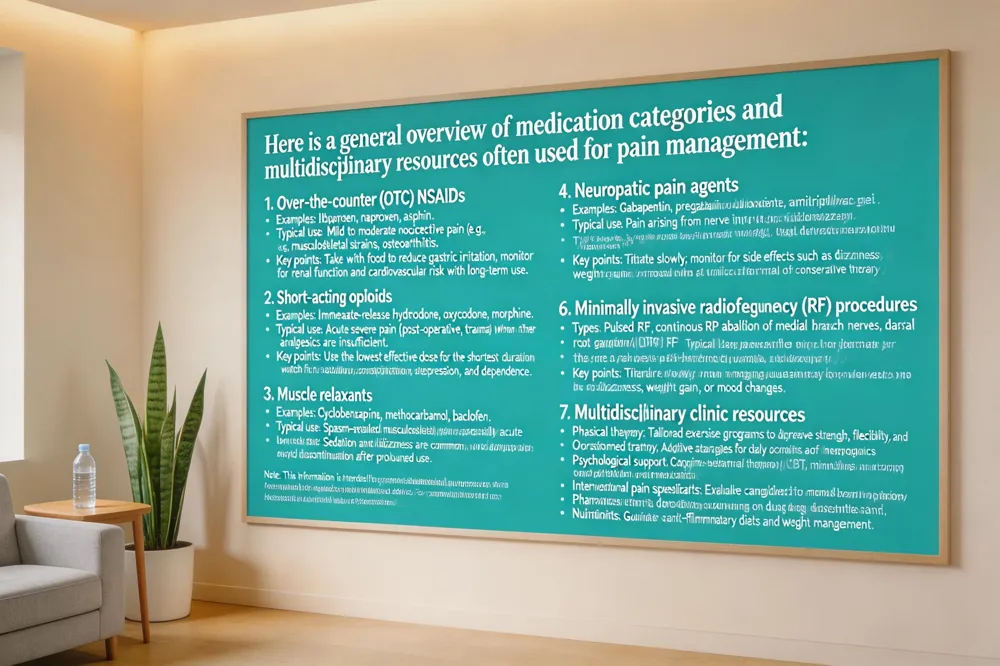 Severe sciatica may require short‑acting opioids such as oxycodone or hydrocodone, but these are used sparingly under close supervision because of dependence risk. Most patients start with OTC NSAIDs (ibuprofen, naproxen) to curb inflammation, adding prescription muscle relaxants for spasm relief and, when nerve pain persists, low‑dose neuropathic agents like gabapentin or tricyclic antidepressants. Topical lidocaine or capsaicin creams (e.g., Bengay Lidocaine, Penetrex) provide localized numbness and are the preferred first‑line skin treatments. For patients who do not improve, minimally invasive options such as pulsed radiofrequency (PRF) and radiofrequency ablation disrupt pain signals without the larger tissue damage of surgery. Multidisciplinary specialty centers—University Spine and Pain Center, California Pain Institute (Inglewood, Torrance), and California Sports & Spine Institute—offer coordinated care that blends medication management, interventional injections, advanced radiofrequency techniques, and regenerative therapies, ensuring each sciatica patient receives a personalized, evidence‑based plan.
Self‑Care, Immediate Relief and Flare‑Up Triggers
 Heat and cold therapy: Apply ice for 15‑20 minutes during the first 2‑3 days to numb inflammation, then switch to a warm pack or heating pad for 15‑20 minutes several times daily to relax muscles and improve circulation.
Activity modification: Keep moving—short walks, gentle hamstring and piriformis stretches, pelvic tilts, and avoid prolonged sitting or lying still. Stand or walk at least every hour.
Red‑flag symptoms: Bilateral leg pain, severe weakness, numbness around the genitals, or loss of bladder/bowel control signal possible cauda equina syndrome and require emergency care.
Short‑term relief techniques: For rapid relief, shift to a pain‑free position, apply a cold pack for 15 seconds, perform a quick glute‑contraction, then stand and do a brief hamstring stretch before walking a few steps.
Immediate relief for sciatica pain: Use heat, OTC NSAIDs (e.g., ibuprofen), gentle movement, and avoid prolonged sitting. Seek urgent care if symptoms worsen or red‑flags appear.
Triggers for flare‑ups: Prolonged sitting, heavy lifting, twisting, coughing, sneezing, poor posture, and weak core muscles.
What not to do: Avoid bed rest, heavy lifting, deep forward bending, excessive twisting, and sleeping on a soft mattress without lumbar support.
What gets rid of sciatica fast: Ice then heat, NSAIDs, short‑term physical‑therapy exercises, and, if needed, a corticosteroid injection; surgery is reserved for severe, refractory cases.
Targeted Stretches, Exercise Programs and Walking Strategies
 Effective sciatica management combines core‑and‑glute strengthening, hamstring and piriformis flexibility, and safe walking habits.
Core and glute strengthening – The glute bridge (2 sets × 8‑12 reps) activates the glutes and lumbar stabilizers; clamshells (2 sets × 8‑12 reps per side) target hip external rotators.
Hamstring and piriformis flexibility – Perform a seated forward bend or standing hamstring stretch, holding 30 seconds, 8‑10 times per side. A piriformis stretch (ankle over opposite knee, gently pull thigh) relieves deep‑hip tension.
Safe walking techniques – Keep strides short, land mid‑foot‑heel, and engage the abdominal muscles lightly. Walk 30‑45 minutes daily at a comfortable pace; avoid steep hills or uneven terrain until pain improves.
Exercise frequency and progression – Stretch and strengthen at least twice weekly, gradually increasing repetitions or adding a third set as tolerance allows.
FAQ
- Sciatica stretches – Gentle mobilization of lower back, hips, and hamstrings; hold each stretch 30 seconds, repeat 8‑10 times per side, twice a week.
- Sciatica exercises – Daily routine: warm‑up, glute bridge, clamshells, bird‑dog, then a brief walk. Stop any movement that worsens leg pain.
- Why does my sciatica get worse when I walk? – Long strides or fast pace increase lumbar disc pressure and pelvis tilt, compressing the nerve. Shorten stride, land softly, and brace the core.
- Sciatica pain so bad I can’t walk – Severe compression may prevent weight‑bearing. Use ice (first 48 h) then heat, OTC NSAIDs, gentle stretching, and assisted short walks. Seek urgent care if weakness, bladder/bowel loss, or sudden numbness occurs.
Consistent, low‑impact activity and targeted stretches are key to reducing nerve irritation and restoring mobility.
When to Seek Professional Care and Managing Advanced Symptoms
 Red‑flag signs such as sudden loss of bladder or bowel control, severe bilateral leg weakness, numbness around the perineal area, or rapidly worsening pain may indicate cauda equina syndrome and require immediate emergency evaluation. If sciatica pain persists beyond four to six weeks of home care—despite regular gentle stretching, heat or ice therapy, and over‑the‑counter NSAIDs—schedule a visit with your primary‑care physician or pain‑medicine specialist. The clinician will review your history, perform a focused neurological exam, and may order imaging (MRI or CT) or electromyography to identify a herniated disc, spinal stenosis, or other structural cause. In the later stages of sciatica, constant severe pain, progressive weakness, or persistent numbness can signal permanent nerve damage; urgent referral to a spine specialist for epidural steroid injections, radiofrequency ablation, or surgical decompression may be needed. Early, multidisciplinary management—including targeted physiotherapy, appropriate medication, and lifestyle modifications—helps prevent escalation and restores function.
Finding the Right Provider – LA Resources and Recommendations
 Choosing a sciatica specialist in Los Angeles begins with locating a clinic that offers evidence‑based, patient‑centered care. Top sciatica therapy clinics in LA include The Joint and Spine Institute, Richard Lee Neuromuscular Massage Therapy, Vivie Therapy, Yonsei Chiropractic Clinic, Sports & Spine Rehabilitation Center, The Chiro Guy, Wilshire Center Chiropractic, and 10 Body Type Acupuncture Clinic – all praised for individualized treatment plans and supportive staff.
Patient‑centered care at California Pain Institute – Our Inglewood office (near the 105 freeway) provides comprehensive evaluations, personalized physiologic, epidural steroid injections, radiofrequency ablation, and ongoing support. We accept most major insurances and offer flexible payment options. Schedule via (323) 555‑1234 or online.
Referral and insurance considerations – For Torrance residents, the Torrance Memorial Physician Network Pain Management clinic coordinates with primary physicians, accepts a wide range of plans, and offers free referral assistance. California Sports & Spine Institute (Arcadia, Glendale, Palmdale) delivers non‑surgical and regenerative options, with telemedicine for convenience.
FAQs
- Where's the best sciatica therapy in LA? See the top‑10 list above.\
- Pain management Inglewood? California Pain Institute, board‑certified, interventional expertise.\
- Pain management Torrance, CA? Torrance Memorial Pain Management, multidisciplinary, includes regenerative therapies.\
- California Sports and Spine Institute? Specialized in functional and regenerative treatments, multiple Southern‑California locations, telehealth available.
Conclusion – A Path Forward for Sciatica Relief
A successful recovery from sciatica relies on a multimodal strategy that blends self‑care, medication, physical therapy, and, when needed, interventional procedures such as epidural steroid injections or minimally invasive surgery. Early intervention is critical; addressing inflammation with ice, heat, and NSAIDs and initiating gentle movement within the first few days helps prevent chronic nerve irritation and reduces the likelihood of long‑term disability. For residents of Los Angeles, the California Pain Institute offers a coordinated, evidence‑based program that includes personalized assessments, targeted physiotherapy, and access to specialist‑driven injections or surgical consultation. If you are experiencing persistent leg pain, numbness, or weakness, schedule a prompt evaluation to begin a tailored treatment plan and regain function as quickly as possible.