Introduction
Anesthesiology began with the first public ether demonstration in 1846, turning surgery from a painful ordeal into a controlled, pain‑free experience. Over the decades the specialty merged with pain medicine, as anesthesiologists pioneered tools such as the Apgar score, positive‑pressure ventilation, and modern pulse‑oximetry that improve safety and enable precise pain assessment. Today, anesthesiology drives multimodal analgesia, ultrasound‑guided nerve blocks, and advanced neuromodulation, all aimed at minimizing opioid exposure while accelerating recovery. For patients at the California Pain Institute, this evolution means access to cutting‑edge, evidence‑based treatments—ranging from regional anesthesia and regenerative injections to AI‑guided dosing and virtual‑reality distraction—designed to relieve pain, preserve function, and improve quality of life. These innovations also support long‑term wellbeing for patients and families.
Foundations of Modern Anesthesiology and Pain Medicine
 Historical milestones such as the 1846 public demonstration of ether anesthesia, Dr. Virginia Apgar’s 1952 Apgar score, and Dr. Bjørn Ibsen’s pioneering of positive‑pressure ventilation have shaped modern medicine and set the stage for today’s pain‑focused anesthesiology. Anesthesiologists now possess core competencies that span airway management, advanced monitoring (e.g., pulse oximetry, EEG‑based nociception assessment), and multimodal analgesia. They lead chronic‑pain programs, perform ultrasound‑guided peripheral nerve blocks, epidural and intrathecal injections, and implant neuromodulation devices such as spinal‑cord stimulators. Board certification in pain medicine, established in the early 1990s, formalizes this expertise and reinforces multidisciplinary collaboration with surgeons, physiatrists, psychologists, and primary‑care providers.
Anesthesia and Pain Medicine – a subspecialty devoted to preventing and treating acute and chronic pain using regional techniques, non‑opioid pharmacology, and interventional procedures, while minimizing opioid exposure and adverse effects.
How do anesthesiologists treat chronic pain? – by employing a multimodal strategy that includes oral/ topical agents, targeted injections (epidural, facet‑joint, peripheral nerve blocks), radio‑frequency ablation, and neuromodulation (spinal‑cord, peripheral‑nerve, intrathecal pumps), all coordinated with rehabilitation and behavioral therapies.
What does a pain‑management anesthesiologist do? – evaluates history and exam, orders diagnostics, designs individualized treatment plans, performs interventional procedures, monitors outcomes, adjusts therapies, and educates patients, ensuring safety and optimal functional recovery.
Innovative Treatments for Neuropathy and Peripheral Pain
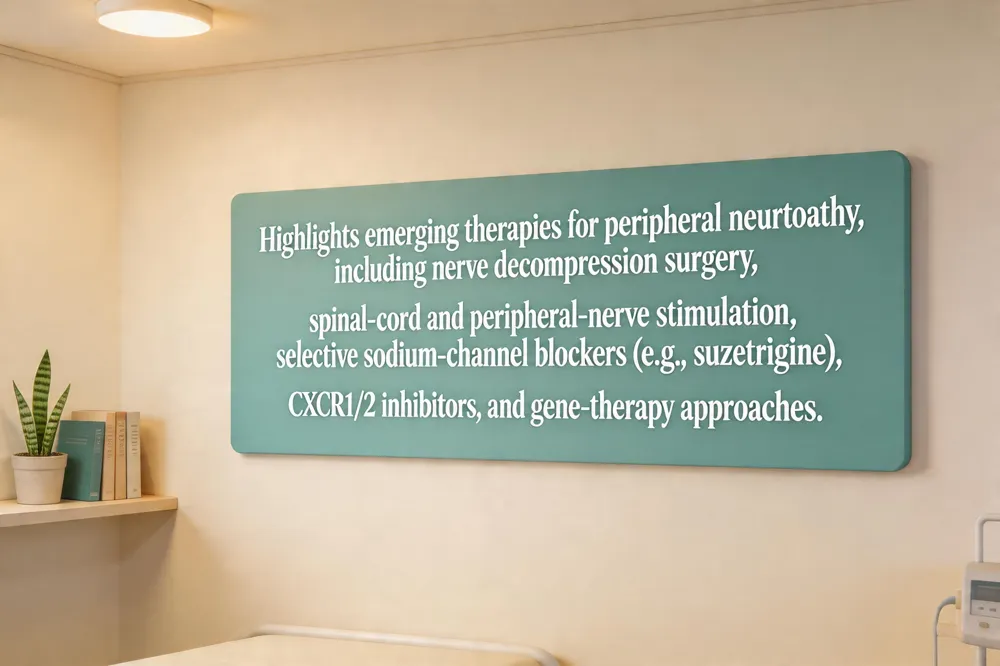 New treatment for neuropathy
Recent advances broaden options for peripheral neuropathy. Surgical nerve decompression relieves chronic pressure on swollen nerves, offering durable pain reduction in diabetic patients. Neuromodulation—FDA‑cleared spinal cord stimulation (SCS) and peripheral nerve stimulation (PNS)—provides non‑pharmacologic relief when medications fail, delivering patterned electrical signals that disrupt pain pathways. Emerging pharmacologic agents include selective sodium‑channel blockers such as the Nav1.8 inhibitor suzetrigine (Journavx™) and experimental CXCR1/2 inhibitor DF2755A, which target inflammatory cascades. Gene‑therapy approaches aim to correct abnormal nerve signaling at its source, using viral vectors to modulate ion‑channel expression or deliver neurotrophic factors.
New treatment for neuropathy
Recent advances broaden options for peripheral neuropathy. Surgical nerve decompression relieves chronic pressure on swollen nerves, offering durable pain reduction in diabetic patients. Neuromodulation—FDA‑cleared spinal cord stimulation (SCS) and peripheral nerve stimulation (PNS)—provides non‑pharmacologic relief when medications fail, delivering patterned electrical signals that disrupt pain pathways. Emerging pharmacologic agents include selective sodium‑channel blockers such as the Nav1.8 inhibitor suzetrigine (Journavx™) and experimental CXCR1/2 inhibitor DF2755A, which target inflammatory cascades. Gene‑therapy approaches aim to correct abnormal nerve signaling at its source, using viral vectors to modulate ion‑channel expression or deliver neurotrophic factors.
New treatments for neuropathy in feet Foot neuropathy benefits from a multimodal strategy. High‑dose duloxetine and 8 % topical capsaicin patches remain first‑line pharmacologic choices. Surgical decompression of compressed plantar nerves has shown lasting relief in diabetic foot pain. Non‑invasive modalities—low‑level laser therapy, SCS/PNS, and specialized physical‑therapy programs—improve microcirculation and reduce inflammation. Gene‑silencing techniques targeting sodium‑channel genes are under investigation to restore normal nerve function.
Sodium channel blockers examples Classic agents include carbamazepine, oxcarbazepine, mexiletine, and topical lidocaine. Older antiepileptics such as phenytoin and lamotrigine also provide sodium‑channel inhibition. The newest generation focuses on subtype‑selective compounds: Nav1.8 blocker suzetrigine, Nav1.7 inhibitor vixotrigine, and experimental PF‑05089771, which aim to curb abnormal firing with fewer side effects. These innovations together expand the therapeutic armamentarium for neuropathic pain, enhancing quality of life for patients with peripheral nerve disorders.
Advances in Chronic Back Pain Management
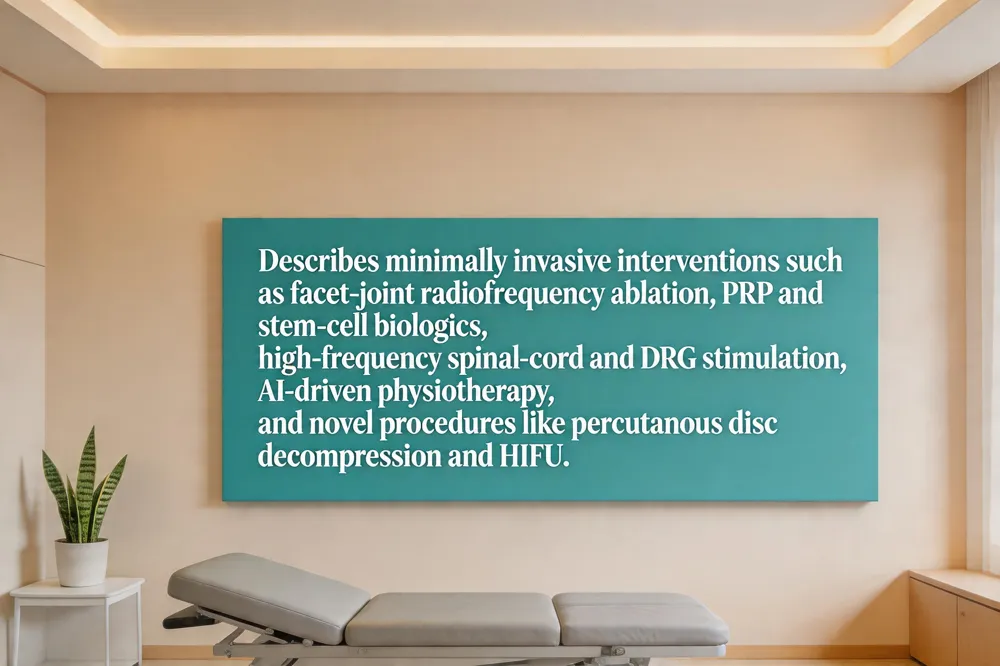 New treatments for lower back pain
Emerging options for chronic low‑back pain now include minimally invasive lumbar facet‑joint radiofrequency ablation, which disrupts pain‑signaling nerves while preserving surrounding tissue. Regenerative biologics such as autologous platelet‑rich plasma (PRP) and stem‑cell or bone‑marrow aspirate concentrate (BMAC) injections aim to repair degenerated discs and facet joints, offering promising pain‑reduction and functional gains. Targeted neuromodulation, especially high‑frequency spinal‑cord stimulation (SCS) and dorsal‑root‑ganglion (DRG) stimulation, can restore spinal stability and has shown long‑term improvement in up to 80 % of patients. AI‑driven physiotherapy platforms now tailor exercise programs to each patient’s biomechanics, enhancing adherence and accelerating rehabilitation.
New treatments for lower back pain
Emerging options for chronic low‑back pain now include minimally invasive lumbar facet‑joint radiofrequency ablation, which disrupts pain‑signaling nerves while preserving surrounding tissue. Regenerative biologics such as autologous platelet‑rich plasma (PRP) and stem‑cell or bone‑marrow aspirate concentrate (BMAC) injections aim to repair degenerated discs and facet joints, offering promising pain‑reduction and functional gains. Targeted neuromodulation, especially high‑frequency spinal‑cord stimulation (SCS) and dorsal‑root‑ganglion (DRG) stimulation, can restore spinal stability and has shown long‑term improvement in up to 80 % of patients. AI‑driven physiotherapy platforms now tailor exercise programs to each patient’s biomechanics, enhancing adherence and accelerating rehabilitation.
New procedures for back pain Recent advances provide patients effective alternatives to surgery. Percutaneous disc decompression and endoscopic laser discectomy remove herniated material through a tiny needle or scope, while high‑intensity focused ultrasound (HIFU) can ablate painful tissue without incision. For vertebrogenic pain, the Intracept (basivertebral nerve ablation) uses radiofrequency energy to interrupt nociceptive signals from damaged endplates, and the MILD (Minimally Invasive Lumbar Decompression) procedure trims hypertrophic ligament to relieve lumbar stenosis. Spinal cord stimulation offers another option, implanting a pulse generator that interferes with pain pathways for durable relief.
Recent advances in chronic pain management In January 2025 the FDA approved Journavx™ (suzetrigine) , the first new analgesic class in two decades, selectively blocking peripheral NaV1.8 sodium channels to provide opioid‑level relief without addiction risk. Closed‑loop neuromodulation systems now automatically adjust stimulation based on real‑time neural feedback, minimizing side effects. Wearable AI platforms and evidence‑based virtual‑reality apps deliver personalized, home‑based therapy, while regenerative biologics targeting inflammatory pathways continue to enter clinical trials. Together, these innovations give patients safer, more precise, and multimodal options for managing chronic back pain.
Multimodal Analgesia, Medications, and Patient Empowerment
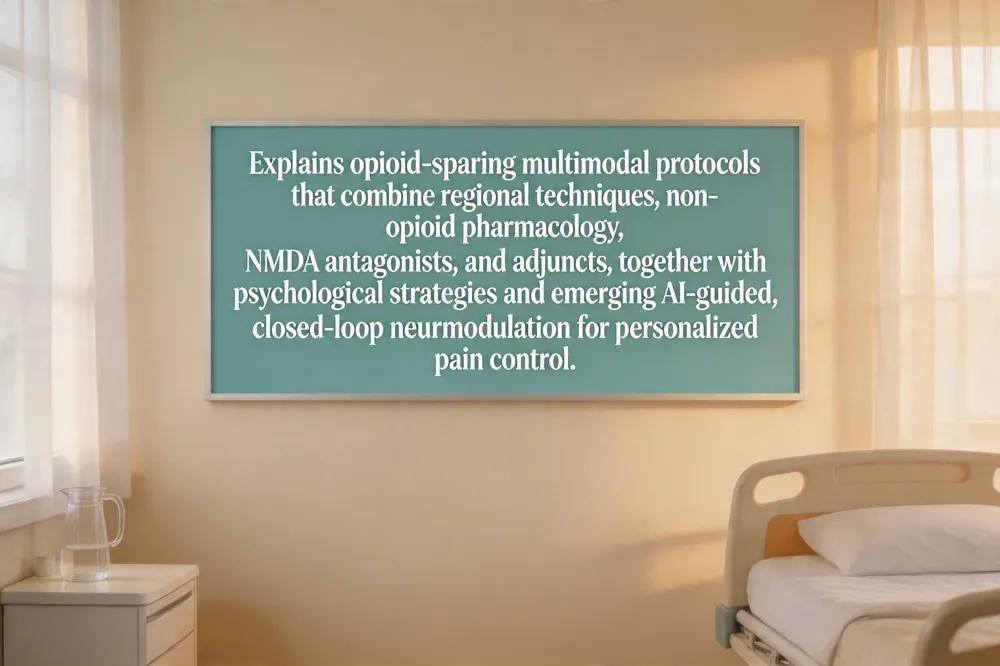 Opioid‑sparing multimodal protocols combine regional anesthesia (ultrasound‑guided nerve blocks, epidurals, liposomal bupivacaine catheters) with non‑opioid drugs—acetaminophen, NSAIDs, gabapentinoids, ketamine, dexmedetomidine—to cut postoperative opioid use by up to 50 % and accelerate recovery. Anesthetic medication classes include short‑acting opioids (fentanyl, remifentanil), long‑acting opioids (morphine, methadone), non‑opioids (acetaminophen, ketorolac), NMDA antagonists (ketamine), and adjuncts such as dexmedetomidine and magnesium, all titrated by anesthesiologists using advanced monitoring (EEG‑based nociception, closed‑loop delivery).
Psychological strategies—Cognitive‑Behavioral Therapy, Pain Reprocessing Therapy, mindfulness, and patient‑education—reframe pain as a brain‑generated signal, reducing fear‑avoidance and opioid reliance. Patients are encouraged to set realistic activity goals, practice daily relaxation, and engage in low‑impact exercise to keep pain from dominating life.
Future pain medicine will be driven by AI‑guided personalization, closed‑loop neuromodulation, and regenerative biologics. Real‑time data from wearable sensors and AI models will predict pain trajectories, while high‑frequency spinal cord stimulation and peripheral nerve stimulation will deliver adaptive, opioid‑free relief. Gene‑editing and stem‑cell therapies promise disease‑modifying treatment, moving pain care from symptom suppression to tissue healing.
How do I not let chronic pain ruin my life? Treat pain as a brain signal, use CBT or Pain Reprocessing Therapy to lower its threat value, stay active with gentle exercise, practice mindfulness, and maintain regular follow‑up with a pain‑medicine specialist.
What pain medications are used in anesthesia? Opioids (morphine, fentanyl, hydromorphone), non‑opioids (acetaminophen, ketorolac), NMDA antagonists (ketamine), α‑2 agonists (dexmedetomidine), and adjuncts such as magnesium and gabapentinoids, delivered intravenously or via regional techniques.
What is the most effective treatment for neuropathic pain? A multimodal regimen—gabapentinoid plus a tricyclic antidepressant or SNRI—often provides the best relief; refractory cases may require peripheral nerve blocks, epidural steroid injections, or spinal cord stimulation.
Future of pain medicine Envisions AI‑driven precision, closed‑loop neuromodulation, regenerative biologics, and personalized pharmacogenomics to deliver durable, opioid‑free analgesia and improve quality of life for chronic‑pain patients.
Why Anesthesiologists Choose Pain Medicine and the Emerging Landscape
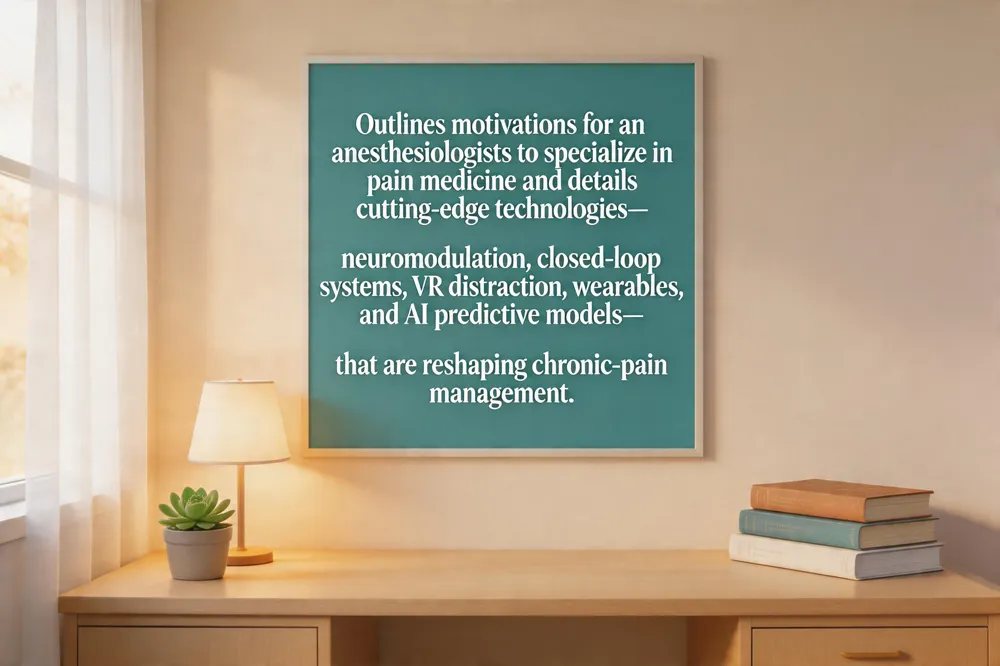 Why do anesthesiologists become pain doctors?
Anesthesiologists are drawn to pain medicine because their core training in nerve physiology, pharmacology, and image‑guided procedures equips them to diagnose and treat complex pain syndromes. Daily exposure to acute postoperative pain sparks a desire to extend relief beyond the operating room, while the specialty offers a hands‑on, multidisciplinary practice that combines regional blocks, epidural injections, and neuromodulation. The ability to improve function and quality of life for chronic‑pain patients provides deep professional fulfillment.
Why do anesthesiologists become pain doctors?
Anesthesiologists are drawn to pain medicine because their core training in nerve physiology, pharmacology, and image‑guided procedures equips them to diagnose and treat complex pain syndromes. Daily exposure to acute postoperative pain sparks a desire to extend relief beyond the operating room, while the specialty offers a hands‑on, multidisciplinary practice that combines regional blocks, epidural injections, and neuromodulation. The ability to improve function and quality of life for chronic‑pain patients provides deep professional fulfillment.
What is the new method of pain management? Neuromodulation—delivering precise electrical or magnetic signals to modify nervous‑system activity—has emerged as a leading pain‑relief strategy. Invasive options include spinal‑cord stimulation, peripheral‑nerve stimulation; non‑invasive techniques span transcutaneous electrical nerve stimulation and repetitive transcranial magnetic stimulation. Recent closed‑loop systems automatically adjust stimulation based on real‑time physiological feedback, offering personalized, consistent relief after a brief trial period.
Emerging technologies: AI, VR, and wearables Virtual‑reality distraction reduces perceived pain by about two points on a numeric rating scale, while wearable sensors continuously monitor vitals and correlate them with pain spikes. Artificial‑intelligence models predict individual pain trajectories and guide opioid‑sparing medication dosing. Together, these tools complement ultrasound‑guided nerve blocks, multimodal analgesia, and neuromodulation, creating a comprehensive, patient‑centered pain‑management paradigm.
Conclusion
Anesthesiology now drives pain medicine through nine key innovations: 1) ultrasound‑guided nerve blocks for precise, opioid‑sparing analgesia; 2) long‑acting liposomal local anesthetics that extend relief up to 72 hours; 3) multimodal analgesia protocols that combine regional, pharmacologic, and non‑pharmacologic therapies; 4) advanced airway and ventilation technologies that keep patients safe during procedures; 5) minimally invasive interventional tools such as radiofrequency ablation, peripheral nerve stimulation, and spinal cord stimulation; 6) emerging non‑opioid drugs like Nav1.8 sodium‑channel blockers (e.g., suzetrigine); 7) AI‑driven dosing and closed‑loop delivery systems; 8) virtual‑reality and other neuro‑behavioral adjuncts; and 9) regenerative approaches (PRP, stem‑cell) guided by ultrasound. (n Angeles residents, schedule a comprehensive evaluation at the California Pain Institute to benefit from these evidence‑based, patient‑centered treatments.