Introduction
Effective pain management begins with understanding how insurance supports treatment. The Affordable Care Act requires most marketplace and employer plans to cover essential health benefits—prescription drugs, chronic disease management, emergency and hospital care, and mental‑health services—many of which are integral to pain care. Medicare and Medicaid also provide core coverage, though the extent of services such as acupuncture or chiropractic care varies by state and plan. For patients, key considerations include verifying in‑network status, identifying deductible and coinsurance responsibilities, and confirming prior‑authorization requirements for interventional procedures. This guide aims to clarify the insurance landscape, highlight common pitfalls, and empower individuals to navigate coverage so they can access comprehensive, evidence‑based pain‑management options without unnecessary financial burden.
Medicare and Medicare Advantage: Core Coverage for Chronic Pain
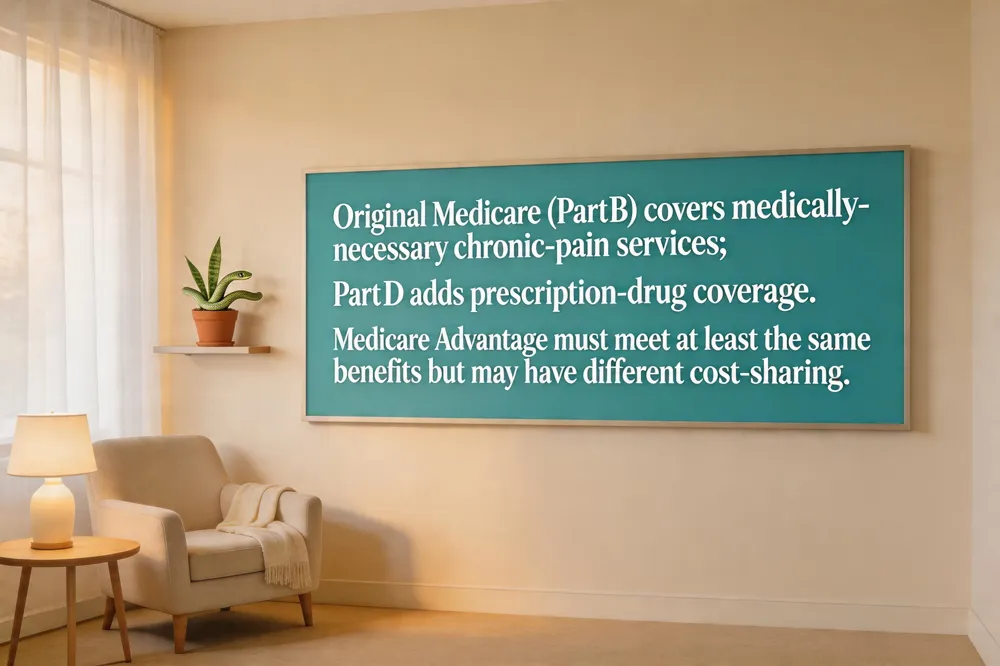 Medicare Part B (Medical Insurance) is the backbone of pain‑management coverage for seniors. It pays for physician visits, physical and occupational therapy, acupuncture for chronic low‑back pain, chiropractic services, and a range of interventional procedures when a qualified provider orders them. Beneficiaries must first meet the annual Part B deductible; thereafter they are responsible for a 20 % coinsurance after any applicable deductible of the Medicare‑approved amount, and some outpatient settings may add a modest copayment. The Medicare‑approved amount is set by Original Medicare; if the provider accepts assignment, Medicare pays its share and the patient pays the remaining portion.
Medicare Part D adds prescription‑drug coverage, often including Medication‑Therapy‑Management programs that help patients use opioid and non‑opioid pain medications safely. The “donut‑hole” gap has been largely closed, so seniors now pay roughly 25 % of drug costs after the coverage limit is reached (the “donut‑hole” has been reduced; beneficiaries now pay only 25% of brand‑name and generic medication costs).
Coinsurance and deductibles differ by plan. Original Medicare applies a standard 20 % coinsurance after the Part B deductible, while Medicare Advantage plans must offer at least the same benefits but may set different copays, coinsurance rates, or out‑of‑pocket maximums. Always verify the specific cost‑sharing details of your plan.
Limitations: Medicare provides very limited coverage for chiropractic care and does not cover acupuncture at all, though some Medicare Advantage policies may add limited acupuncture benefits.
Does Medicare cover chronic pain management? Yes. Part B covers medically necessary chronic‑pain services, and Part D assists with related medications.
Does Medicare cover pain‑management doctors? Yes. Pain‑management specialists are covered under Part B when they accept assignment and the services are deemed medically necessary.
What is included in the pain management care plan? A comprehensive assessment, personalized goals, pharmacologic and non‑pharmacologic therapies (physical therapy, CBT, acupuncture where allowed), patient education, and interdisciplinary coordination, with regular re‑evaluation to adjust treatment and improve quality of life.
California State Programs: Medi‑Cal and ACA Marketplace Plans
 Under the Affordable Care Act, all Marketplace and many employer‑sponsored plans must provide Essential Health Benefits (EHB). EHB cover chronic‑disease management, prescription drugs, mental‑health services, and, in most states, pain‑related counseling. California does not list chiropractic care as an EHB, and acupuncture is an EHB only in a few plans; coverage varies widely.
Free annual depression screening is mandated for anyone with chronic pain under the ACA, and mental‑health treatment for depression or anxiety is covered as part of the EHB package.
Pain‑clinic services are generally covered when deemed medically necessary, especially if the clinic is in‑network. Medicare Part B and Medicaid also reimburse many office visits, interventional procedures and therapy services, typically with a 20 % coinsurance after the deductible. Patients should verify their specific policy details, network status and any prior‑authorization requirements to understand out‑of‑pocket costs.
Private PPO Plans: Blue Cross Blue Shield, Aetna, UnitedHealthcare
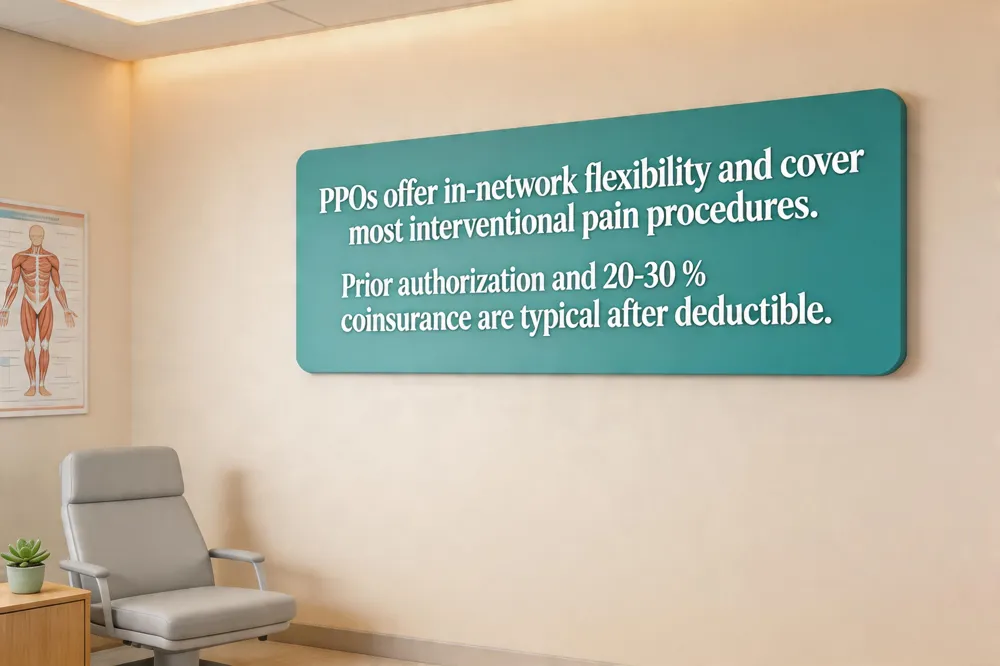 PPO network flexibility – PPOs let you see any in‑network specialist without a referral, which is valuable for chronic‑pain patients who may need to combine physician visits, physical therapy, and interventional procedures.
Coverage for interventional procedures – Most PPOs under Blue Cross Blue Shield (BCBS), Aetna, and UnitedHealthcare list nerve blocks, epidural steroid injections, radiofrequency ablation, and spinal cord stimulation as covered when medically necessary. Prescription‑drug formularies also include many analgesics, though some require prior authorization or step‑therapy.
Prior authorization and cost‑sharing – All three carriers typically require prior authorization for high‑cost injections or implantable devices. After the deductible, members usually pay 20‑30 % coinsurance for physician services and a fixed copay ($20‑$40) for office visits; outpatient procedures often involve a 20 % coinsurance after the deductible is met.
Specific plan examples –
- BCBS PPO: 20 % coinsurance after deductible for interventional pain services; $30 office‑visit copay; coverage of acupuncture in states where it is an essential health benefit.
- Aetna PPO: 20 % coinsurance for injections; $20‑$40 copays; includes behavioral‑health counseling for pain‑related depression.
- UnitedHealthcare PPO: 20 % coinsurance for procedures; $25‑$35 office copays; often covers diagnostic imaging at 80 % of allowed amount after deductible.
Answers to common questions
- Does Blue Cross Blue Shield cover pain management? Yes—BCBS covers medically necessary pain‑management services, including diagnostics, physical therapy, and interventional procedures, though exact benefits vary by plan and state.
- Best insurance for chronic pain in California – A PPO such as BCBS of California, Aetna, or UnitedHealthcare offers the broadest network and flexible coverage; Medicare Part B/Advantage is optimal for seniors.
- Best health insurance for chronic illness in California – Kaiser Permanente, Blue Shield of California, and Health Net provide extensive specialist networks, low copays, and disease‑management programs; Gold or Platinum plans on Covered California reduce out‑of‑pocket costs.
- Pain management near me (Los Angeles, CA) – The California Pain Institute in Los Angeles offers multidisciplinary care—including medication management, interventional injections, spinal cord stimulation, and integrative therapies—and accepts most PPO plans, Medicare, and many Medicaid plans.
Employer‑Sponsored & ACA Marketplace Plans: Essential Health Benefits
 The Affordable Care Act (ACA) defines a core package of Essential Health Benefits (EHBs) that all Marketplace, individual‑market, and small‑employer plans must cover. Essential Health Benefits (EHBs) include prescription‑drug benefits, chronic‑disease management, emergency and hospital care, and mental‑health services such as counseling and free depression screening for chronic‑pain patients.
Mental‑health coverage is a required component, ensuring patients can access therapy, cognitive‑behavioral therapy, and substance‑use treatment without additional cost‑sharing when the provider accepts assignment.
Alternative‑medicine coverage varies by state. Most states list chiropractic care as an EHB, but California, Hawaii, and Utah do not. Coverage for alternative medicine such as acupuncture and chiropractic care varies by state; most states include chiropractic care as an Essential Health Benefit, while only a handful of states—California, Hawaii, and Utah—do not. Acupuncture is an EHB only in a handful of states (e.g., Alaska, California, Maryland, New Jersey, New Mexico, Washington). Acupuncture is listed as an Essential Health Benefit in only a few states, including Alaska, California, Maryland, New Jersey, New Mexico, and Washington; other states may or may not cover it. Medicare Part B offers limited chiropractic coverage and no acupuncture. Medicare provides very limited coverage for chiropractic care and does not cover acupuncture at all.
All plans impose deductibles, copays, and coinsurance. After meeting the deductible, patients typically pay a fixed copay (e.g., $20‑$40) or a coinsurance percentage (often 20 % for Medicare B). Patients typically pay 20% coinsurance after any applicable deductible for covered pain‑management services. Services deemed medically necessary are covered, but out‑of‑network providers may incur higher cost‑sharing.
Q: Does insurance pay for pain management?
A: Yes—most health‑insurance plans, including Medicare Part B and Medicaid, cover a core set of pain‑management services such as prescription medications, physical therapy, chronic‑disease management, and many office‑based procedures when they are deemed medically necessary. The exact amount you pay out‑of‑pocket depends on your plan’s deductible, copay, and coinsurance requirements, and some treatments may need prior‑authorization. Services that are not considered essential health benefits—such as acupuncture or chiropractic care—are often excluded or covered only in certain states. Pain‑clinic visits are usually covered if the clinic is in‑network, but out‑of‑network providers may require higher cost‑sharing. Always check your specific policy and confirm coverage with your insurer before starting treatment.
Q: Are pain clinics covered by insurance?
A: Yes, most health‑insurance plans provide coverage for services rendered at pain‑management clinics, especially for medically necessary physician visits, interventional procedures (such as epidural or facet‑joint injections) and related therapies. Under the ACA, individual and employer plans are required to include essential health benefits that encompass chronic‑disease management, prescription drugs, mental‑health services and, in many states, chiropractic or acupuncture care. Medicare Part B also covers many pain‑management services, typically requiring a 20 % coinsurance after the deductible. while Medicaid plans must cover prescription drugs and often pain counseling. However, coverage can vary by state, plan type, and whether the clinic is in your network, and some alternative treatments may need prior authorization or may not be covered at all. It’s always best to verify your specific policy and any out‑of‑pocket costs with your insurer before beginning treatment.
Q: What is included in the pain management care plan?
A: A pain‑management care plan begins with a comprehensive assessment of the patient’s pain characteristics, triggers, and impact on daily activities. It sets personalized goals—such as achieving an acceptable pain level and maintaining function—and outlines both pharmacologic options (prescription and over‑the‑counter medications, nerve blocks, or patient‑controlled analgesia) and non‑pharmacologic therapies (physical therapy, massage, acupuncture, heat/cold, meditation, counseling). The plan includes patient and family education about pain mechanisms, medication use, and coping strategies, while also addressing cultural, religious, or personal beliefs that may affect treatment. An interdisciplinary team of physicians, nurses, therapists, and mental‑health specialists collaborates to monitor progress, adjust interventions, and document outcomes. Regular re‑evaluation ensures the care plan evolves with the patient’s condition, optimizing relief and improving quality of life.
Q: How to get a chronic pain management plan?
A: 1️⃣ Schedule an appointment with your primary‑care doctor or a pain‑medicine specialist for a thorough evaluation and diagnosis. 2️⃣ Discuss your goals, medical history, and any prior treatments so the clinician can design a personalized plan that may combine medications, physical therapy, and behavioral health services. 3️⃣ Incorporate complementary therapies—such as acupuncture, massage, or occupational therapy—based on your specific condition and preferences. 4️⃣ Meet regularly with your care team to monitor progress, adjust medications, and refine exercises or coping strategies. 5️⃣ Stay engaged in self‑management tools like pacing, mindfulness, and sleep hygiene to support long‑term relief and improve quality of life.
Choosing the Right Plan in Los Angeles: Practical Tips
 Comparing premiums, deductibles, out‑of‑pocket maximums – When evaluating ACA Marketplace or employer‑sponsored plans, look beyond monthly premiums. A Gold or Platinum metal tier often has a higher premium but lower deductibles and out‑of‑pocket caps, which can be crucial for frequent specialist visits, imaging, and interventional procedures. Calculate the total annual cost by adding the premium, expected deductible, copay/coinsurance for pain‑clinic visits, and the maximum out‑of‑pocket amount.
Using HSAs/FSAs with HDHPs – High‑deductible health plans paired with Health Savings Accounts (HSAs) let you save pre‑tax dollars for pain‑management expenses such as physical‑therapy sessions, injections, or durable medical equipment. Flexible Spending Accounts (FSAs) work similarly but must be used within the plan year. Both tools reduce taxable income and can offset the higher deductible of an HDHP.
Telehealth and virtual visits – Medicare, many private insurers, and California’s Covered California plans now reimburse telehealth pain‑consultations at parity with in‑person visits. Virtual appointments can handle medication management, depression screenings, and follow‑up assessments, lowering travel costs and expanding access to board‑certified specialists.
Network verification and in‑network vs out‑of‑network – Always confirm that your chosen pain‑management clinic is in‑network. In‑network providers typically require only a copay (e.g., $20‑$40 for Aetna or 20% coinsurance for Medicare Part B) while out‑of‑network services may cost 2‑3 times more.
California Pain Consultants – La Mesa – Located at 5360 Jackson Dr., Ste 100, the La Mesa clinic offers diagnostic imaging, interventional procedures, regenerative medicine, and medication‑based therapy. Most major insurers are accepted; appointments can be scheduled at (858) 571‑3630 or online.
California Pain Consultants – Rancho Bernardo – At 16466 Bernardo Center Dr Unit 150, the center delivers nerve blocks, epidural steroid injections, radiofrequency ablations, and multidisciplinary rehabilitation, accepting most major plans. Call (858) 571‑3630 or book online.
Pain management near me (Los Angeles, CA) – California Pain Institute provides medication management, injections, spinal cord stimulation, ketamine infusions, PRP therapy, and physical rehab. Board‑certified physicians and on‑site imaging make it a one‑stop solution; schedule via (310) 264‑7246 or online, with telehealth options available.
Best health insurance for chronic illness in California – Kaiser Permanente, Blue Shield of California, and Health Net offer extensive specialist networks, low copays, and robust pharmacy formularies. Through Covered California, Gold/Platinum plans or enhanced Silver plans with cost‑sharing reductions provide predictable out‑of‑pocket costs. Verify that your pain‑medicine provider is in‑network to avoid surprise bills.
Conclusion
Insurance options for chronic‑pain patients are broad but vary by program. ACA‑compliant marketplace plans, Medicaid, Medicare (Part B and Part D), and most large employer plans must include Essential Health Benefits that cover prescription drugs, physical therapy, mental‑health services, and often interventional procedures. Private carriers such as Aetna, Blue Cross Blue Shield, UnitedHealthcare and Cigna typically reimburse medically necessary pain‑clinic visits, injections and, with many plans, psychotherapy and complementary therapies. Medicare Part B pays 20% coinsurance for covered services, while Medicare Advantage or Medicaid may add extra benefits. To verify coverage, patients should: (1) obtain a detailed Summary of Benefits and Coverage; (2) confirm that the pain‑clinic or specialist is in‑network; (3) check deductible, copay and coinsurance amounts; (4) secure any required referrals or prior‑authorizations; and (5) ask the clinic’s billing staff to submit a pre‑authorization or appeal if needed. Finally, because chronic pain is best managed through a biopsychosocial approach, seek an interdisciplinary program that combines medical management, interventional therapies, behavioral health (e.g., CBT), and complementary modalities such as yoga or acupuncture. Coordinated, multidisciplinary care not only improves outcomes but also aligns with insurance parity requirements, ensuring patients receive comprehensive, affordable relief.